
It reorders the social map of a class
Sporting ability and academic ranking stop being the organising principle. The quiet ones in class often turn out to be the calm ones in a raft. Everyone notices.
School trips · Sri Lanka
Single-day school adventure trips at Kitulgala. Rafting, canyoning, rainforest, leadership — for groups up to 100 students. No overnight stay to approve.
Groups of up to 100 people · Kitulgala, two hours from Colombo · quote within one working day
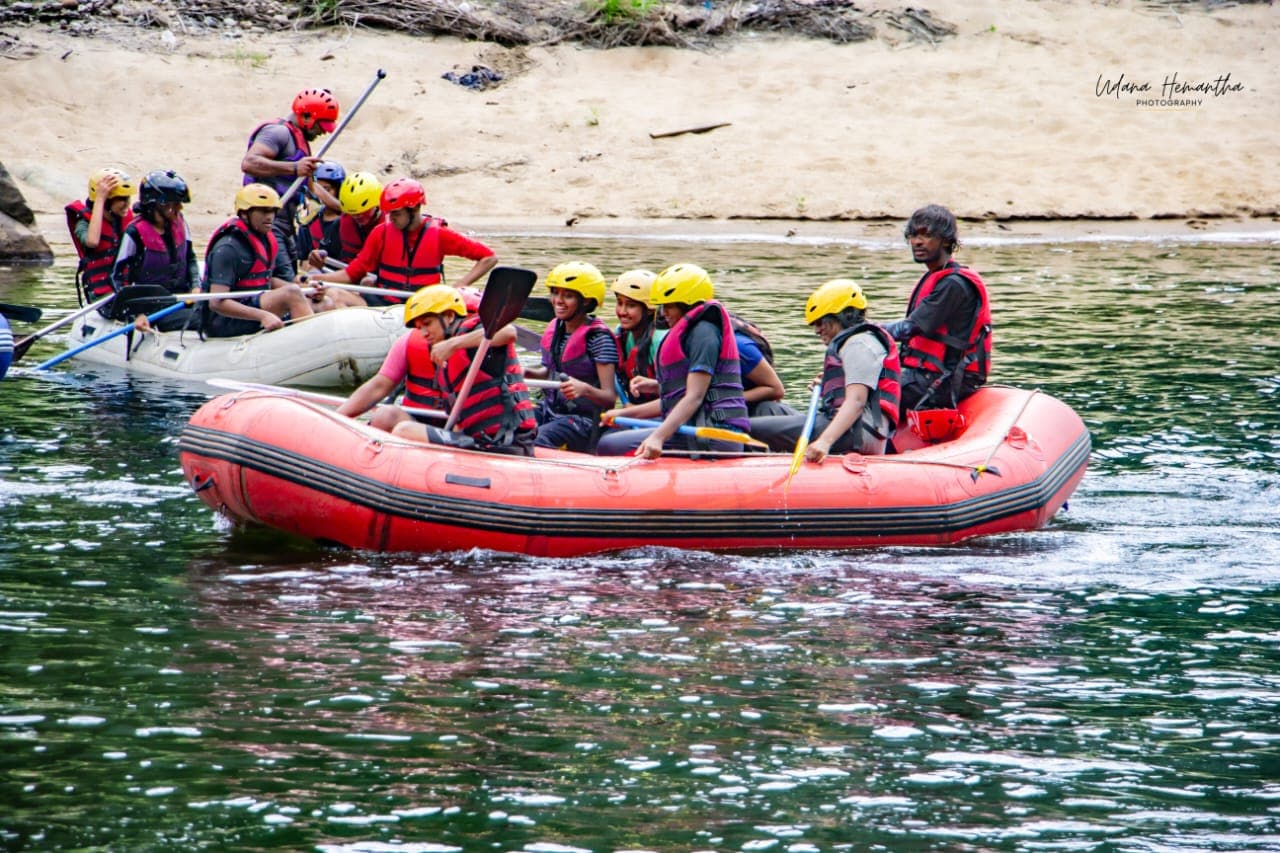
Every teacher knows the moment. About forty minutes in, somewhere between the safety briefing and the second rapid, the quiet student from the back row shouts an instruction. The raft listens. You cannot timetable that. You can only put a class somewhere it happens.
We run single-day school programmes from Kitulgala, in the Kelani River valley — two to two and a half hours from Colombo. Coaches leave in the morning. Students are home the same evening. No overnight stay to approve. No residential risk to sign off. No packing list beyond a change of clothes. No boarding logistics for staff to manage.
That single-day, day-return shape is deliberate. Most established adventure providers in this valley run multi-night residential programmes. Good programmes — but a real approval and budget barrier for most Sri Lankan schools. We built the opposite: a serious, properly run adventure day a Head of PE can actually get signed off.
This hub covers how school days work, what we run at each age band, how supervision and headcounts work, and what we put in writing before you commit to anything.
Where we stand on safety
That is Sri Lanka Tourism Development Authority (SLTDA) guidance — a rule, not a suggestion, for every section of the river. Some operators in this valley advertise rafting from age six. We do not.
We hold 14 as the minimum for the Grade 2-3 Kelani run. No exception for a group nearly there. No exception for a signed parental waiver. We will not put a twelve-year-old on a grade three rapid and call it a school trip.
Under 14? You still get a full day. Rainforest, zip line, supervised shallow water, team challenges at base. Just not the grade 2-3 run. We tell you plainly which activities fit your students' age, before you plan the day.
Abseiling and canyoning ages are not one national number. Equipment specification and site conditions set the limit. We confirm it against the actual route and the actual harnesses your group will use — before you plan the day, not on the morning thirty students are already on the rock.
We do not claim certification logos or insurance language. We describe how we actually run a day: briefings, buoyancy aids, helmets, guided crews, headcount discipline, non-swimmer handling. Tell us what your school's approval process needs and we tell you honestly, in writing, what we can and cannot provide — before you commit to a date.
Supervision in practice
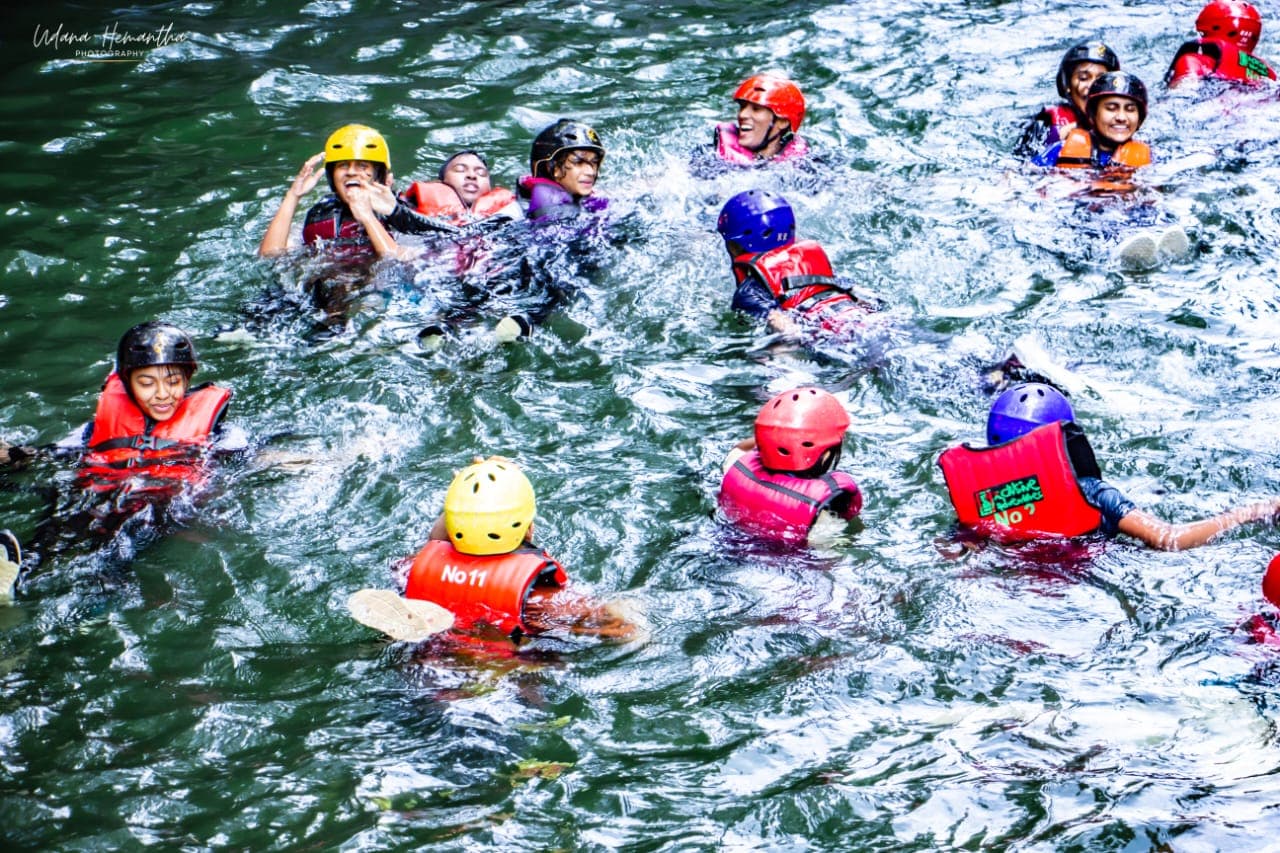
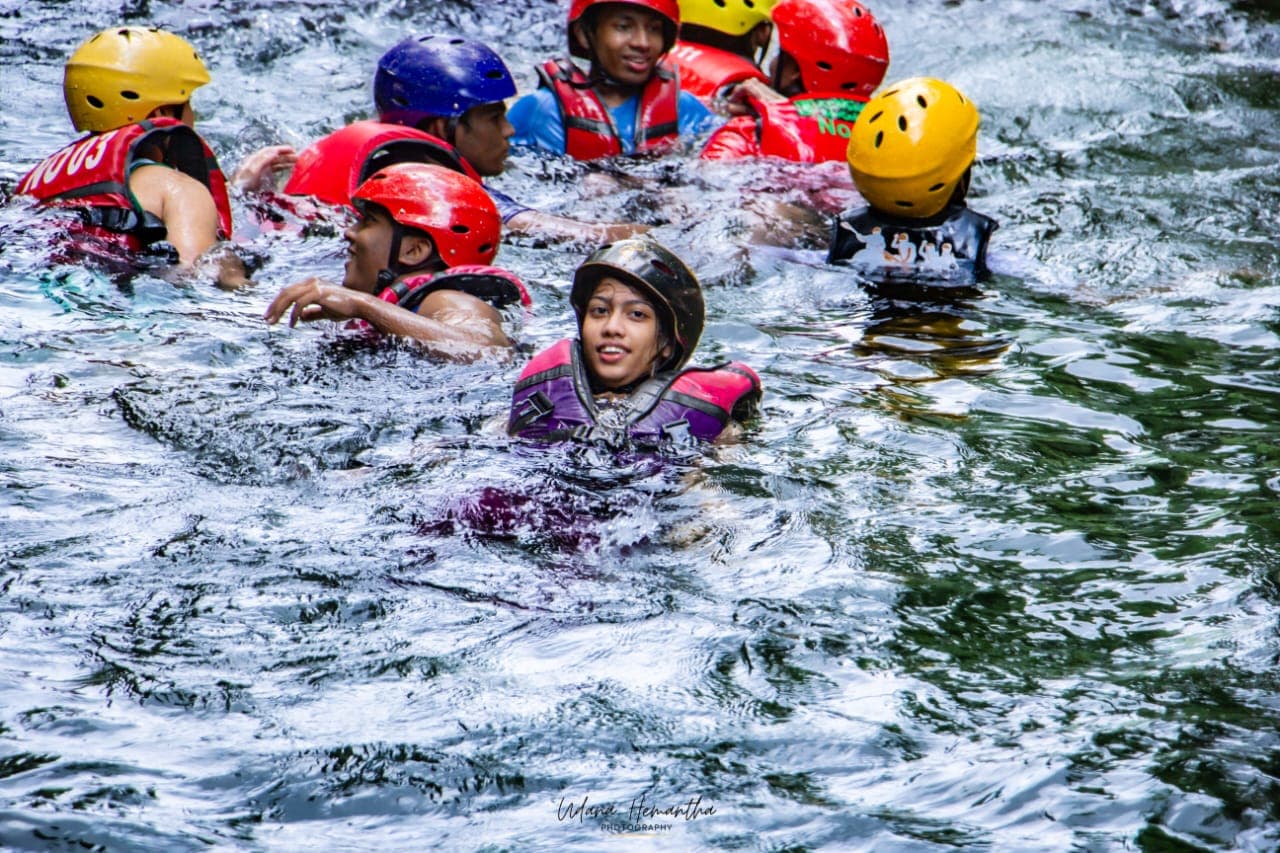
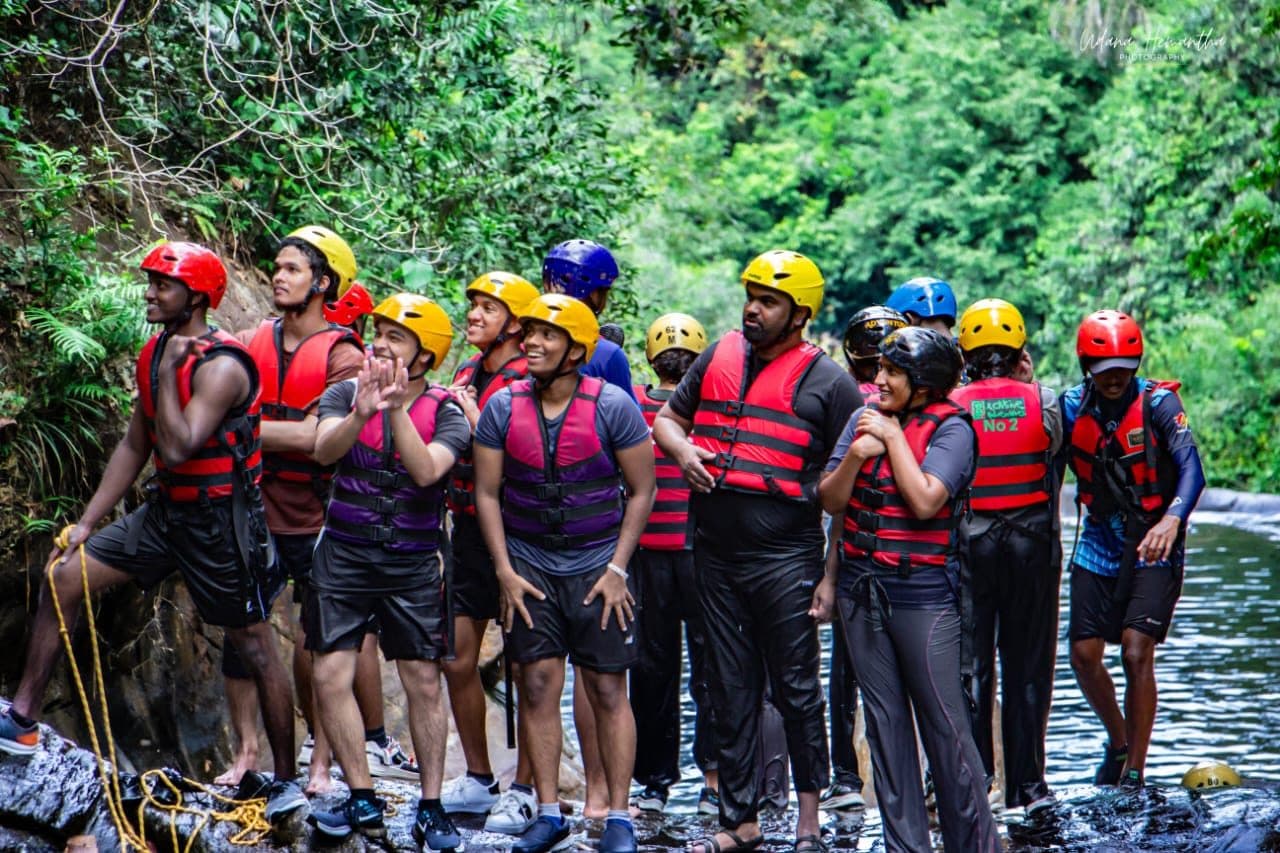
Look at the photographs on this page. See the numbers on the helmets? Not decoration. Every student gets a number at kit-up, and that number is theirs for the day. A headcount becomes a fast, unambiguous roll call — not an anxious scan of thirty students in matching gear.
Students move in fixed pods with a named guide. Pods stay together for the whole activity block. Counts happen at every transition — off the bus, after kitting up, before entering the water, on exit, before lunch, before departure. Guides call each count aloud, so staff can cross-check against their own list.
Teachers are not spectators. We brief accompanying staff separately, before the students — where the pods are going, where the exits are, where the counts happen, and who to speak to if a student needs to stop. Want to get in the water? Come in. Want to stay dry and watch the group? Just as useful.
Age bands
We build school days around what each age band can genuinely do — not the same programme sold to everyone. Use this table to sanity-check a trip before you propose it.
| Age band | Core activities | Not available | Best suited to |
|---|---|---|---|
| Ages 8-12 | Rainforest trekking, birdwatching, zip lining. Supervised shallow river and pool sessions. Team games and problem-solving at base. | Grade 2-3 river rafting — SLTDA minimum age is 14. Full waterfall abseiling descents. | Primary and middle-school year trips, nature and environment clubs, end-of-term reward days. |
| Ages 13-15 | Everything above, plus canyoning and the rock slides. Full river rafting once a student turns 14. | Rafting for any student still under 14, regardless of year group. Higher abseil pitches where the harness does not fit. | Middle and lower-secondary year groups, house or form competitions, sports squad bonding. |
| Ages 16-19 | The full programme — river rafting, canyoning, waterfall abseiling, zip lining, rainforest trekking, and extended multi-activity days. | Nothing on age grounds. Individual activities still depend on conditions, confidence and equipment fit. | A/L year groups, prefect and leadership camps, International Award journeys, university and campus batches. |
Mixed-age groups are normal. We run parallel tracks, so a Grade 8 and a Grade 12 student both get a full day. Everyone still eats together and travels together.
Explore the hub
Curriculum requirement, leadership day, or the trip students keep asking about — start with the page closest to your plan.
The core programme
The standard single-day trip, structured by age band. What a class of thirty does, and what changes for a year group of ninety.
See day programmesLeadership development
Day programmes for prefect boards, head-student teams and senior leadership groups. Activities chosen to expose how students lead under pressure.
Leadership programmesDofE & co-curricular
How our Kitulgala days fit the Duke of Edinburgh's International Award adventurous journey, IB CAS hours and other co-curricular requirements.
Award and CAS days16+ groups
Campus batch trips, freshers' days, faculty outings, scout and guide troops, and youth organisation programmes for groups of sixteen and over.
Student group daysFor your approval file
Our full position on minimum ages, non-swimmers, supervision ratios, headcount procedure, medical disclosure — and what we put in writing for your school.
Read the safety detailDifferent hub
Planning a staff day, an INSET trip or a teachers' outing rather than a student programme? The corporate hub covers team building and staff outings.
Go to corporate hubA day in practice
A standard full day for a secondary year group of about sixty, leaving Colombo in the morning. Timings flex around your school, headcount and age band.
Coaches leave from the school gate. We quote transport, or coordinate with buses your school has already arranged. Staff take the first roll call before departure.
Arrival at our Kitulgala base, with morning tea. Washrooms and changing rooms straight away. Bags into secure dry storage. Staff take a second count.
Teachers are briefed separately, and first — pod allocations, guide names, exit points, where counts happen, and the stop procedure for any student who has had enough.
The full group is briefed together, then fitted with helmets and buoyancy aids. Numbers are assigned here and stay with each student all day.
Pods rotate into their first activity by age band. River rafting for 14+. Rainforest trek, zip line and supervised water for younger students. Every pod keeps its own guide throughout.
Buffet lunch at base — halal, vegetarian and other diets catered for. Full headcount before and after. The natural point to swap pods between activities.
The second rotation. Canyoning and the rock slides for older students. Team challenges and rainforest for younger pods. A quieter option for anyone who needs it.
Students change into dry clothes and take evening tea. We get the year-group photograph. Photos and video reach the school afterwards.
Final headcount against the numbered helmets and the school's own list. Then boarding. Most Colombo schools are back at the gate by about 19.00.
More than one day
Some trips need more than a day. A year group being deliberately mixed. A leadership cohort past the polite stage. An activity week with more than one slot to fill. None of that finishes in six hours. The usual answer in this valley is a residential camp — and that is exactly where the approval problems start.
So we run consecutive days instead. Two or three separate day trips, across a week or spread across a term, students home on their own bus every evening. Day one builds the crews and gets everyone past the first-time nerves. Day two goes where day one could not — harder water, the full canyon, a group task that only works once students are comfortable together. Day three consolidates it.
You get the depth of a residential week. No overnight risk assessment. No rooming list. No night-duty rota. No parental consent form for a stay. Each day still runs at up to 100 students, so a year group of 240 goes through the same programme across three days — nobody misses out.
Why schools book this
Adventure days sell themselves on excitement. The reasons teachers give us afterwards are usually more specific than that.
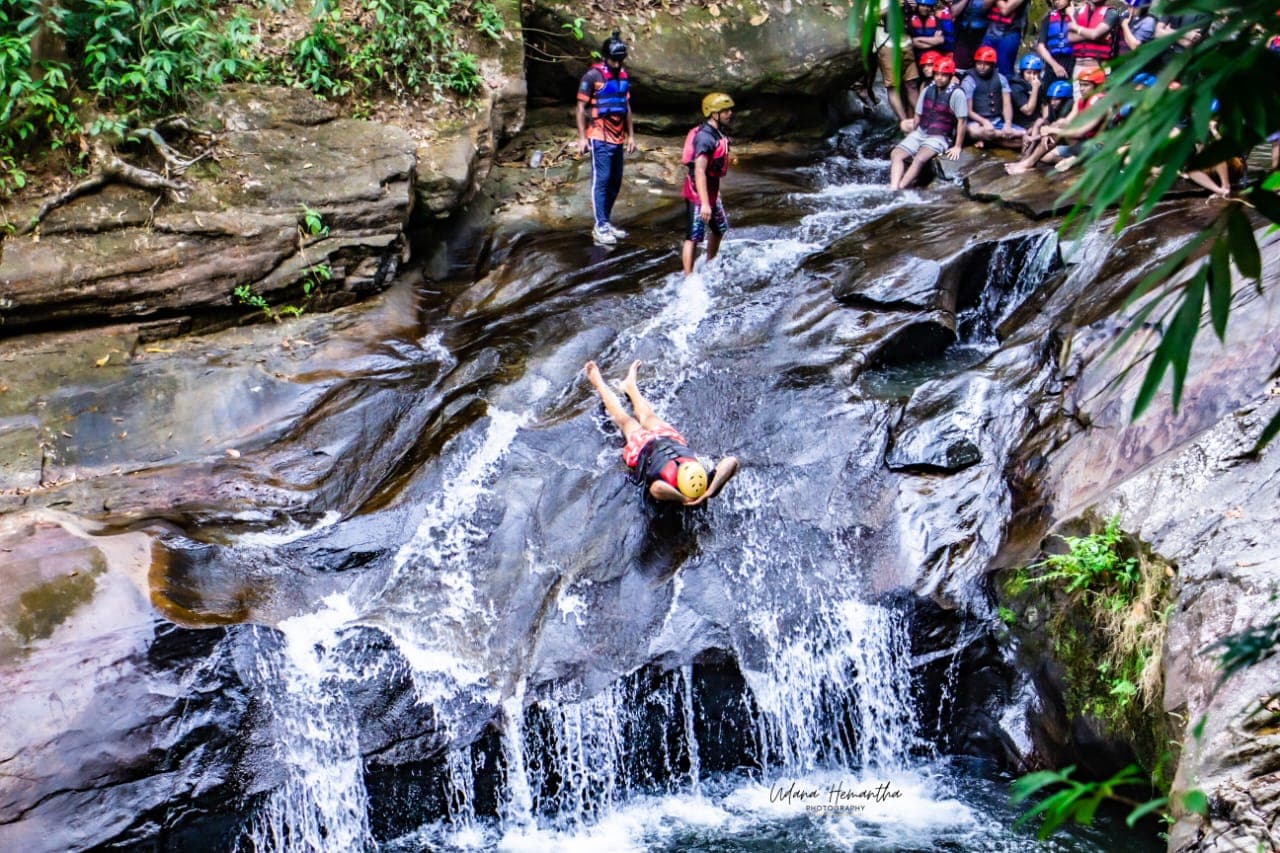
Sporting ability and academic ranking stop being the organising principle. The quiet ones in class often turn out to be the calm ones in a raft. Everyone notices.
A raft does not move unless the crew communicates. No classroom exercise prompts participation that well.
Getting through something that looked frightening from the bank is a real achievement. Students carry it back into school — visible for weeks.
Kitulgala is wet-zone rainforest with serious birdlife. For Colombo students, walking into it is a genuine encounter with what they are taught about.
Award journeys, co-curricular hours, leadership programmes and house competitions all need a credible, well-run outdoor component. This is one.
Not every school activity has to justify itself academically. Sometimes the goal is a genuinely great day together — one the year group remembers.
Real school groups
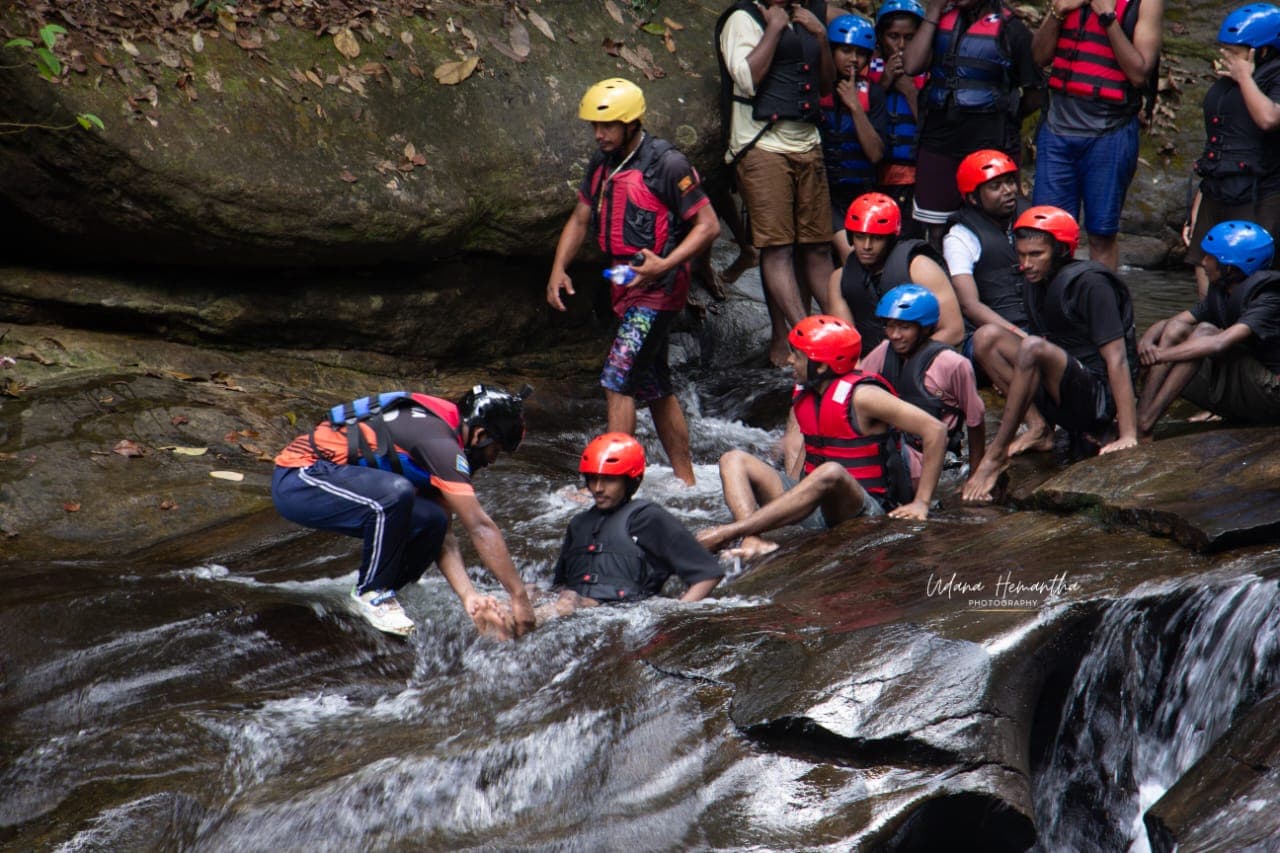
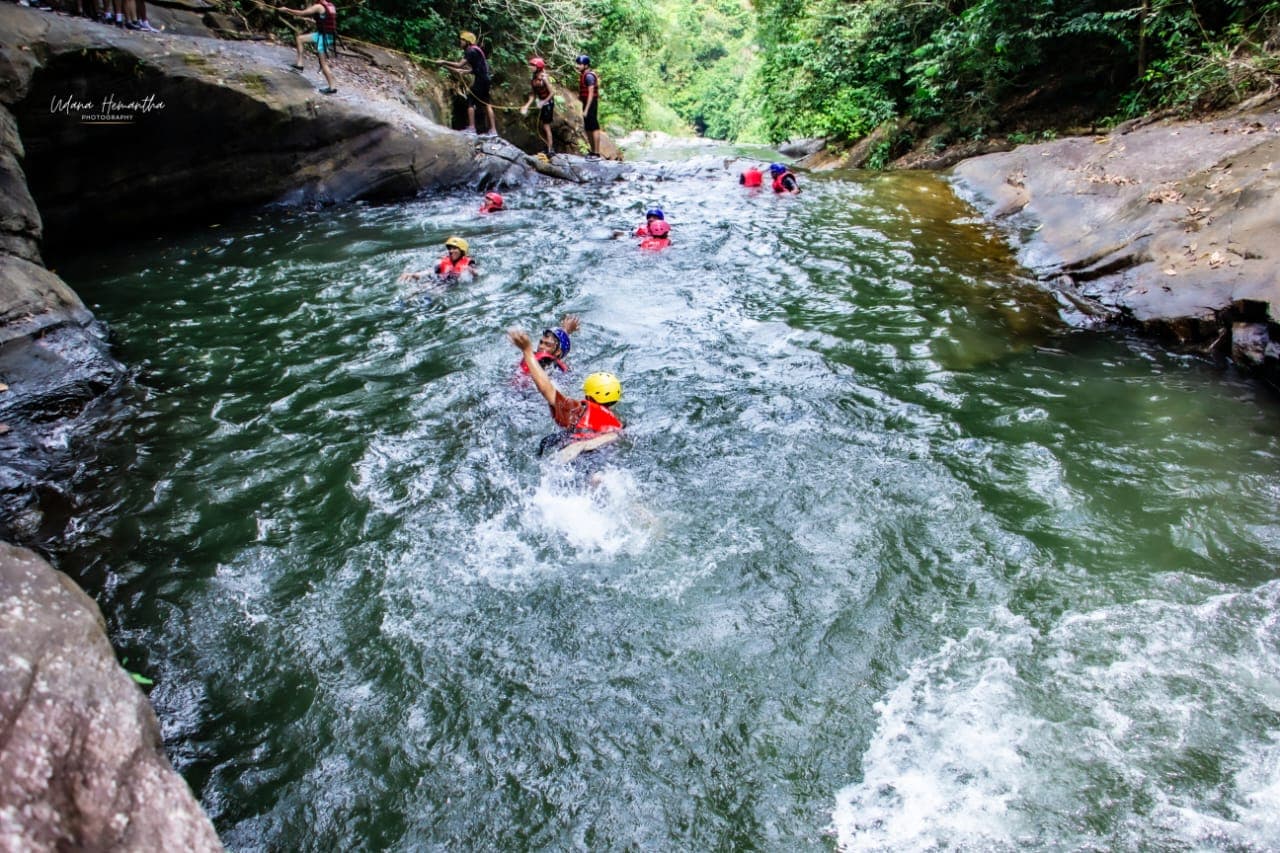
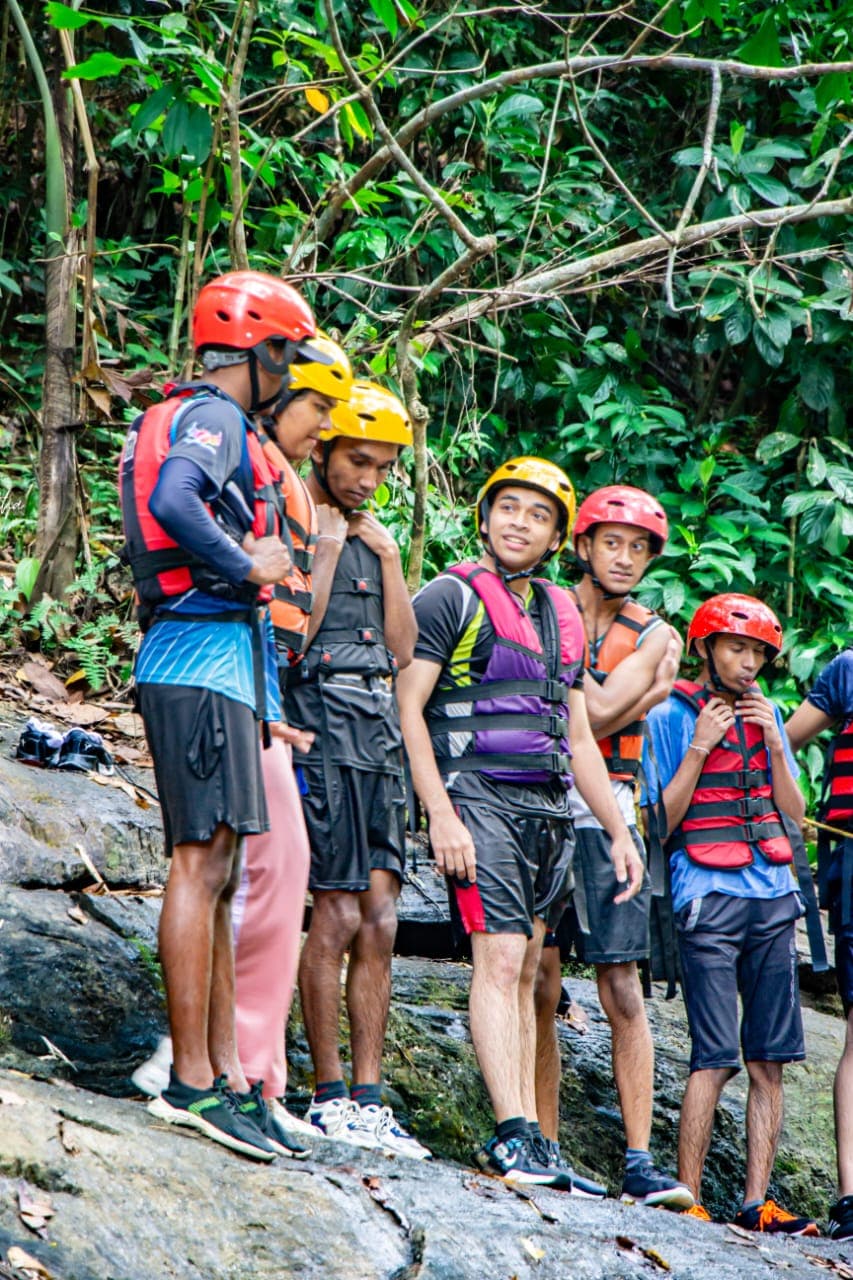
These are photographs from real Xclusive Adventures school and youth group days. Note the numbered helmets — that is our headcount system in use.
What we handle
Getting a trip signed off is a paperwork and logistics problem, not an activity problem. All of this comes as standard.
If your approval process needs specific documentation, send us the checklist. We answer it item by item, in writing, before you commit to a date.
Timing your trip
Government and national schools run a three-term year, starting in January. Most international schools in Colombo run a UK-style year, starting in late August. Coordinating across both systems — a joint trip, an inter-school programme, a scouting event — that mismatch is usually the first thing to solve.
Exam windows matter more than term dates. GCE Ordinary Level sits in December, Advanced Level in August and September. Cambridge IGCSE and Edexcel International GCSE run their main session from late April into June. Trips do not survive contact with any of these. Most schools work in the gaps: mid-January to early February, late March before the New Year break, May and June for the local system, and September to November once senior exams have cleared.
Weather is less of a constraint than teachers expect. Kitulgala is wet-zone rainforest — that is why it is rainforest — and rain does not stop an adventure day. Students are already wet. The river is often better with more water in it. The rainforest is at its most alive. What matters is a wet-weather running order, agreed before the day. That is how we quote it.
For a single class, three to four weeks' notice usually works. For a full year group, or a specific date in the busy January-to-March window, give us six to eight weeks.
“Excellent day out that cannot be missed if you're in Sri Lanka. The scenery is out of this world and the company is professional.”
Xclusive Adventures holds 4.8 on TripAdvisor and 4.9 on Google. Check us independently before you put a proposal to your principal — we would rather you did.
You get an indicative per-student rate, a draft running order for that age band, and a straight answer on any documentation your approval process needs. Within one working day.
Request a school group quoteQuestions & answers
SLTDA guidance sets a minimum rafting age of 14, on all sections of the river. We hold to that for the Grade 2-3 Kelani run — no exceptions. Students under 14 are not excluded. They get a full programme: rainforest trekking, zip lining, supervised shallow water, team challenges.
The Kelani at Kitulgala is a grade 2-3 river — genuinely exciting, not extreme. It is Sri Lanka's standard introductory rafting run. Every student wears a helmet and a buoyancy aid. Every raft is guided. The whole group is briefed before anyone enters the water. Students move in fixed pods, with headcounts at every transition. We hold to 14+. If conditions on the day make the river unsuitable, we say so and switch to the land programme.
Yes, with the right activity. Every participant wears a buoyancy aid, and the briefing covers exactly what to do in the water. Confidence matters as much as ability — a frightened student has a bad day even in a safe situation. Tell us how many non-swimmers are in the group at the quoting stage. We plan pods, activities and supervision around it, including a genuinely good dry-land option for anyone who would rather not go in.
Sri Lanka has no single statutory ratio for school excursions. Most schools work to their own policy, or to international guidance — typically around one adult per ten students for a day trip, tighter for water activities. Our guides supervise the activities. Your staff supervise your students. Tell us your school's ratio when you enquire, and we size the pods and guide team around it.
Two to two and a half hours by road. A 6.30am departure buys a full day of activity and gets most Colombo schools back at the gate by about 7pm, same evening. No overnight stay to arrange or approve.
No — that is the point of these programmes. Most established adventure providers in this valley run multi-night residential trips. We built a single-day, day-return product instead, because the overnight component is the single biggest barrier to getting a Sri Lankan school trip approved and funded.
No. We have no residential base, and we do not run residential trips. An overnight programme brings night-duty supervision, rooming, evacuation and medical obligations we are not set up to carry for a school group. What we run instead is consecutive day programmes — two or three separate day trips, students home each evening. If your school specifically needs a residential, tell us anyway. We will give you a straight answer on whether we can help.
Yes, and this is increasingly how schools use us. Two or three full day trips run across a week, or spread across a term, with a designed progression — day one builds the crews, day two goes deeper into the water or the canyon, day three consolidates. Students travel home every evening. No overnight risk assessment, no rooming list, no night-duty rota. Tell us the year group and how many days you are considering, and we map the progression before quoting.
Yes, across consecutive days, not by cramming one. We cap a single day at 100 students, because that is where supervision, pod sizes and guide ratios stay right. A year group of 240 runs as three days of eighty — every student gets the same programme, not a diluted version. We tell you honestly how we would split your cohort before you commit to dates.
Up to 100 students in a single day. Larger groups run in rotation — one half on the river or in the canyon, the other half trekking or on challenge activities, then they swap after lunch. If your year group is bigger, we say so honestly and suggest splitting it across two dates rather than compromising supervision.
Send us your school's external-provider checklist. We answer it item by item, in writing, before you commit to a date. We tell you plainly what we can provide and what we cannot — not a vague reassurance that falls apart the moment your senior leadership team asks a specific question.
That is planned for, not improvised. Every student is told at the briefing exactly how to signal they want to stop. There is always an exit route, and somewhere comfortable to wait with staff. Nobody is talked into continuing. A student allowed to stop without fuss often asks to rejoin an hour later.
Yes, as standard. Send the numbers with your final headcount, and we confirm the catering plan in writing before the day. Flag allergies at the same time, so they are handled separately, not assumed to be covered by the vegetarian count.
Yes. We invoice the school, accept purchase orders and work by bank transfer. A teacher never has to settle a trip on a personal card and claim it back.
Work around the exam calendar, not the weather. The clear windows: mid-January to early February, late March before the New Year break, May and June for the local system, September to November once senior exams clear. Rain does not stop an adventure day — the wet-weather running order is agreed when we quote.
School group desk
Tell us the year group, student numbers and the term you are aiming at. Within one working day, you get an indicative per-student rate, a running order for that age band, and straight answers on ages and supervision.
Prefer to talk it through first? Call +94714646865 or email info@xclusiveadventures.com.
More in this hub
The core single-day school adventure programme at Kitulgala: age-banded activities for ages 8 to 19, real rotations for large groups, and the full running order.
Prefect camps and student leadership days at Kitulgala. Rotating command on the river surfaces real leadership behaviour, with a usable debrief for staff afterwards.
How a Kitulgala adventure day supports the Duke of Edinburgh's International Award and CAS in Sri Lanka, and where your school's Award Leader stays in charge.
Adventure days at Kitulgala for university batches, freshers' groups, sports clubs, scouts and alumni. Self-organising groups aged 16+ get full activity access.
Our full safety, minimum-age and supervision policy for school groups at Kitulgala: rafting age limits, non-swimmers, chaperone ratios, headcounts and paperwork.
Keep reading
Minimum ages, non-swimmers, supervision, headcounts and what we will confirm in writing.
How the standard single-day school trip is structured, age band by age band.
The river, rainforest and canyon base your trip is built around.
Analytics and retargeting choice
We use analytics and Meta Pixel only if you accept, so we can understand which Sri Lanka planning pages and campaigns lead to useful enquiries. Essential enquiry and booking forms work either way. Read the privacy policy and cookie policy.