
Team challenges at base
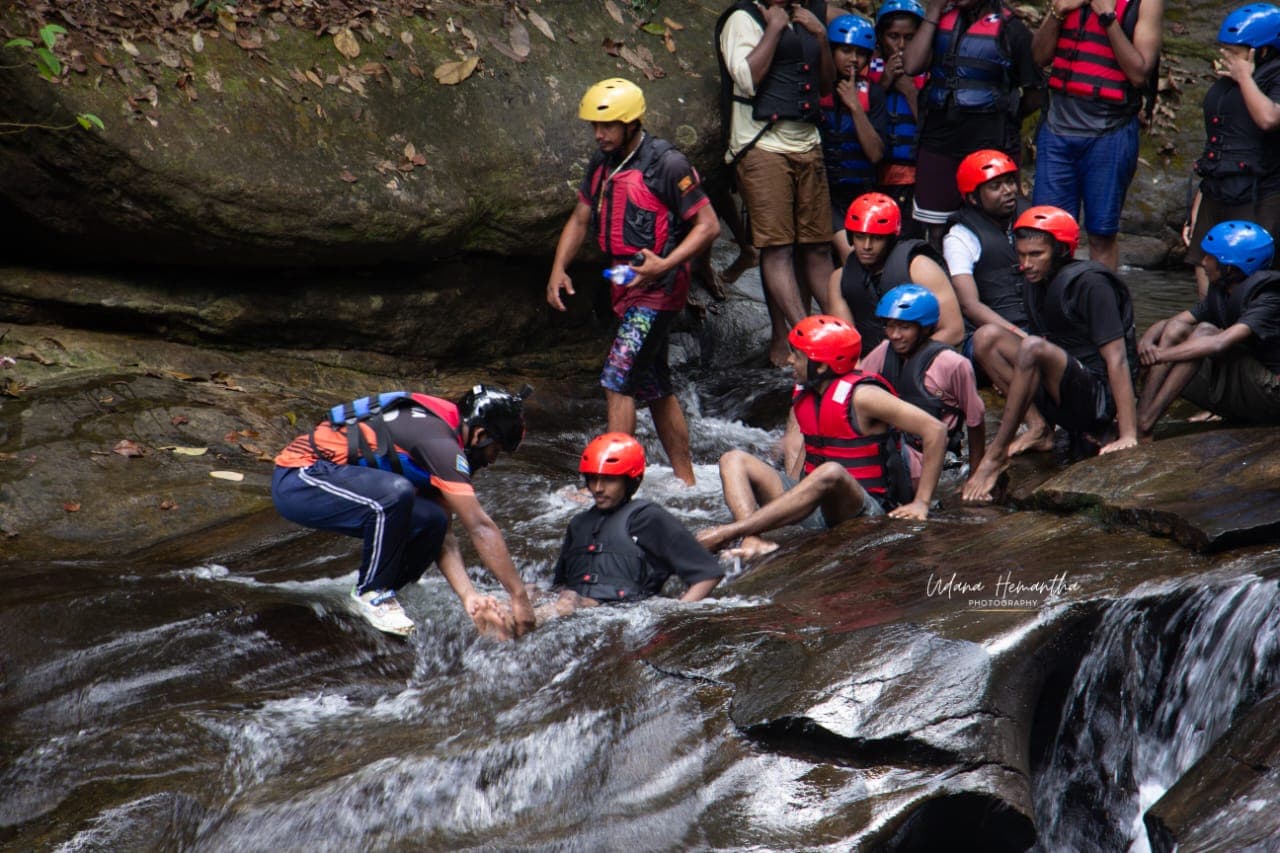
Structured problem-solving and cooperation tasks run at base — for younger students between water activities, and for anyone sitting out a specific activity. A real, guided programme, not a holding pen.
School trips · Sri Lanka
Our core single-day school programme at Kitulgala. Three age-banded tracks. Real rotations for large year groups. A rainforest component that is taught, not filler.
Groups of up to 100 people · Kitulgala, two hours from Colombo · quote within one working day
Every school adventure day starts from the same question: what can this age group genuinely do well, safely, for a full day? Not what looks good on a brochure. What a class of eleven-year-olds, or a year group of sixteen-year-olds, can actually be handed, hour after hour — without boring the older ones or frightening the younger ones.
Three age-banded programmes run from Kitulgala. Here is how a class of thirty moves through a day differently from a year group of ninety. What students are physically doing at each stage. Why the rainforest and birdwatching component is a taught part of the programme, not a walk between the exciting bits.
Trips coordinator working out whether this fits your year group? Head of PE weighing it against a classroom alternative? Read this before you request a quote.
How we design a day
Say "school adventure day" and most people picture one thing. Rafting. But a good school day is not one activity stretched thin. It is activities matched to what an age group can genuinely do, run in parallel, so nobody stands waiting for someone else's turn.
Every day is built from three age bands: 8-12, 13-15 and 16-19. Each band gets a genuinely different day — not the same day with the exciting parts removed. The 8-12 programme runs rainforest trekking, birdwatching, zip lining, supervised shallow water and team challenges at base. The 13-15 programme adds canyoning, and the river for students who have turned 14. The 16-19 programme is the full day: the Kelani's grade 2-3 water, canyoning, waterfall abseiling, zip lining and rainforest trekking.
This age-banding is not a marketing device. SLTDA guidance sets a minimum age of 14 for white-water rafting, on all sections of the river, and we hold to that without exception. It is also the only way to run a large, mixed-age school group — without excluding the youngest students, or watering the day down for the oldest ones.
Age bands in detail
The working version of the age-band split — what is included, what is left out, what the day builds, and how group size changes the picture.
| Age band | Included in the day | Not available | What the day builds | Group size notes |
|---|---|---|---|---|
| 8-12 | Rainforest trekking with guided birdwatching. Zip lining. Supervised shallow-water and pool sessions. Team-challenge tasks at base. | Grade 2-3 river rafting — SLTDA's minimum age is 14. Full waterfall abseiling descents. | Cooperation in small teams. Comfort in an unfamiliar environment. A first taste of managed risk, under close supervision. | Works well from a single class up to a full primary year group. Smaller pods (six to eight) with a named guide throughout. |
| 13-15 | Everything in the 8-12 band, plus canyoning and the rock slides. Full river rafting for any student who has turned 14 that day. | Rafting for students still 13 on the day, regardless of year group. Higher abseil pitches where the harness does not fit. | A genuine step up in physical challenge. Decision-making under a guide's instruction. The first real experience of shared risk as a group. | Runs well as a single form or as a full year group in rotation. Mixed 13/14 cohorts are common — we split by actual age on the day, not by class. |
| 16-19 | The complete programme: grade 2-3 river rafting, canyoning, waterfall abseiling, zip lining and rainforest trekking, combined to fill the day. | Nothing is withheld on age grounds. Individual pitches still depend on conditions, group confidence and equipment fit on the day. | Sustained physical effort. Real leadership opportunities within a raft or pod. The kind of shared, slightly frightening experience a year group remembers together. | The natural fit for A/L cohorts, leadership and prefect groups, International Award journeys, and university or campus batches. |
Mixed-age school groups are normal, not an exception. We run parallel tracks by actual age, not by class or form. A Grade 7 and a Grade 12 student on the same coach both get a full, properly matched day.
What to bring
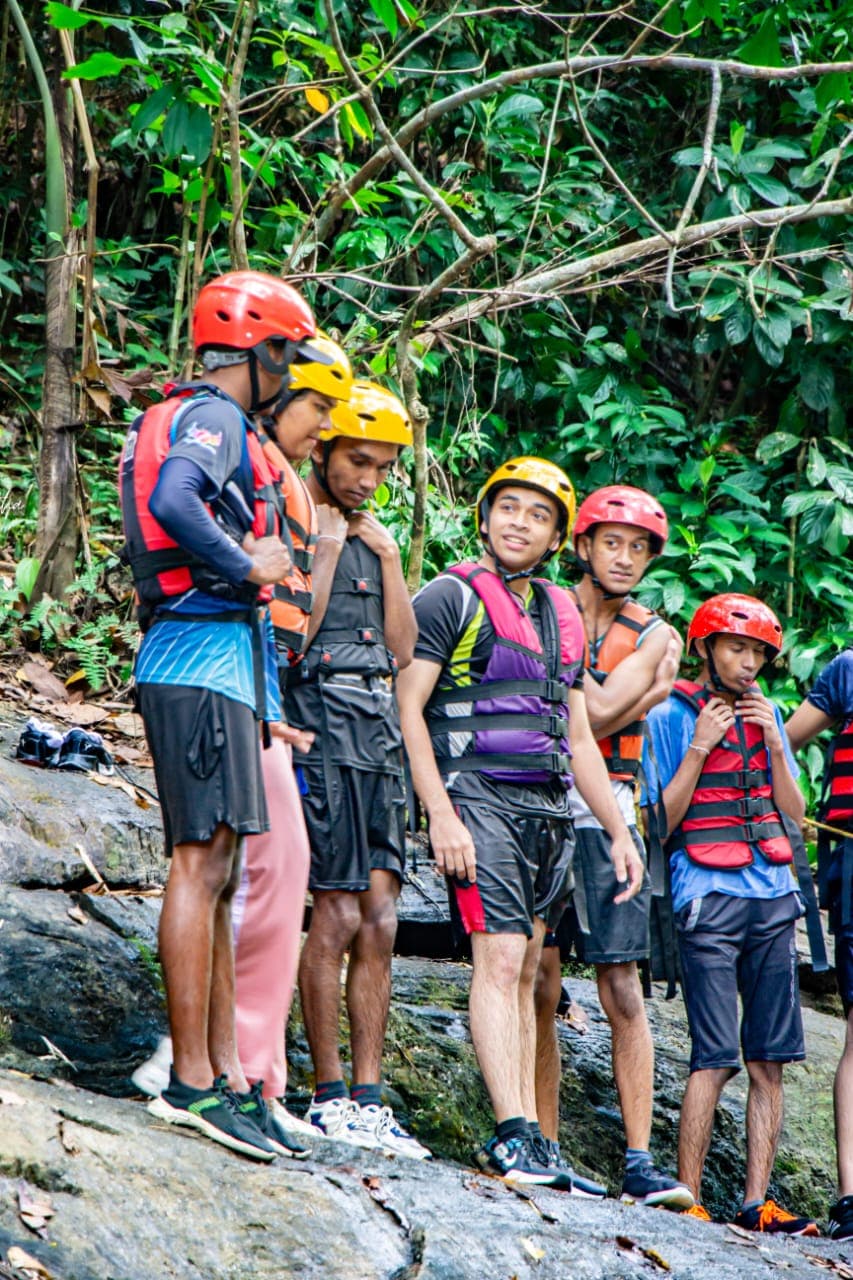
Students arrive in clothes and shoes that can get wet — trainers or sports shoes with a strap or laces, never sandals. A full change of dry clothes, a towel and a plastic bag for wet kit covers what most students need. We provide helmets and buoyancy aids for every activity that requires them.
Kit-up is also where the supervision structure begins. Every student is fitted with a helmet and a buoyancy aid, and given a number that stays with them all day. A headcount becomes a fast roll call against a list, not a scan of thirty students in identical gear. Send sunscreen, a hat and a refillable water bottle even on an overcast day — Kitulgala's rainforest humidity means students dehydrate faster than they expect.
Phones, watches and anything that should not get wet go into secure dry storage at base for the day — not a pocket a student promises to keep zipped.
Running a large group
A single class of thirty can run one activity at a time, in order. A year group of ninety cannot — everyone would spend most of the day waiting. Above roughly forty students, we split into two waves. Different activities in parallel, swapped after lunch. Here is what that looks like for a mixed 13-15 year group of about ninety.
The year group splits roughly in half at arrival, based on the age and ability mix in each form — not a line down the register. Each wave gets its own guides and pods for the morning.
Safety briefing and kit-up happen for the whole year group at once, before the waves separate. Every student hears the same instructions. Every helmet is numbered before anyone moves.
Wave A moves to water-based activities: rafting for 14-plus students, canyoning and rock slides for the rest. Wave B is on the rainforest trek, birdwatching walk and team-challenge tasks at base.
Both waves come together for buffet lunch and a full headcount. Guides give each wave a two-minute briefing before anyone moves — the afternoon is the opposite of the morning.
The waves swap. Every student gets both the water-based and the land-based programme across the day. Nobody's afternoon is a smaller version of someone else's morning.
Both waves finish within the same window. The whole year group changes, has tea and gets the group photograph together — not half the group waiting around while the other half is still on the water.
One count against the full year-group list and the numbered helmets, then boarding. The two-wave structure means this is one count for the whole group, not two separate departures.
Multi-day, no overnight
A single day can start something without finishing it. Students get over the first-time nerves. The year group mixes properly for the first time. Then the coach leaves. For an activity week, a year-group integration exercise, or a leadership cohort past the polite stage, one day is a beginning, not a programme.
The conventional answer is a residential camp. We do not run one. We have no residential base, and we will not build a school product around an overnight duty of care we are not set up to carry. What we run instead is consecutive day programmes — the same full day, repeated across two or three dates, with a deliberate progression between them and every student sleeping at home.
The progression has to be designed. Left alone, it does not happen by itself. Three identical days is not a programme — it is the same trip three times, and students notice by the second one. So we plan what each day is for before quoting: which activities are held back for day two, which students get re-mixed into different pods, what the third day is meant to consolidate. Tell us how many days you are considering, and what the year group needs by the end, and we map it before anyone commits to dates.
One tradeoff, stated plainly: each day repeats the journey — two to two and a half hours each way, twice or three times. In exchange, you never once need an overnight approval, a rooming list, a night-duty rota or a parental consent form for a stay. For most Colombo schools, that trade is worth making. For a school that needs a residential experience, it is not — and we would rather say so than sell you a shape that does not fit.
Programme shapes
Every shape below runs as day trips with students home each evening. The difference is what the programme can achieve, not where anyone sleeps.
| Shape | What it achieves | Best for | What to plan for |
|---|---|---|---|
| Single day | A shared experience, a genuine confidence moment, and a class that talks to each other differently on Monday. | End-of-term rewards, first-time groups, a single class or form, a year group testing the water before committing to more. | One set of consents and one coach booking. The simplest trip to get approved. |
| Two days | Day one removes the nerves and builds the crews. Day two goes where day one could not — harder water, the full canyon route, or a group task that only works once students are comfortable together. | Year-group integration, activity weeks, sports squads, prefect cohorts that need more than an introduction. | Deciding which activities are deliberately held back for day two, and whether pods stay fixed or are re-mixed. |
| Three days | A full arc: build, stretch, consolidate. Enough contact time for staff to see real change in individual students, not just infer it. | Leadership programmes, large year groups covered in waves, schools using the days as a term-long thread rather than a one-off. | Spacing across the term, budget phasing, and keeping the same lead guide across all three days for continuity. |
| Waves for a large cohort | The same programme for a year group bigger than a single day allows — no diluted supervision, no split experiences. | Year groups over 100 students where every student should get the identical programme. | Which students travel on which day, and keeping friendship groups and support needs together across the split. |
A single day is capped at 100 students so pod sizes, guide ratios and headcount discipline stay right. Larger cohorts are covered by adding days, never by stretching one.
Not filler
On our programmes it is the centrepiece of the 8-12 age band, not a side note. Kitulgala is wet-zone rainforest with genuinely serious birdlife — the forest that gave the area its reputation among birders, not a patch of scrub dressed up for a school photo.
The trek is guided by someone who can identify what the group is looking at, and explain why it is there. Canopy layers. Why a bird favours a particular height. What the calls actually mean. How the valley's microclimate supports species that do not turn up ten kilometres away. For a Colombo-based class studying ecosystems, food webs or conservation, this is a direct, physical encounter with the syllabus — not an abstraction on a whiteboard.
It also does real work on a mixed-ability day. The rainforest and birdwatching block, with the team-challenge tasks at base, is where younger students and anyone not doing water activities spend their time — not sitting on a bench watching. A student who has opted out of rafting, or whose parents asked that they not go in the water, still gets a full, structured, guided programme. Not a consolation activity.
Nobody sits it out
Every year group has a spread of ability, confidence and — in a mixed-age cohort — actual age. The programme runs parallel tracks through the same day, not a single track some students are quietly excused from.
Structured problem-solving and cooperation tasks run at base — for younger students between water activities, and for anyone sitting out a specific activity. A real, guided programme, not a holding pen.
Where a class or form has a genuine age spread either side of 14, we split by actual date of birth for the rafting decision, not by year group. No student is included or excluded on a technicality.
Students not going in the water — medical, parental or personal reasons — get the rainforest, birdwatching and team-challenge programme. Run to the same standard as everyone else's day, not a reduced version.
Nervous students are not required to commit to a full run before they have felt the water. Shallow supervised sessions and a guide's judgement on the day both feed into how far a student goes.
Both tracks run at the same location and the same time. A student on the land programme can watch and be cheered on by the water group, and vice versa. Nobody is sent somewhere out of sight.
Every pod, on either track, has a named guide for the day. That guide knows the students in their pod by name and number, not just by headcount.
The day in photographs
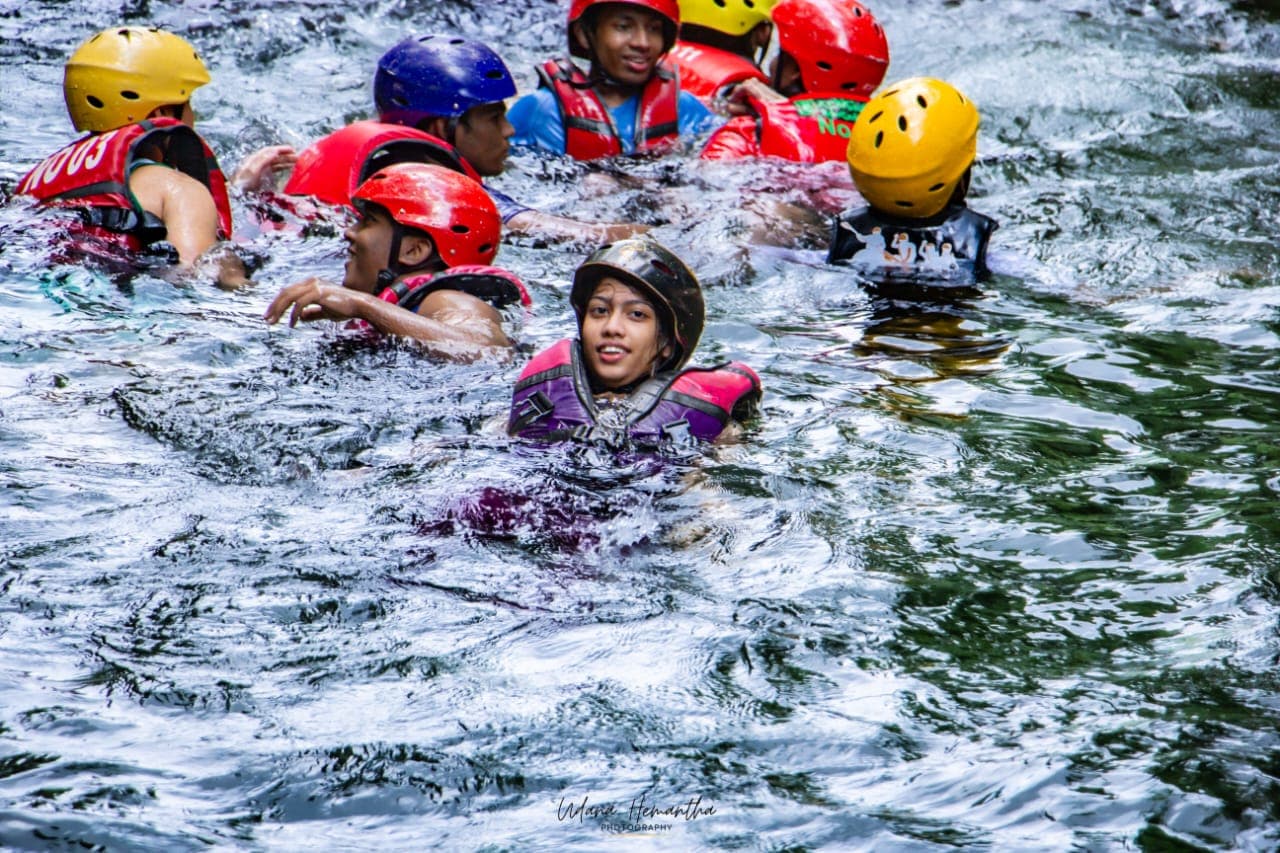
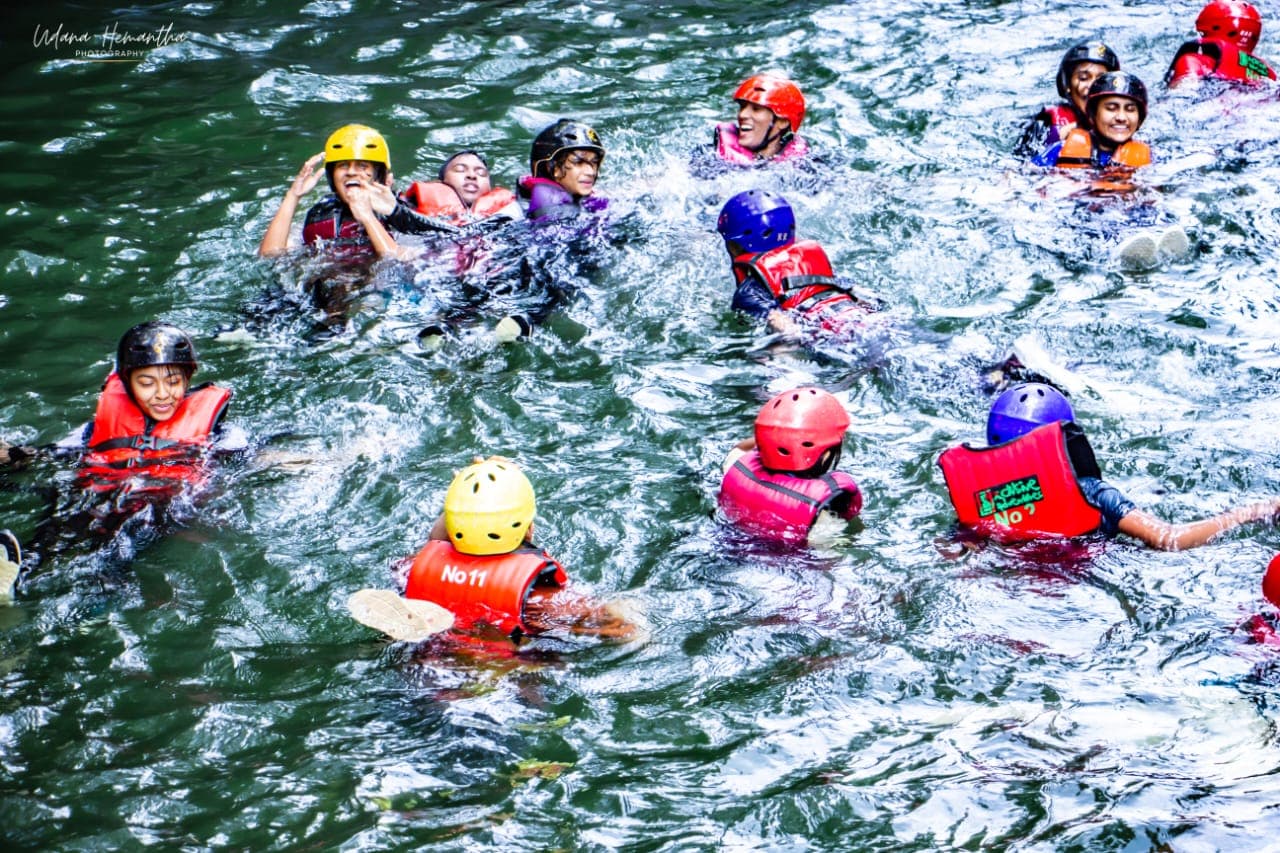
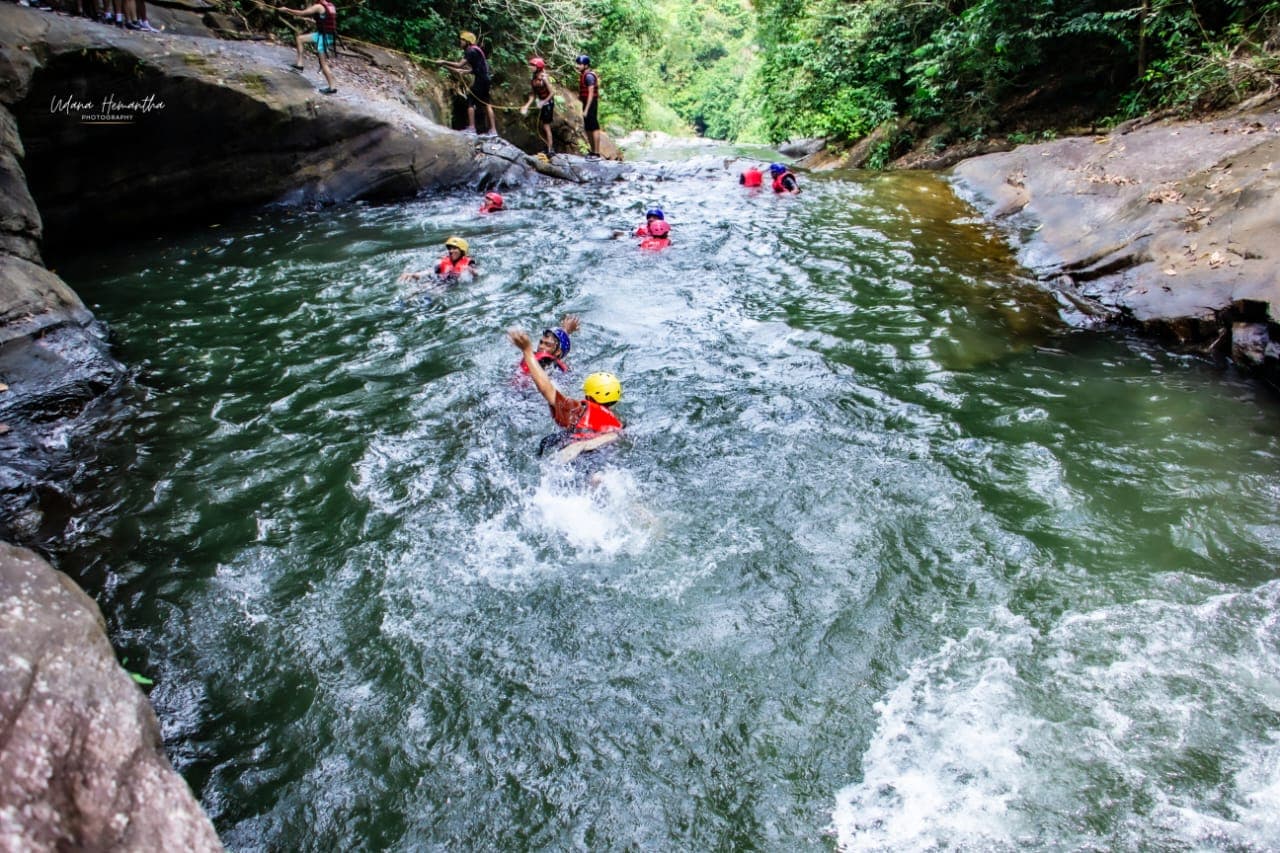
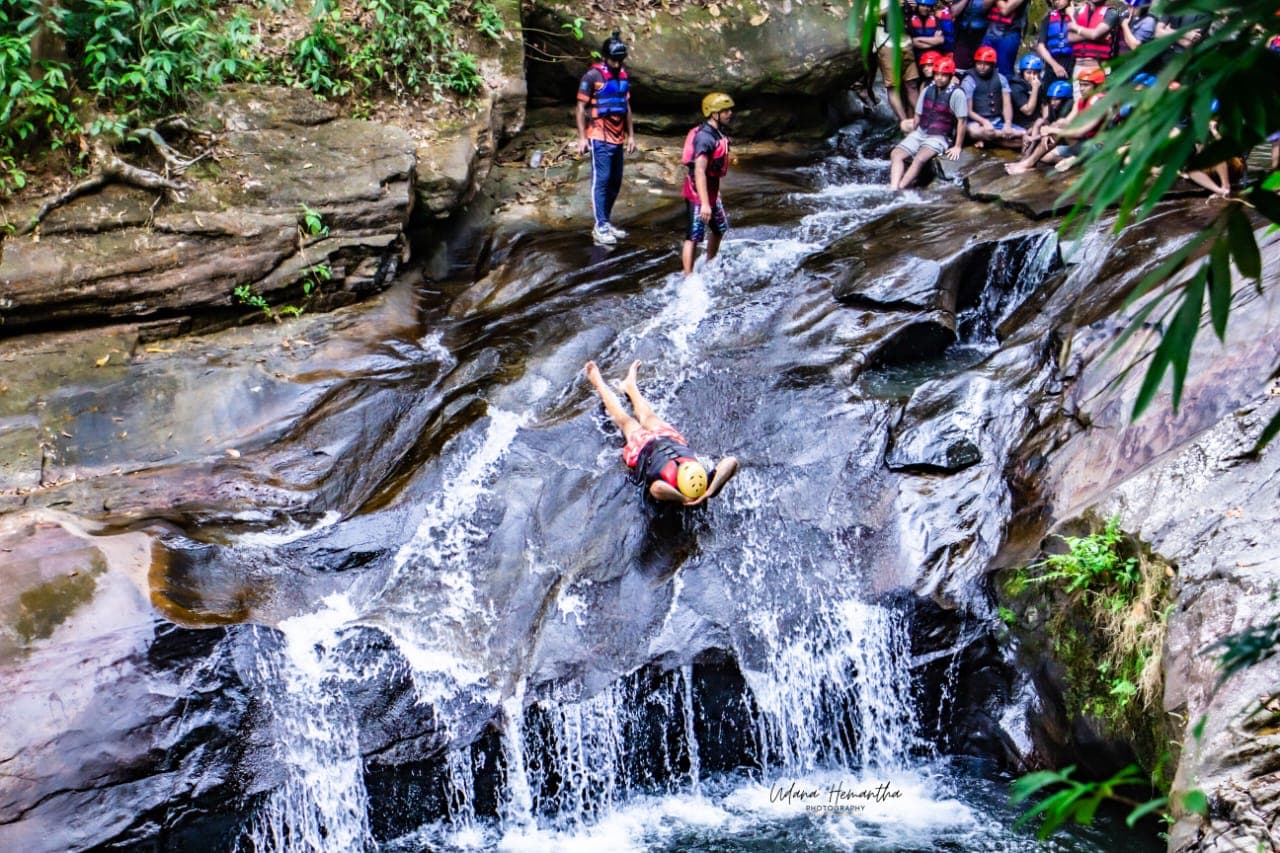
Photographs from actual Xclusive Adventures school days. Numbered helmets, fixed pods and a guide with every group, visible throughout. This is the supervision system this page describes — not a staged version of it.
How the day connects back to school
An adventure day works best when it is not a one-off. Here is how schools we work with connect the day to form time, co-curricular hours and the house or prefect system afterwards.
None of this needs extra planning from you. A well-run adventure day naturally produces it — we make sure the photos, structure and debrief material are there for you to use afterwards.
What teachers tell us
We do not run structured feedback surveys. The same handful of observations come back from teachers, term after term, unprompted. The most common: a class's usual social order visibly reshuffles for a day. The students who organise everything in the classroom are not always the ones who keep a raft calm. The ones who rarely speak up are, more often than you would guess, the ones a pod ends up listening to.
The second is a specific kind of confidence — not performed, but earned from doing something that looked genuinely difficult from the riverbank. Teachers describe it showing up weeks later: a student who puts a hand up more often, or volunteers for something they would previously have avoided. We cannot manufacture that outcome. What we can do is put students somewhere it has room to happen.
The third is practical: teachers say the day works as a diagnostic. Who took charge without being asked. Who supported a nervous classmate without prompting. Who struggled, and how they handled it. All of it is visible in a way a normal school day rarely surfaces. Several schools use what they noticed on the day when choosing prefects or form captains the following term.
“The best as usual in organizing the whole trip and taking care of each detail. We all enjoyed it.”
Xclusive Adventures holds 4.8 on TripAdvisor and 4.9 on Google — check us independently before you propose a date to your senior leadership team.
Plan the rest of the trip
The standard programme is above. Here is what comes up once you start planning the detail.
For your approval file
Our full position on minimum ages, non-swimmers, supervision ratios, headcount procedure and what we confirm in writing before you commit to a date.
Read the safety detailSenior students
A different day format for prefect boards and head-student teams, built around rotating leadership rather than a standard age-banded programme.
See leadership campsActivity detail
The grade 2-3 Kelani River run in full — what it involves, how it is guided, and why it suits the 14-plus programme.
About the rafting runActivity detail
More on the guided rainforest trek and birdwatching walk that anchors the 8-12 programme and runs alongside every age band.
About the rainforest trekBack to the overview
The full picture of how school programmes at Kitulgala work, including group size, timing and what we handle for you.
Back to school tripsSend the year group, the rough headcount and the age range in the room. Within one working day, you get an age-banded running order, an indicative per-student rate, and straight answers on any ages question your approval process raises.
Request an adventure day quoteQuestions & answers
Yes, as consecutive day trips, not a residential. Two or three full days run across a week, or spread across a term, with students home every evening and a designed progression — day one builds the crews, day two goes deeper, day three consolidates. You get the contact time of an activity week, with none of the overnight approval, rooming or night-duty burden. Tell us how many days you are weighing up, and what the year group needs by the end, and we map the progression before quoting.
Not if it is planned properly — and that planning does not happen by itself. Three identical days is the same trip repeated, and students notice by the second one. Before quoting, we decide which activities are held back for later days, whether pods stay fixed or students get re-mixed, and what each day is actually for. Expect us to ask what your year group should be able to do by the end of day three.
It depends on the age band. For 8-12: rainforest trekking with guided birdwatching, zip lining, supervised shallow-water sessions and team-challenge tasks at base. For 13-15: everything above, plus canyoning and rafting for students who have turned 14. For 16-19: the full programme — rafting, canyoning, waterfall abseiling, zip lining and rainforest trekking, combined to fill the day. Every version runs as a genuine full day, not a shortened taster.
Each band is built from activities that genuinely suit that age, not the same day with parts removed. The 8-12 programme is entirely land- and shallow-water-based. The 13-15 programme adds canyoning and rafting for students already 14. The 16-19 programme includes everything — the full grade 2-3 river run and waterfall abseiling too. All three run in parallel on a mixed-age day, so nobody is excluded.
Yes. SLTDA guidance sets 14 as the minimum age for white-water rafting, and we hold to it. Students under 14 are not left out of the trip. Their day is built from rainforest trekking, birdwatching, zip lining, supervised shallow-water sessions and team challenges — a full, properly guided programme, not a scaled-down version of the older students' day.
Above roughly forty students, we split the year group into two waves at arrival. One wave runs the water-based activities, the other runs the rainforest and base programme, then they swap after a shared lunch and headcount. Every student gets both halves of the day. Nobody spends the whole day waiting for a turn on one activity.
No — it is a guided, taught part of the programme, and the centrepiece of the 8-12 day. Kitulgala is wet-zone rainforest with serious birdlife, and the trek is led by someone who explains what the group is seeing and hearing. For classes studying ecosystems or conservation, it is a direct, physical reference point. It is also where students not doing water activities that day spend a full, structured session.
Clothes and shoes that can get properly wet — trainers rather than sandals — plus a full dry change, a towel, sunscreen, a hat and a refillable water bottle. We provide and fit helmets and buoyancy aids at kit-up, where every student is also given a number that stays with them for headcounts all day. Phones and valuables go into secure dry storage at base.
Yes, and it is common. We split by each student's actual age on the day, not by year group or form. A mixed cohort either side of 14 gets the correct programme individually — the whole group is never capped to the youngest student's age band. Tell us the age spread when you enquire, and we plan the pods and rotation around it.
Well, in practice. A full guided day covers a genuine block of experiential or co-curricular hours, not a token half-day. The team-challenge tasks translate easily into house or form point systems, if your school runs one. Photos and video supplied afterwards work well for a form-time debrief. None of this needs extra planning on your side.
They move to the parallel land-based track for that block — rainforest, birdwatching or team challenges at base, run to the same guided standard as the water activities. Not a consolation option. Nobody is pressured to continue once they have said they want to stop. There is always a comfortable place to wait with staff nearby.
A single class can usually be booked at three to four weeks' notice. A full year group, or any specific date in the busy January-to-March window, is better given six to eight weeks — enough to confirm the two-wave rotation, guide numbers and catering with confidence. Earlier is always easier, but we will tell you plainly if a shorter timeframe works.
School group desk
Tell us the year group, the age range in the room and the rough headcount. Within one working day, you get a running order built for that mix, an indicative per-student rate, and straight answers on ages and supervision.
Prefer to talk it through first? Call +94714646865 or email info@xclusiveadventures.com.
More in this hub
School trips and student adventure days at Kitulgala, two hours from Colombo. Single-day, no overnight, age-banded programmes for groups of up to 100 students.
Prefect camps and student leadership days at Kitulgala. Rotating command on the river surfaces real leadership behaviour, with a usable debrief for staff afterwards.
How a Kitulgala adventure day supports the Duke of Edinburgh's International Award and CAS in Sri Lanka, and where your school's Award Leader stays in charge.
Adventure days at Kitulgala for university batches, freshers' groups, sports clubs, scouts and alumni. Self-organising groups aged 16+ get full activity access.
Our full safety, minimum-age and supervision policy for school groups at Kitulgala: rafting age limits, non-swimmers, chaperone ratios, headcounts and paperwork.
Keep reading
The full overview of how school programmes at Kitulgala work, group size, timing and what we handle.
Minimum ages, non-swimmers, supervision ratios, headcounts and what we confirm in writing.
The grade 2-3 Kelani River run that anchors the 13-15 and 16-19 programmes.
Analytics and retargeting choice
We use analytics and Meta Pixel only if you accept, so we can understand which Sri Lanka planning pages and campaigns lead to useful enquiries. Essential enquiry and booking forms work either way. Read the privacy policy and cookie policy.