
Loud is not the same as leading
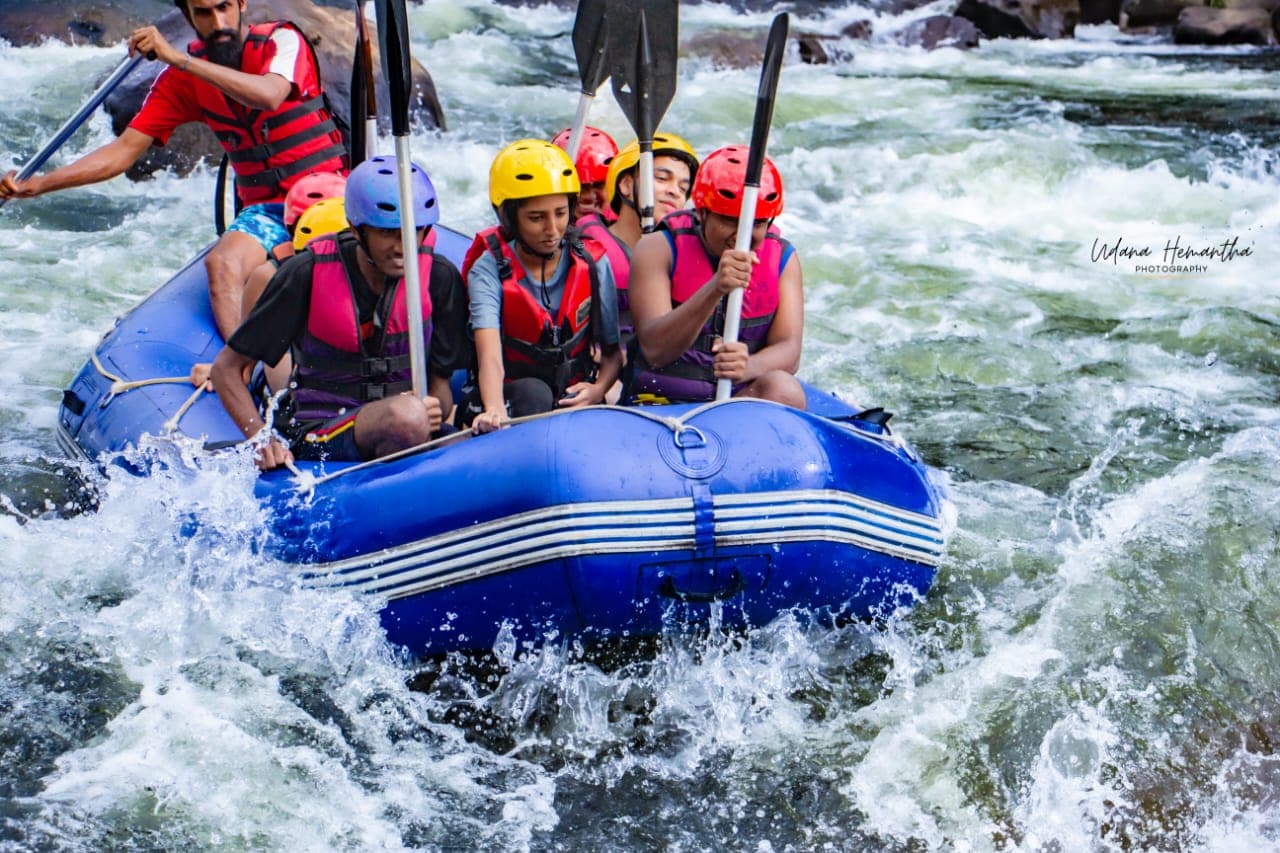
The loudest student in the raft is not always the one the crew follows. That gap shows up fast — often in the first rapid.
School trips · Sri Lanka
A single day built around one leadership outcome — a new prefect board, a head-student team, a sports captaincy group. Not a classroom exercise. The raft decides who is actually leading.
Groups of up to 100 people · Kitulgala, two hours from Colombo · quote within one working day
The prefect camp is a Sri Lankan school tradition. National and international schools both run one. Most schools hold it before prefects are formally invested. Some fold it straight into interviews and final selection. Colombo's leading international schools run their own version — leadership weeks, experiential weeks, outbound days. The idea is always the same. Put senior students somewhere a classroom cannot follow. Watch who actually leads.
Not the standard adventure day with a leadership label stuck on. The activities, the pod sizes, the pacing and — above all — the debrief are built around one outcome, set in advance. A newly selected prefect board that does not yet work as a board. A head-student team that has not decided how it makes decisions. A sports captaincy group needing one day of pressure before the season starts.
Still deciding which format fits your group? Read this alongside our standard adventure day programme. The short version: a leadership day trades some activity variety for smaller pods, deliberate role rotation and far more debrief.
Why the river, not the classroom
A boardroom exercise — a tower of spaghetti, a case study, a debate — shows who is confident speaking in a safe, familiar room. It rarely shows who holds a group together when something goes wrong. Nothing genuinely goes wrong in a classroom.
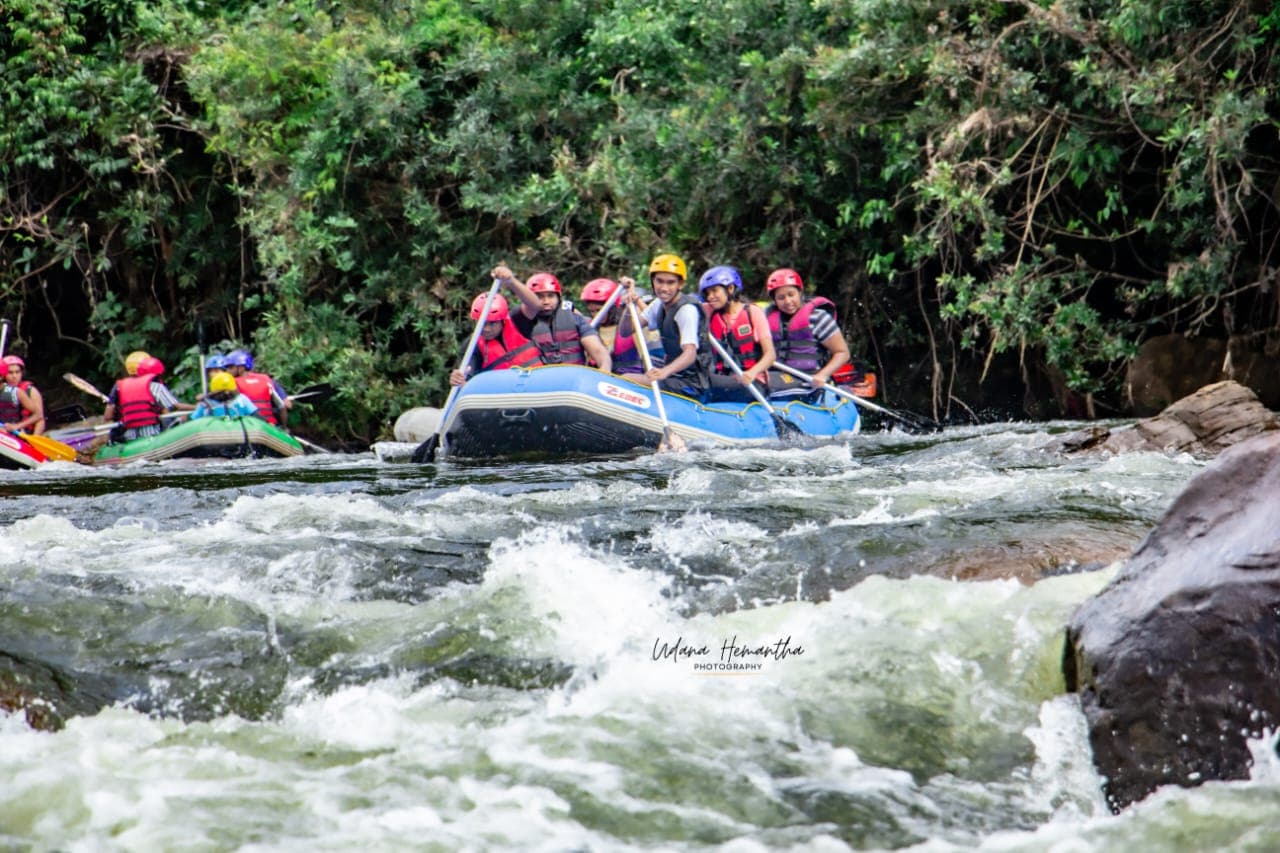
A raft in a grade 2-3 rapid is different. Real water. A real current. A guide's instruction that has to be followed at the right moment. A crew that works together, or does not. Nobody can fake handling it well — the raft's line through the rapid is the evidence. That is what makes a leadership camp at Kitulgala genuinely useful. It is not another team-building afternoon with better scenery.
We do not sell this as an upgrade on the standard school day. It is a different tool for a different job. Want a full, varied adventure day for a year group? Our standard programme is the right one. Want one day that tells you something true about how a specific group of senior students leads? This is built for that.
The core mechanic
The single most useful thing we do is rotate who calls the raft. Over the morning, every student in a crew takes a turn giving the instructions — read the water, call the paddle strokes, decide the line through a rapid. Everyone else has to actually follow, including the student who was calling it five minutes earlier.
This does two things a standard exercise rarely manages. It forces students who are used to being followed to feel what following an imperfect instruction is like. And it puts a naturally quiet student in the calling seat with no option to defer. The raft still has to get through the rapid. Someone has to say what happens next.
Guides are briefed in advance on what to watch for. They feed it back to the group, and to accompanying staff, without singling anyone out in front of their peers. That feedback happens in the debrief. It is framed around what worked in the crew, never as a public verdict on one student.
What the day actually surfaces
These are the patterns our guides see again and again — across prefect camps, head-student days and captaincy groups. None of them need a clipboard or a scoring rubric. They are simply visible, if someone is watching.
The loudest student in the raft is not always the one the crew follows. That gap shows up fast — often in the first rapid.
Somebody in almost every pod quietly looks after a nervous crewmate, unasked. That instinct is exactly what a prefect board needs. Interviews rarely test for it.
Every crew gets at least one instruction wrong. What happens next is what matters — blame, freeze, or correct and move on. That response is one of the clearest signals of the day.
In mixed groups, a non-prefect often leads more naturally than someone already selected. Know that before finalising a board's roles.
Command rotates to someone unexpected. How willingly the crew follows says a lot about how that group will function once the camp ends.
By the afternoon, tired and wet, some students keep encouraging their crew. Others go quiet. That is closer to a real prefect term than the morning's energy ever is.
A different day
This is not the standard school day rearranged. Pods are smaller. Roles rotate deliberately instead of staying fixed. A genuine debrief block replaces some of the activity variety a standard day would include.
On the coach, staff confirm the outcome for the day with us — a new board's first day together, a head-student team's decision-making, a captaincy group before the season. Everything that follows is built around it.
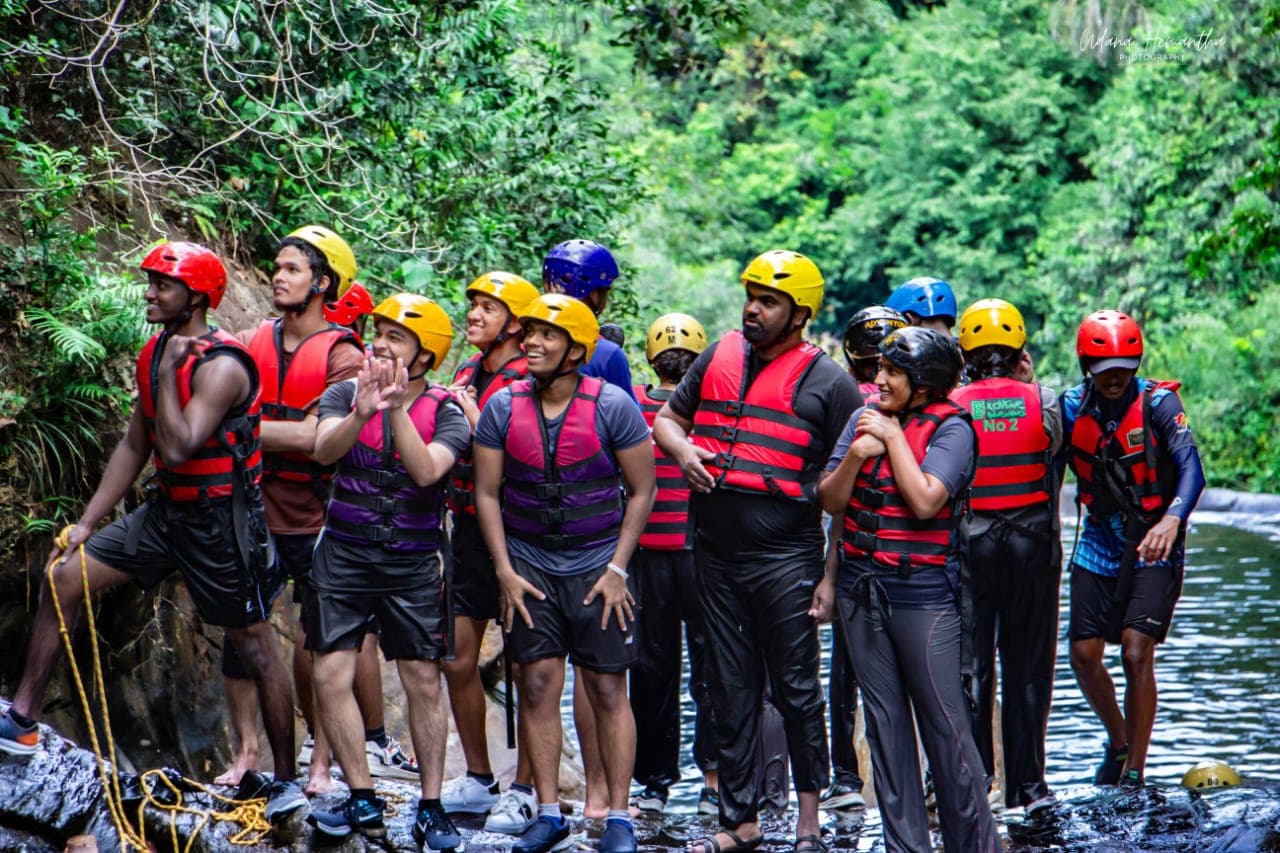
Pods form at six to ten students. They are deliberately mixed, not left as existing friendship groups. That way the day tests how students work with people they do not automatically defer to.
Students are told plainly that command will rotate through the pod. Everyone leads and everyone follows during the morning. Numbered helmets are assigned and headcounts begin.
The core exercise: every student takes a turn calling the raft while guides observe. This is the longest block of the day, deliberately so.
Buffet lunch. Guides share early, low-key observations with accompanying staff — not the formal debrief yet, but enough for staff to start noticing patterns through the afternoon.
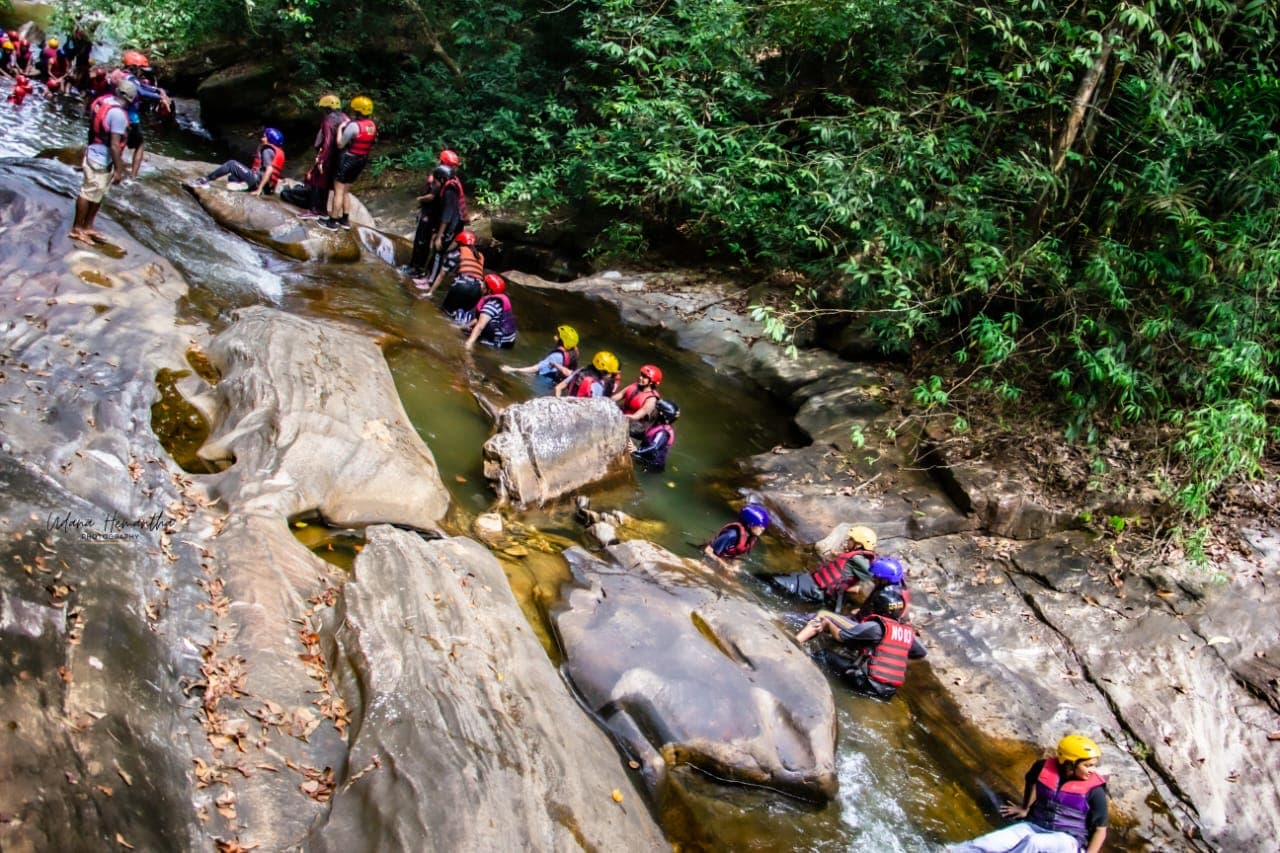
A second activity, usually canyoning, puts the same crews under a different kind of pressure. It is a second chance to see whether the morning's patterns hold or change.
Pods sit with their guide and, where the school wants it, a staff facilitator. Guides share what they observed, framed around the group rather than individual rankings. Students discuss what they noticed in themselves and each other.
Final headcount and departure. Staff get a short verbal handover on anything worth following up back at school — not a formal report, but enough to carry the debrief forward.
Building the day around your outcome
A newly selected board that does not know each other well needs a day focused on forming working relationships fast. Smaller mixed pods. More rotation. A debrief that concentrates on how the group communicates under pressure, not on individual performance.
A head-student team that already knows each other, but has not worked out how it makes decisions, needs something different. Fewer, longer rotations, so the same small group negotiates several decisions in a row. A debrief that pushes directly on how they disagreed and how they resolved it.
A sports captaincy group ahead of a season is different again. The day can run closer to the standard adventure format, with leadership framing layered on top. The outcome here is less about forming a new team. It is about testing composure and communication under fatigue — closer to what a match actually demands.
Tell us which of these — or what mix of them — your day needs to achieve. We build the pod sizes, rotation pattern and debrief questions around it before the day. Nothing is improvised on it.
Real leadership days
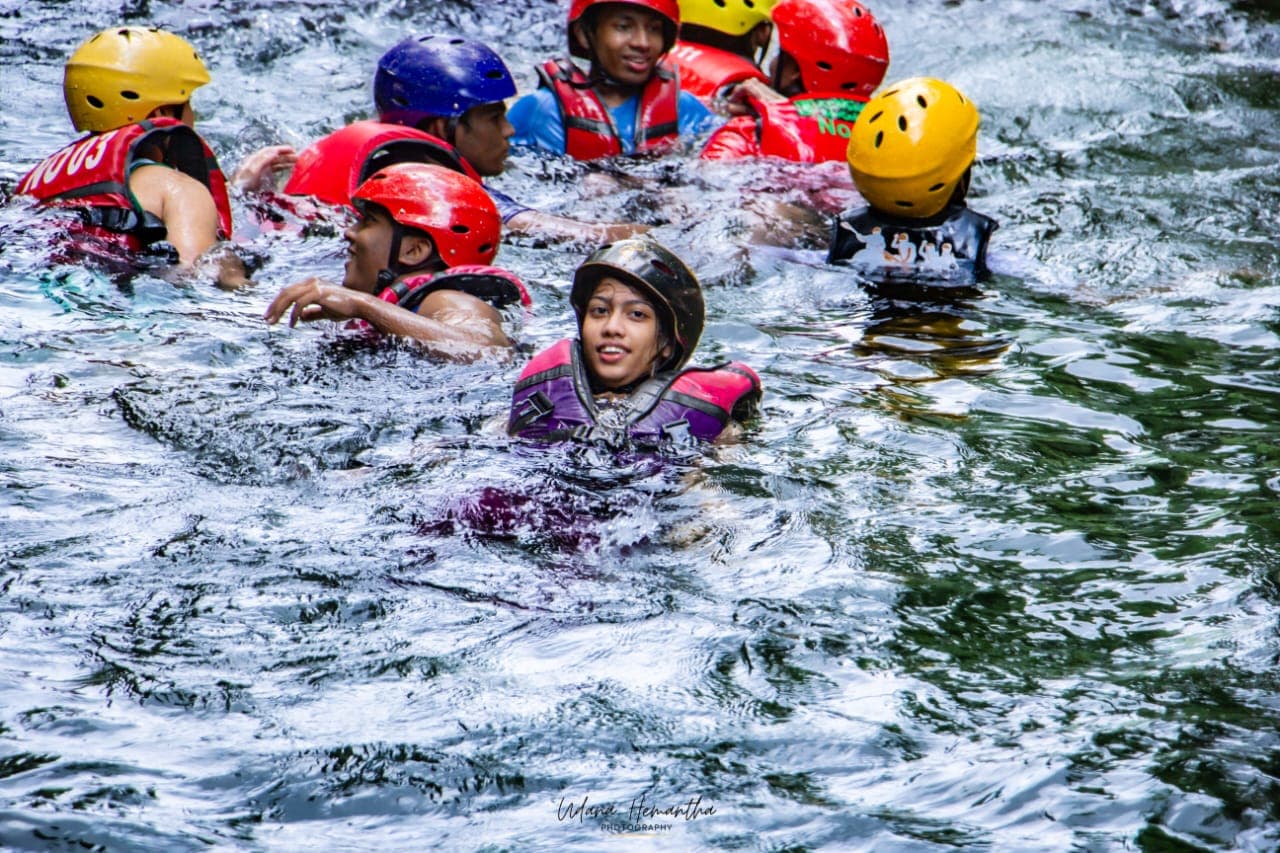
Photographs from actual student leadership days. Smaller pods and closer guide supervision than a standard school day are visible throughout.
After the coach leaves
The formal debrief happens at Kitulgala. But the most useful conversations often happen days later, once students have had time to think. This is what we hand back to make that follow-up conversation easier to run.
We do not produce a written psychometric report or a ranked scorecard. No single day earns one. What we hand back is observation, not assessment.
A leadership camp is genuinely useful — we would not run the format otherwise. It will not resolve a board's dynamics on its own, and nobody honest will tell you it does. What it reliably gives you is a shared, honest starting point, and staff real material to work with over the term that follows. It sits alongside your existing investiture, selection and mentoring process. It does not replace it.
When one day is not enough
The prefect camp has traditionally meant a residential — a night or two away, often tied to selection or investiture. We do not run residential programmes. We are not going to improvise one for a group of teenagers. There is no residential base here. An overnight brings night supervision, rooming and duty-of-care obligations we are not set up to carry for a school.
What we run instead is consecutive days — two or three separate day programmes, students home each evening, built to escalate. That suits leadership work better than a single compressed residential. On day one, a new board is still performing for each other. The roles are still the ones they were given. By day two the performance has worn off. That is precisely when the useful observations start — who steps up when the group is tired, who quietly holds a pod together, who has been leading all along without the badge.
It also gives your staff something a single day cannot: a gap in between. The debrief after day one is not the end of the exercise. It is the brief for day two. Students go back to school and sit with what happened. They arrive the second time with something to prove, or something to change. Staff who have run this format tell us the second day is where they actually decide things about individual students.
If your camp is tied to selection or investiture timing, tell us the fixed date. We will work the days backwards from it.
“Excellent day out that cannot be missed if you're in Sri Lanka. The scenery is out of this world and the company is professional.”
Xclusive Adventures holds 4.8 on TripAdvisor and 4.9 on Google. Check us independently before you propose a leadership camp to your senior leadership team.
Related pages
A leadership day still needs the same logistics as any school trip. These cover the detail.
Standard format
Want a full, varied adventure day instead of a leadership focus? This is the standard age-banded programme.
See standard day programmesFor your approval file
Minimum ages, supervision ratios, headcount procedure and what we confirm in writing before you commit to a date.
Read the safety detailActivity detail
More on the gorge and waterfall route used in the afternoon block of a leadership day.
About canyoningActivity detail
The grade 2-3 Kelani River run that carries the rotating-command exercise at the centre of the morning block.
About the rafting runBack to the overview
The full picture of how school programmes at Kitulgala work, including group size, timing and what we handle for you.
Back to school tripsNew prefect board, head-student team, sports captains before the season — tell us which. Add the headcount and the date you are aiming at. We come back within one working day with a pod structure, a rotation plan and an indicative rate.
Request a leadership camp quoteQuestions & answers
A prefect camp is a day, or a block of days, schools run for newly selected or about-to-be-selected prefects — usually before formal investiture. It is a well-established tradition in Sri Lankan schools. Ours runs as an adventure day built around whatever outcome the school needs: forming a new board, testing candidates before final selection, or preparing a head-student team to work together. It can extend across two or three consecutive days where a cohort needs longer.
No. We do not run residential programmes and we have no residential base. An overnight prefect camp is not something we offer. For cohorts that need more than a day, we run consecutive day programmes instead — two or three separate days, students home each evening. For leadership work, that structure often works better than a residential anyway. The gap between days is where students sit with what happened, then come back having decided to do something differently.
Because day one is largely performance. A newly formed board is still being the version of itself it thinks it should be. The roles are still the ones the school assigned. By day two, that has worn off. Staff start seeing who actually steps up when the group is tired, who holds a pod together quietly, and who has been leading without the badge. The debrief after day one becomes the brief for day two — a far more useful tool than one closing conversation.
Pods are smaller — six to ten students, rather than a standard pod. Roles are deliberately rotated, so every student takes a turn giving instructions and following someone else's. The afternoon includes a formal debrief block, which a standard adventure day does not. The trade-off is less activity variety for a day built specifically around leadership behaviour.
Yes. Tell us the outcome when you enquire, and we design the pod sizes, rotation pattern and debrief questions around it. A newly formed board that does not know each other gets a day focused on fast relationship-building. A head-student team gets longer rotations testing shared decision-making. A captaincy group gets a day closer to the standard format, with leadership framing added.
Pods sit with their guide, and a staff facilitator if the school wants one, after the afternoon activity block. Guides share what they observed through the day, framed around the pod as a group, not a ranking of individuals. Students discuss what they noticed in themselves and each other. Staff also get a short verbal handover on anything worth following up back at school.
Command of the raft rotates through every student in the pod on a set schedule, not by volunteering. That removes the option for a naturally confident student to take every turn. It puts quieter students in the calling seat with no way to defer — the crew still needs an instruction to get through the rapid.
No, and we would not claim it is. One day gives the group and your staff a shared, honest starting point, and real material to build on through the term. It does not finish the job of developing a prefect board on its own. It works best alongside your existing investiture, selection and mentoring process — not as a substitute for it.
Yes. The format works for any senior student leadership group — sports captains, head-student teams, student council, house captains. Tell us which when you enquire. The day is tuned differently depending on whether the group already knows each other well, or is forming for the first time.
In practice, this is almost always a 16-19 programme. It typically involves the full river rafting activity, which carries a Sri Lanka Tourism Development Authority minimum age of 14. It works best with older, more experienced students. Younger student-council or house-captain groups can run a version built from canyoning, rainforest and team-challenge activities instead — ask us when you enquire.
It sits alongside it, at whatever point suits your school's calendar. Some schools run it before final selection, as part of assessing candidates. Others run it after investiture, as a bonding day for the board just announced. Tell us where in your process the day falls, and we will frame the debrief questions accordingly.
Yes — that is exactly what we hand back for. You get a verbal handover on the day, photos and video afterwards, and a simple set of framing questions staff can reuse in a follow-up form-time or house meeting. We do not produce a written scorecard or ranked assessment. What we give you is honest observation to build a conversation from.
School group desk
Tell us the outcome your day needs to achieve — new prefect board, head-student team, captaincy group — plus the headcount and date. We come back within one working day with a pod structure, a rotation plan and an indicative rate.
Prefer to talk it through first? Call +94714646865 or email info@xclusiveadventures.com.
More in this hub
School trips and student adventure days at Kitulgala, two hours from Colombo. Single-day, no overnight, age-banded programmes for groups of up to 100 students.
The core single-day school adventure programme at Kitulgala: age-banded activities for ages 8 to 19, real rotations for large groups, and the full running order.
How a Kitulgala adventure day supports the Duke of Edinburgh's International Award and CAS in Sri Lanka, and where your school's Award Leader stays in charge.
Adventure days at Kitulgala for university batches, freshers' groups, sports clubs, scouts and alumni. Self-organising groups aged 16+ get full activity access.
Our full safety, minimum-age and supervision policy for school groups at Kitulgala: rafting age limits, non-swimmers, chaperone ratios, headcounts and paperwork.
Keep reading
The full overview of how school programmes at Kitulgala work, group size, timing and what we handle.
The standard age-banded school day, for groups who want a full varied programme rather than a leadership focus.
Minimum ages, non-swimmers, supervision ratios, headcounts and what we confirm in writing.
Analytics and retargeting choice
We use analytics and Meta Pixel only if you accept, so we can understand which Sri Lanka planning pages and campaigns lead to useful enquiries. Essential enquiry and booking forms work either way. Read the privacy policy and cookie policy.