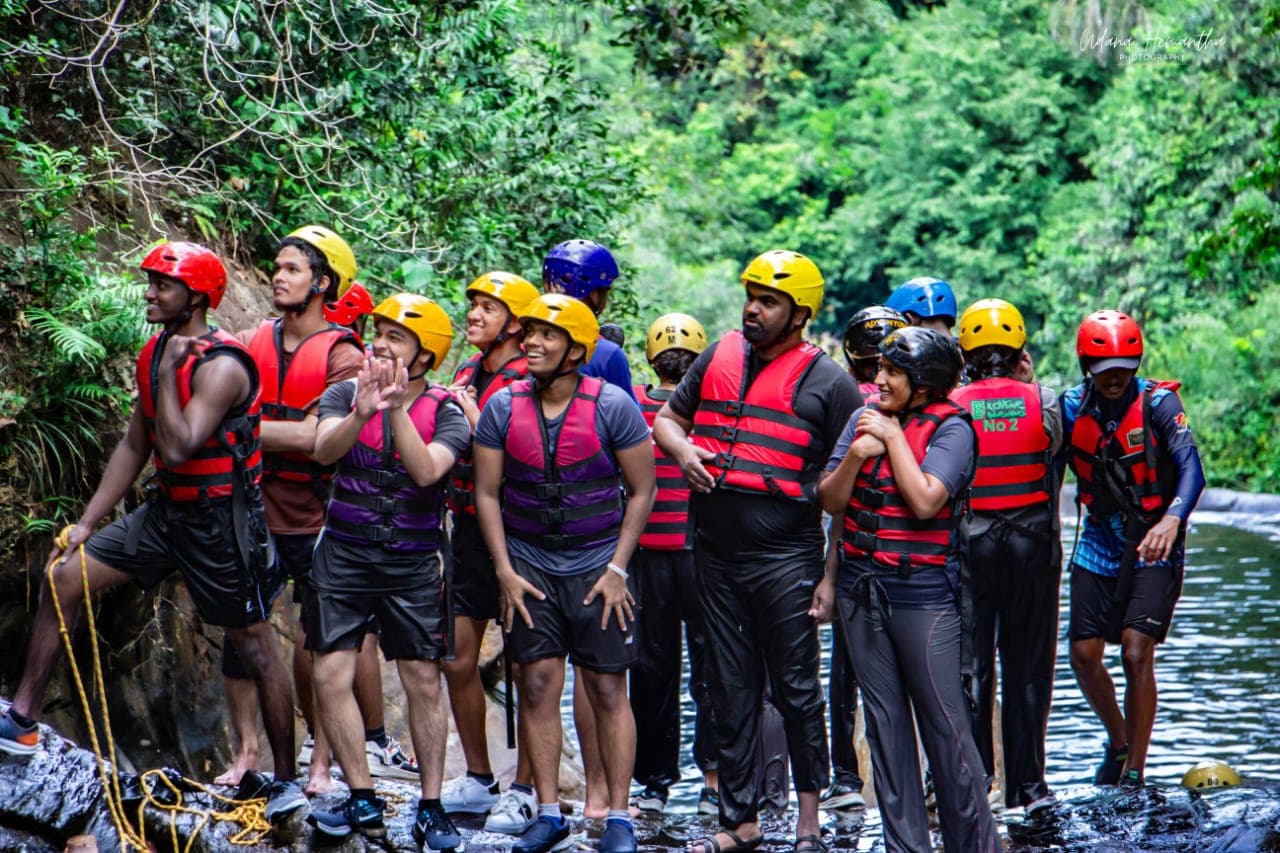
Structured outbound training on the Kelani River and in the Kitulgala rainforest. Activities built around a specific behavioural brief. Run and debriefed by the guide team that designed them, for groups of ten to one hundred.
Groups of up to 100 people · Kitulgala, two hours from Colombo · quote within one working day
Ask ten Sri Lankan HR managers what outbound training means and you get ten confident answers. Ask if it's the same as team building and most say no. OBT is the term Sri Lankan HR and L&D teams reach for most — used more than "team building" in procurement and training calendars. It means something specific: activities chosen for a stated behavioural objective, then a structured debrief that turns the day into something the team can name and use. Take away the debrief and you have a very good day out. Take away the objective and it's just activity. OBT needs both.
We run OBT from our own base at Kitulgala, in the Kelani River valley — two to two and a half hours from Colombo. We are not a training company that hires a venue and briefs a stranger to run the activity. Our river. Our canyon. Our guides. The person who designs your exercise stands on the bank, watches it happen, and runs the debrief afterwards.
A trust issue gets a different exercise to a communication issue. A newly merged team gets a different crew mix to a leadership group deciding who actually calls the shots. Tell us the real brief and we build the day, the debrief and the follow-up around it — including what one day can't fix.
What OBT actually is
Outbound training, defined properly
Outbound training, or OBT, is corporate training run outdoors — on a river, in a canyon, not in a conference room. The activity serves a stated behavioural objective. A structured debrief turns it into something the team can name and carry back to work. Take away the objective and the debrief and what is left is a very good team day out. Book that instead if that is genuinely what you want. It is just not OBT.
Team building and OBT look identical in a photograph. Same river, same helmets, same wet, laughing group at lunch. The real difference sits before and after the activity, not inside it. A team building day exists to give people a shared, good time together — the activity is the point. An OBT day exists to move one specific behaviour. The activity is the method. The debrief afterwards is where the training actually happens.
Vendor copy blurs the two on purpose. "Training" sits more comfortably on a training budget line than "day out" does. We would rather you know exactly what you are buying. Want a brilliant day and nothing more? Good brief — head to the team building activities or staff outings page instead. Got a specific issue and want the day to move it? Keep reading.
OBT vs team building
The distinction that actually matters
Put the two side by side and the real difference sits either side of the activity, not inside it. A rafting session can be either one. What makes it OBT is thirty minutes before it, agreeing exactly which behaviour we are trying to surface. Then thirty minutes after, when a guide who watched it happen sits the group down and asks what actually went on.
That difference changes several decisions. Which activity we choose. How we brief the guide running it. How crews or sub-groups get allocated. What questions get asked afterwards. A team building day optimises for enjoyment and shared memory. An OBT day optimises for one specific, nameable shift. Maybe how the team communicates under pressure. Maybe how fast trust builds in a new structure. Maybe how a newly merged group starts acting like one unit instead of several.
Team building: the experience is the objective. OBT: the experience is the method.
Team building rarely needs a formal debrief. OBT is largely wasted without one.
Team building crews are arranged for fun. OBT crews are arranged to surface the dynamic you told us about.
Both can run on the same river, on the same day, with the same guides — the difference is entirely in the brief.
The method
The experiential learning loop
Every OBT exercise follows the same four-step loop. It has a formal name in adventure-based training literature. Nobody on your team needs to know that. They just need to feel it happen.
Do
The group runs the exercise. A raft that only moves if everyone paddles on the guide's call. A canyon crossing that only works if the group agrees a system for passing bags and people across. A challenge that fails outright if one sub-group hoards information. Nobody is told the lesson in advance. They just have to get through it.
Review
Straight afterwards, while it's still fresh and nobody has polished the story, the guide asks what actually happened. Who ended up making the calls? What broke down? What changed the second time round? This isn't a quiz. It's people describing, out loud, something they just lived through together.
Conclude
The guide — or your own facilitator, if you bring one — pushes the group from description to pattern. Is this how the team generally operates back at the office? Is the person who took charge on the river the same person who takes charge in meetings? Naming the pattern is the actual point. Everything before this step is just raw material.
Apply
This is the step most outdoor training days skip. It's the one that decides whether the day changes anything. What will the team do differently on Monday, because of what got named on the rocks? We ask the group to commit to something specific before they leave the site — while the memory is still vivid, not weeks later in a report nobody reads.
Brief to exercise
From brief to exercise
Tell us what's actually going on in the team. We build the exercise around it. These are the briefs we hear most at the quoting stage.
Your brief
What we run
Why it works
Departments that operate in silos
Mixed raft crews crossing the divide on purpose, then a canyon task that fails unless both sides share what they know
The river kills territorial thinking. You cannot get through a rapid ignoring the people in your own boat
Low trust after a difficult period
Restricted-communication exercises in the canyon, where part of the group relies on instructions they can't check for themselves
Trust rebuilds through small, repeated proof. Not a single speech about trust
Communication under pressure
White-water rafting itself. Instructions have to be short, timed and acted on immediately, or the raft loses the line
The pressure is real, not staged. There's no faking your way through a rapid
Decision-making and who actually leads
Rotating who calls each raft, crew by crew, then debriefing on who the group deferred to and why
Hierarchy drops away. The real leadership pattern becomes visible
A newly merged or fast-hired team that hasn't gelled
Maximum rotation through small mixed groups all day. Pairings change constantly
By the debrief, most of the room has worked alongside most of the room
Not on this list? Describe it when you enquire. That's the normal starting point for every OBT conversation, not a fixed menu.
The debrief
What a real debrief looks like
A debrief that works is short, specific, and run by someone who watched the exercise happen. Not someone reading from a script written before the group arrived. Ours are led by the guide who stood on the bank or in the canyon. They saw who called the line, who went quiet, who took over without being asked, who was still explaining the plan after the group had already moved. That specificity is what makes a debrief land, instead of sounding like generic corporate wellness talk.
The format is usually the same. The group sits together, still wet, straight after the exercise. The guide asks open questions — what happened, what worked, what nearly went wrong — and lets the group answer first. It runs fifteen to twenty-five minutes, depending on group size. It stays conversational. Never a lecture.
Bringing your own L&D facilitator or an external trainer? We build the day around their session plan instead. We supply the activity, the safety framework and our guide's read of what happened. Your facilitator runs the room for the psychological or organisational framing. Both models work well. Tell us at the enquiry stage which one you want, so we brief the right person to lead the room.
Measuring it
How you'll know it worked
A single day is not a controlled experiment. But it can give you evidence worth acting on. Here's what to track.
A written note of the specific behavioural objective, agreed before the day, so you have something concrete to measure against afterwards.
The debrief commitments each group or sub-team made on the day — written down there and then, not reconstructed from memory a week later.
A short follow-up conversation with team leads two to four weeks later: did the specific behaviour actually show up back at work, or did the day stay in Kitulgala?
Manager observation over the following quarter, focused on the one or two behaviours the day targeted, rather than a vague sense of whether it went well.
An honest comparison against the brief you started with — if the objective was trust between two departments, did they start working differently, or did they just enjoy a nice Saturday together?
We are guides, not organisational psychologists. We will not sell you a measurement framework we can't back up. What we can do: make sure the day itself produces something specific enough to measure.
The exercise in practice
What OBT looks like on the ground
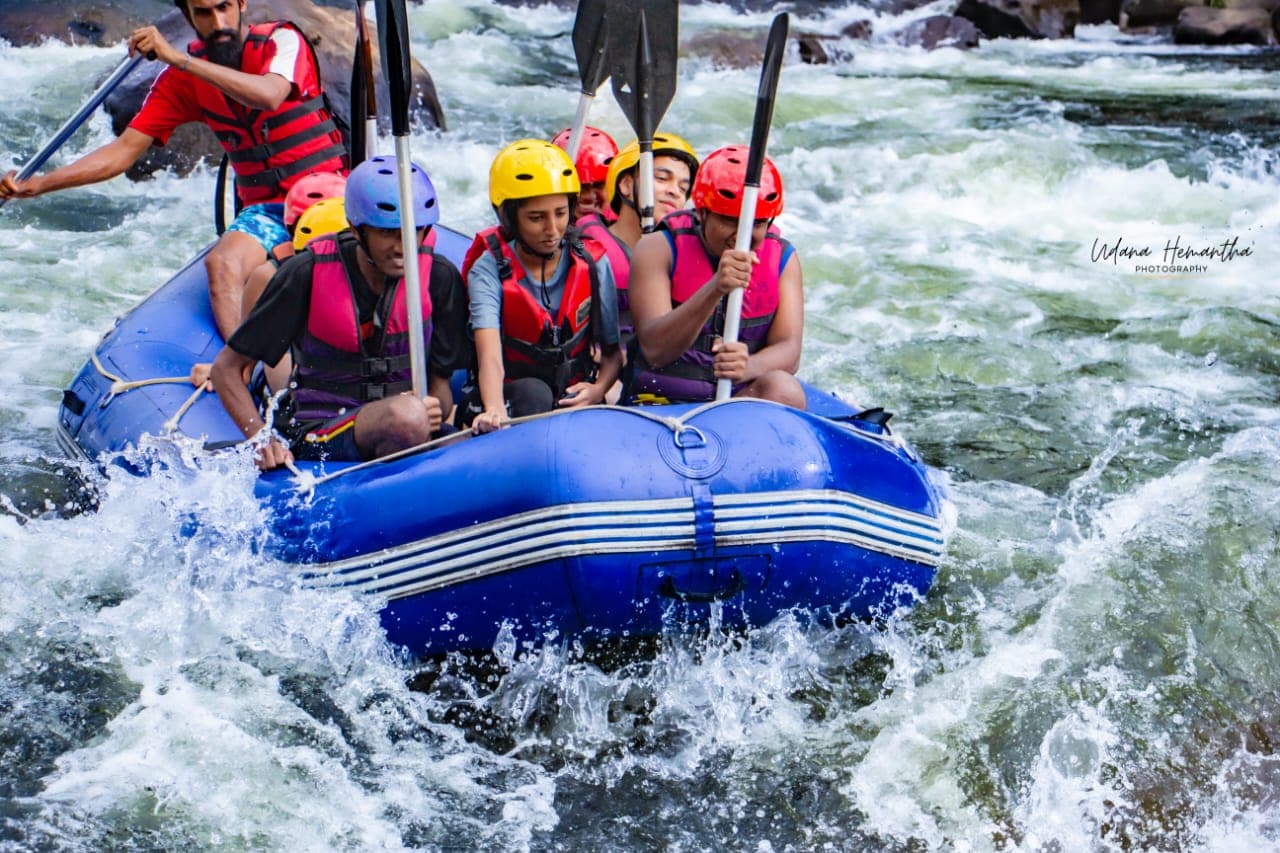
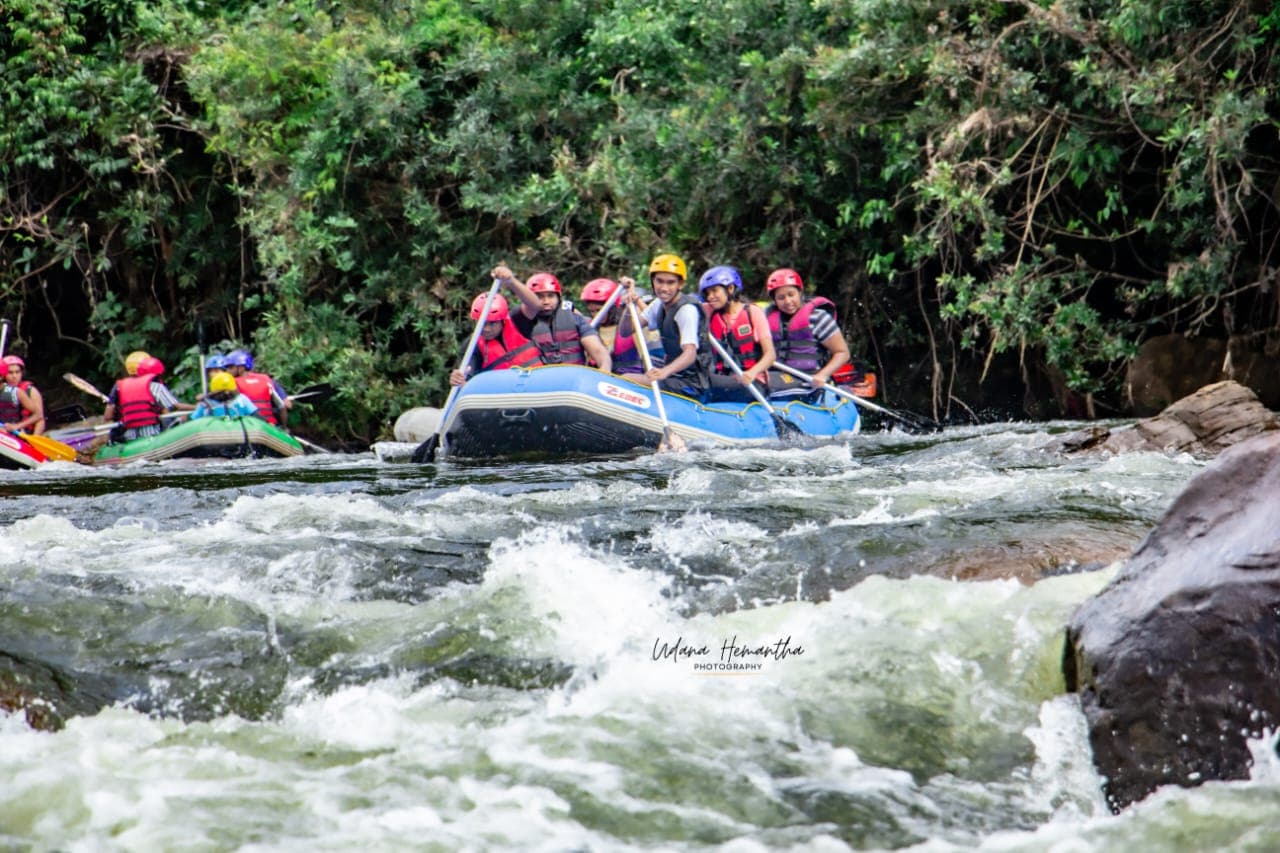
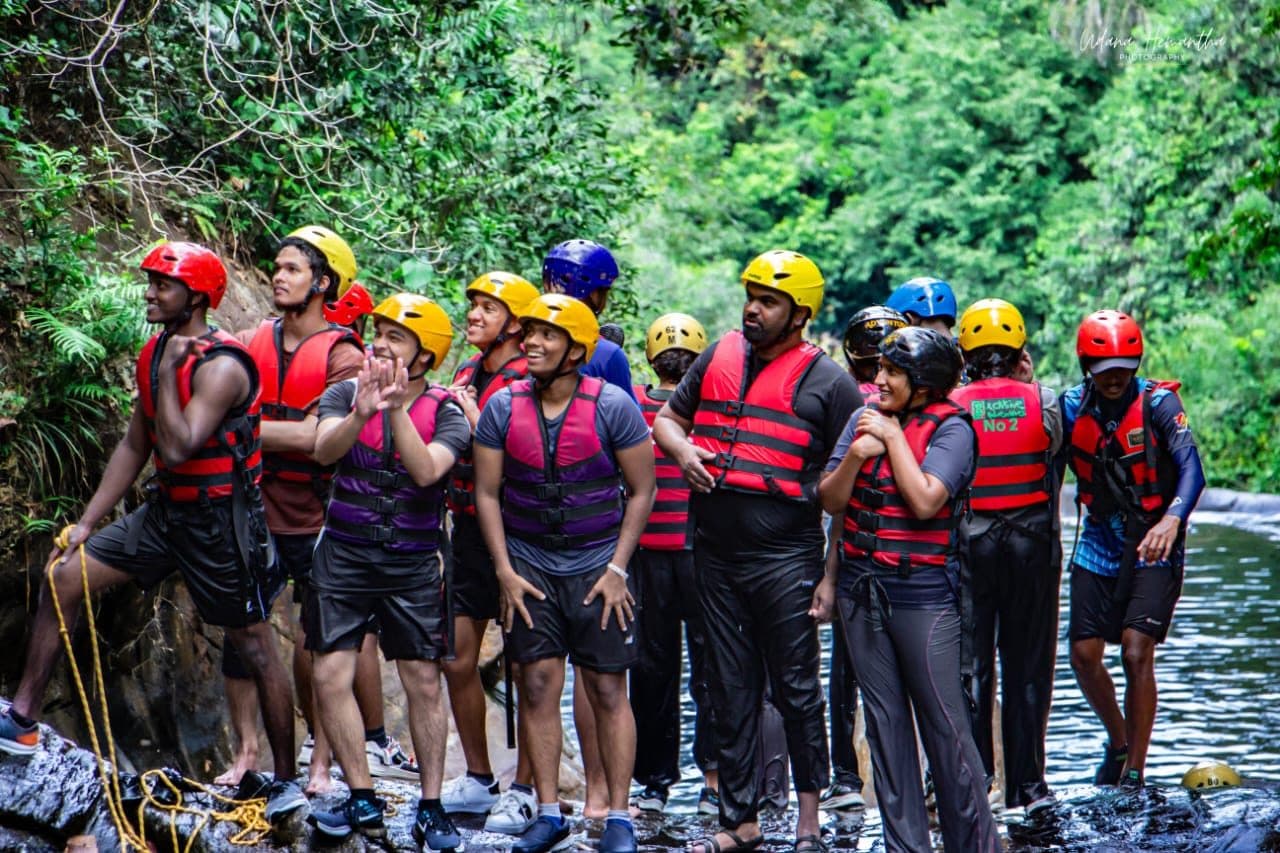
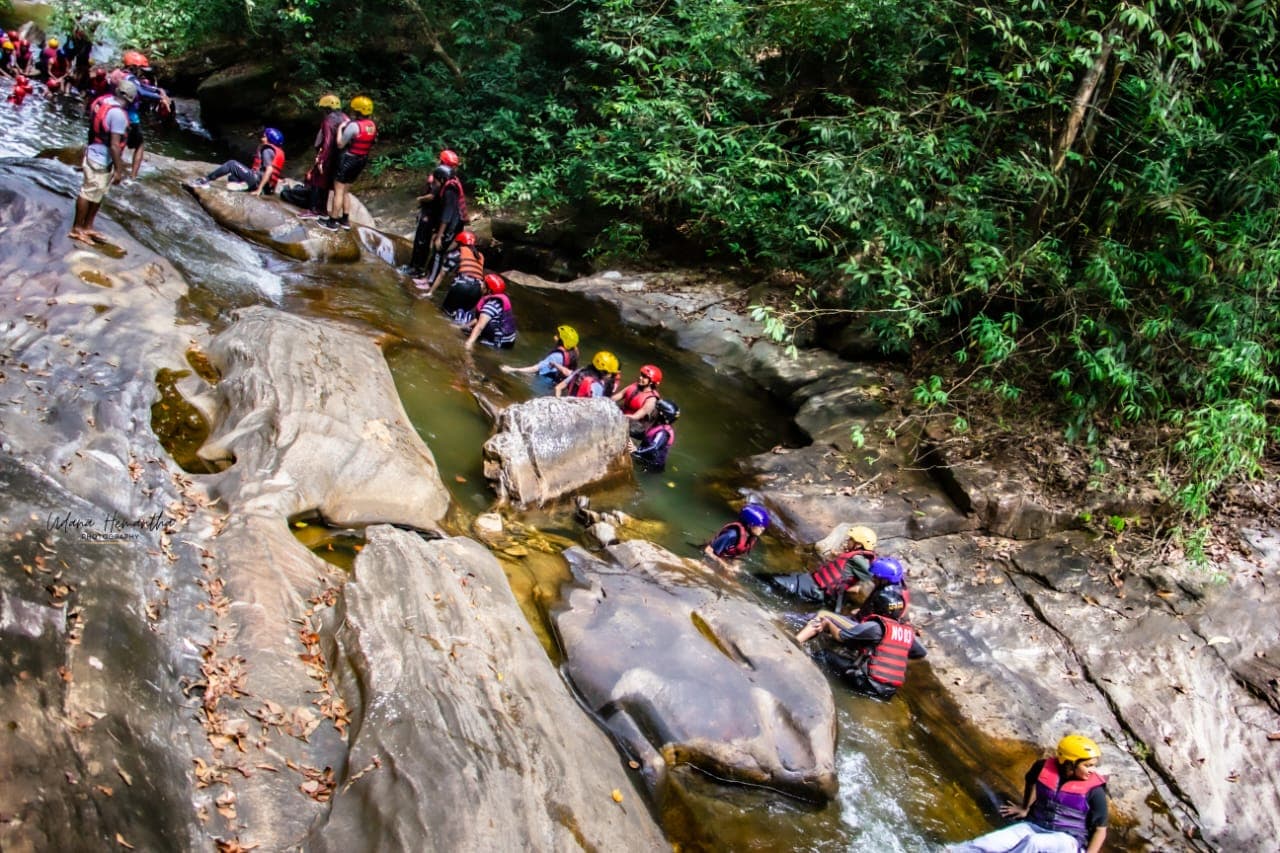
No stock photography. Every image below is a real Xclusive Adventures group running a real programme at Kitulgala.
Every OBT day starts with the same full-group briefing — also where crews get deliberately mixed.
A canyon crossing exercise, moving as a single line — the point where communication either holds or doesn't.
Kitted, briefed and grouped for the exercise ahead.
Before and after
Who should be involved
The HR or L&D lead who commissions the day is rarely the only person who matters. Before the day, we want a short call with whoever actually knows the team — often a line manager or department head, not HR alone. They describe what's really going on, not the polished version. Fifteen minutes with the right person beats an hour with the wrong one.
On the day, it helps enormously if the most senior person present is a genuine participant, not an observer. A director paddling in the boat, taking instructions from a twenty-six-year-old guide, sends a signal no debrief language can replicate. If leadership would rather hover at the edge in dry clothes, that's their call. It changes what the rest of the room is willing to reveal.
Afterwards, the debrief commitments are only worth the paper they're written on if someone owns following up. Usually that's the line manager, not HR. Usually inside the next monthly one-to-one, not a separate meeting three months later, when nobody remembers the specifics. Tell us who that person will be before the day. It's a useful discipline in itself.
Honest limits
What one day can and cannot do
A one-day OBT programme can surface a pattern. It can create a shared reference point the whole team points back to. It can give a genuine jolt of energy and goodwill that outlasts the day itself. Real, useful things — we've watched them happen often enough to say so with confidence.
What one day cannot do: fix a structural problem. Replace a difficult conversation that's been avoided for eighteen months. Repair a relationship between two people who don't trust each other for reasons that have nothing to do with a river. If the issue needs a restructure, a managed exit, or six months of consistent leadership behaviour, an OBT day will not do that work for you. We would rather say so upfront than sell you a day as a substitute.
OBT is a catalyst, not a cure. It works best as one deliberate input into something your organisation is already committed to changing — not the whole change programme. Teams that get the most from it have a manager ready to keep the thread going afterwards. That is exactly why we ask who that person is before we build the day.
“Excellent day out that cannot be missed if you're in Sri Lanka. The scenery is out of this world and the company is professional.”
Xclusive Adventures holds 4.8 on TripAdvisor and 4.9 on Google. The same guide team that runs your OBT exercise earns every review — check us independently.
Related reading
Building the rest of the day
OBT is one exercise inside a bigger programme. These pages cover the rest of it.
Send us a paragraph on what's actually going on in the team. That's the most useful thing you can give us. We'll come back within one working day with a proposed exercise, a draft debrief structure and a written quote, inclusions itemised.
Outbound training, or OBT, is corporate training delivered outdoors — on a river, in a canyon — with a specific structure attached. The activity serves a stated behavioural objective. A guided debrief turns the experience into something the team can name and apply at work. Without the objective and the debrief, you have a very good team day out. Not OBT. In Sri Lanka, OBT is the term HR and L&D teams reach for most, more than "team building".
What is the difference between outbound training and team building?
In Sri Lankan usage the terms overlap, but the useful distinction is the objective and the debrief. Team building is about a shared, positive experience — the activity is the point, no formal learning outcome required. Outbound training uses the same kind of activity as a method to move a specific behaviour, followed by a structured review of what happened and why it matters. We run both, on the same river, with the same guides. Tell us which one you actually need and we'll build the day around it.
How is an OBT day at Kitulgala different from a hotel-based training programme?
A hotel-based programme usually rents a conference room and brings in an activity vendor for an afternoon. At Kitulgala, one team runs the exercise, the environment and the debrief. We own the location and know exactly how a group behaves in a raft or a canyon before it happens. That lets us build genuinely specific exercises, not generic icebreakers. The person debriefing your team actually watched them do it.
Who runs the debrief — a psychologist, a facilitator, or your guides?
Our lead guides run the debrief as standard. They watched the exercise happen in real time, so they speak to specifics, not theory. Bring your own L&D facilitator or external trainer, and we build the day around their session instead — our guide's role shifts to briefing them on what happened. Tell us at the enquiry stage which model you want.
How do you decide which exercise fits our brief?
We start with a short conversation about what's actually going on in the team — silos, low trust, unclear decision-making, a newly merged group, or something else — and build the exercise from there. A trust issue gets a different structure to a communication-under-pressure issue, even on the same stretch of river. Send us a paragraph on the real situation when you enquire. We'll propose an exercise before you commit to anything.
Can a one-day OBT programme actually change how a team behaves?
It can surface a pattern, give the team a shared reference point, and create real momentum. It will not fix a structural problem, or a relationship broken for years — and we're upfront about that. OBT works best as one deliberate input into a change your organisation is already committed to, with a manager who keeps the thread going afterwards. Not as a standalone fix.
How many people can join an OBT programme in one day?
Up to 100 people in a single day at Kitulgala. Larger groups run in waves, so the exercise stays effective. Try to debrief a hundred people at once and you lose the specificity that makes it work. We typically split into smaller crews or sub-groups, even within a large headcount, then bring everyone back together for a shared closing session.
Do you run OBT programmes for leadership teams specifically, not just general staff?
Yes. Smaller leadership groups are some of the most effective OBT sessions we run — the dynamics are easier to see in a group of eight to fifteen than in a group of eighty. We rotate who leads within the group deliberately, then build the debrief around how decisions actually got made under pressure. That's usually exactly what a leadership team wants to look at honestly.
How far in advance should we book an OBT day?
Four to eight weeks gives us time for a proper conversation about the brief, and to build an exercise around it, rather than defaulting to something generic. January to March is our busiest period for OBT — Sri Lankan companies use training budget before the financial year closes at the end of March. Book early if you want a specific Saturday in that window.
OBT programme desk
Tell us the brief and get a proposed exercise
Send us the headcount, the date, and a paragraph on what's actually going on in the team. We'll reply within one working day with a proposed exercise, a debrief structure and a written quote.
A written quote. Clear per-person rate, inclusions listed.
A draft running order, sized to your headcount.
A named lead guide and a wet-weather plan, before you commit.
We use analytics and Meta Pixel only if you accept, so we can understand which Sri Lanka planning pages and campaigns lead to useful enquiries. Essential enquiry and booking forms work either way. Read the privacy policy and cookie policy.