
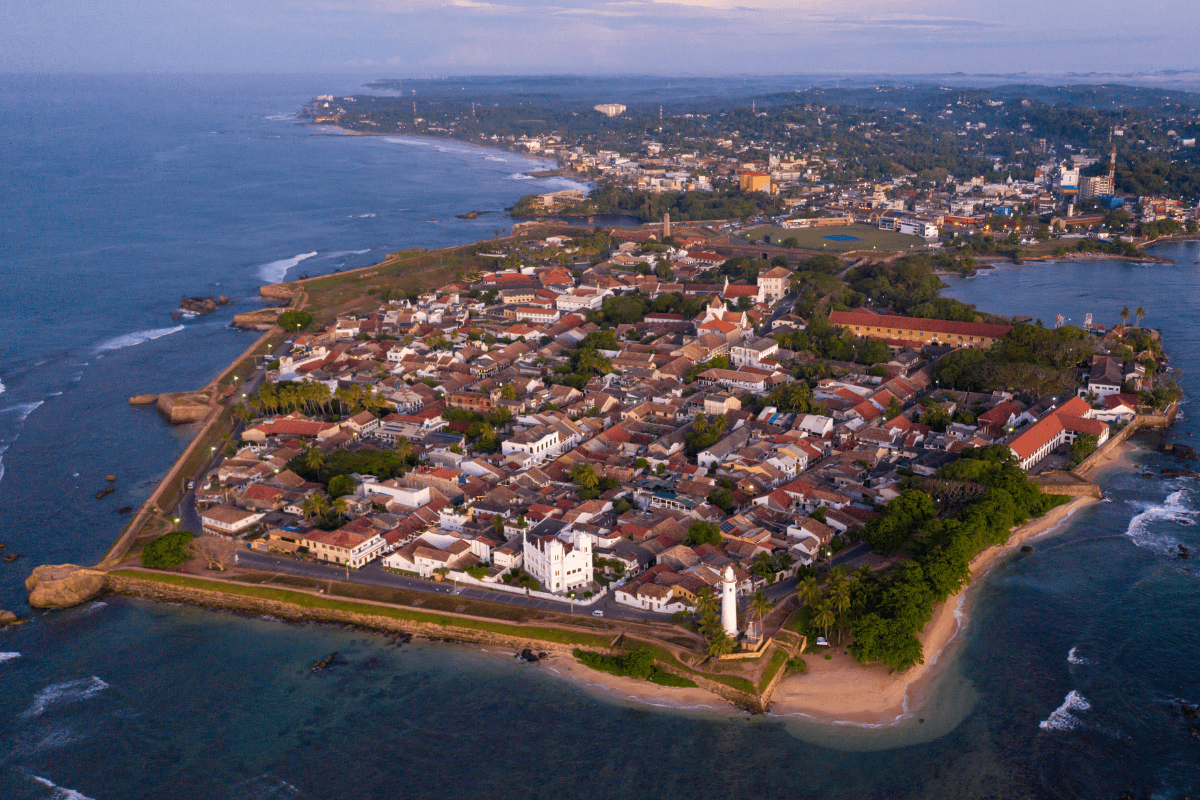
Sri Lanka and the Maldives are both Indian Ocean destinations with turquoise water and bucket-list reputations, but they deliver completely different experiences. Sri Lanka hands you stories — adventure, culture, wildlife, food, and human connection across an island that punches well above its size. The Maldives hands you peace — visual perfection, world-class diving, and the kind of deep restoration that a self-contained overwater resort does better than almost anywhere on earth.
The Case for the Maldives: Nothing Does Ocean Like This
The Maldives offers a level of visual perfection that photographs barely convey — a bungalow on stilts above water so clear you can watch fish from your bed, on an island small enough to walk in fifteen minutes. The snorkelling and diving are among the best on earth: house reefs right off the jetty, manta rays, whale sharks in season, and coral gardens with visibility and species variety that put most of Southeast Asia to shame. What the Maldives is not is a place of cultural texture — each resort island is a beautiful bubble, offering restoration and world-class marine experience but not the kind of human contact that changes how you see things. It is also one of the most expensive holiday destinations on earth, with mid-range overwater resorts running USD 500-700 per person per night, and it makes no apology for it.
The Case for Sri Lanka: The Country That Gives You Everything Else
Sri Lanka is a small island doing the work of a continent — in two weeks you can watch leopards in Yala, abseil jungle waterfalls in Kitulgala, climb a sacred mountain at 2am for a summit sunrise, eat extraordinary curries, and have conversations with strangers that stay with you for years. The adventure specifically is hard to match at this price point in Asia: Grade 2-3 white-water rafting on the Kelani River (up to Grade 4 in high water), canyoning and waterfall abseiling, world-class rainforest birding among 33-plus endemic species, and the Adams Peak sunrise hike — a multi-faith pilgrimage climbed at night, arriving in darkness to wait for the sun above a sea of clouds. Sri Lanka's food is one of the most underrated cuisines in South Asia, and its people offer a genuine warmth and curiosity that hands you stories no resort can replicate.
The Honest Price Comparison
The two destinations diverge most dramatically on price. The Maldives operates almost entirely on a resort-island model: a mid-range overwater bungalow runs USD 500-700 per person per night, and a week for two at a mid-range property costs USD 7,000-10,000 before flights. Luxury properties run USD 1,500-3,000 per person per night. Sri Lanka, by contrast, offers genuine value across a very wide range — budget travellers can have a full trip on USD 60-80 per person per day, mid-range travellers spend USD 150-250 per day and eat and stay very well, and even luxury experiences are a fraction of Maldives pricing. For the cost of five nights in the Maldives, many travellers can fund a complete two-week Sri Lanka adventure including activities, transport, accommodation, and food.
Duration: How Long Each Destination Actually Needs
The Maldives works beautifully as a five to seven day trip — the slower pace and self-contained resort model suit a shorter stay, and there is no long list of sights to tick off. Sri Lanka needs more time: ten to fourteen days is the realistic minimum to do justice to even a focused itinerary. The island is small but roads are slow and the density of worthwhile experiences is very high. Rushing Sri Lanka is one of the most common first-timer mistakes. The most popular combination itinerary — ten to fourteen days in Sri Lanka followed by five to seven nights in the Maldives — works precisely because Sri Lanka goes first when you have energy, and the Maldives comes after as a wind-down. Travellers who do this route often describe the Maldives portion as feeling earned in a way a standalone visit does not.
Seasonal Differences: When to Go to Each
Sri Lanka has two monsoon systems affecting different parts of the island at different times. The southwest — including Kitulgala, Ella, and the south coast — is dry and at its best from November through April. The north and east flip this pattern, with their best conditions from May through September. The practical result is that Sri Lanka is never entirely closed, just requiring seasonal awareness of which region to prioritise. The Maldives is somewhat less dramatically seasonal — it has wet and dry periods, but the dispersed island geography means rain is short and localised rather than sustained monsoon. Its dry season runs roughly November through April, overlapping with whale shark season in Ari Atoll. November through March is the sweet spot for both destinations simultaneously, making it the ideal window for the combination itinerary.
Who Should Go Where
Go to Sri Lanka if you travel to feel something — to come home with stories, to move emotionally and intellectually, to eat food that surprises you and talk to people who challenge your assumptions. Sri Lanka suits first-timers to South or Southeast Asia who want culture, wildlife, adventure, beaches, history, and food in one accessible package at any reasonable budget. Go to the Maldives if you need to stop — if the year has been relentless and you need visual perfection and the absence of demands, or if diving is the central purpose of your trip, or if you are celebrating something that calls for world-class service and privacy. Do both if you have two to three weeks and want the complete Indian Ocean experience: Sri Lanka for the stories, Maldives for the peace, in that order.
The Intangible: What Do You Actually Take Home?
From the Maldives you take home peace — genuinely the kind of deep rest that comes from days of physical comfort, beauty, and the absence of demands. You remember the colour of the water, the silence at the surface before a dive, the overwater hammock at night with nothing pressing. From Sri Lanka you take home stories: the moment the elephant turned and looked at you from ten metres away, the guide who spotted a purple-faced langur you would never have found alone, the family who invited you in for tea when you were lost outside Kandy, the way the shadow of Adams Peak appeared on the clouds below at summit and every single person around you went quiet. Neither is more valuable. The question is which one you need right now — and if you can manage both, you come home with something genuinely rare.
Planning FAQs
Can you visit both Sri Lanka and the Maldives on the same trip?
Yes, and many travellers do exactly this. The standard combination is ten to fourteen days in Sri Lanka followed by five to seven nights in the Maldives — Sri Lanka first because it is more active and stimulating, Maldives second as a restorative wind-down. Flights between Colombo (Bandaranaike International Airport) and Male are short and frequent, making logistics straightforward, and the sequencing is particularly popular for honeymoons.
Is Sri Lanka cheaper than the Maldives?
Significantly. The Maldives operates almost entirely on a resort-island model where mid-range overwater bungalows run USD 500-700 per person per night. Sri Lanka offers a genuine range — budget travellers can travel well on USD 60-80 per person per day, mid-range travellers spend USD 150-250 per day, and luxury experiences are available at a fraction of Maldives pricing. For most travellers, Sri Lanka delivers far more experience per dollar.
Which is better for a honeymoon — Sri Lanka or the Maldives?
Both are excellent for different reasons. The Maldives offers visual perfection, privacy, and luxury service that is hard to match. Sri Lanka offers romance of a different kind — shared adventure, beautiful boutique stays, wildlife, and experiences that become the stories a couple tells for the rest of their lives. Many couples do both on a single honeymoon trip, which delivers the best of each destination in a natural sequence.
How long do you need for Sri Lanka versus the Maldives?
The Maldives works well as a five to seven day trip — the slower pace suits a shorter stay. Sri Lanka needs more time; ten to fourteen days is the realistic minimum to cover adventure, culture, wildlife, and coast without feeling rushed. If you only have a week in Sri Lanka, prioritise ruthlessly and accept you will be saving something for next time.
Is the Maldives better for diving and snorkelling than Sri Lanka?
For pure marine experience, yes — the Maldives is in a different league. House reefs, manta ray cleaning stations, whale shark encounters, and coral gardens offer visibility and species variety that few places on earth match. Sri Lanka has good snorkelling and diving on the south coast around Hikkaduwa and Trincomalee, and excellent whale watching from Mirissa, but it is not primarily a diving destination. If underwater experience is the central purpose of your trip, the Maldives wins clearly.
What is the best season to visit both Sri Lanka and the Maldives together?
November through March is the sweet spot for both destinations simultaneously. The southwest of Sri Lanka — including Kitulgala, Ella, and the south coast — is dry and at its best. The Maldives is in its dry season, and whale sharks are present in Maldivian waters from roughly October through May. For the combination itinerary focused on adventure followed by beach, this window is ideal.