
Sri Lanka has its own photographic logic — rooted in a living religion, a still-sensitive military history, and a culture where asking respectfully changes everything. This guide is a photographer's honest account of the mistakes made, the images deleted, and the extraordinary photographs that only happened because of a thirty-second conversation. Read it before you raise the lens.
Monks: Lower Your Lens, Raise Your Awareness
The rule with monks in Sri Lanka requires you to slow down. Never photograph a monk using a long lens from a distance without acknowledgment, never frame their face without asking, and never touch them — women should not even pass something to a monk directly. These aren't tourist warnings but genuine Vinaya monastic practice. What actually works is approaching slowly, making eye contact, pressing your palms together in a brief gesture of respect, and simply asking. Most monks at public temples are willing to be photographed if you've first acknowledged them as a person. Several times, a monk who agreed to be photographed gestured for a conversation, producing warm, present images that no telephoto lens could replicate.
Temples: Flash Is the Enemy
The rule at Buddhist temples across Sri Lanka is straightforward: no flash at Buddha images. Many temples also prohibit cameras entirely in inner sanctuaries, and signage is not always obvious. The safest approach is to look at what Sri Lankan visitors around you are doing — if nobody is raising a phone, that is the signal. Shooting temples well means slowing down until your eyes adjust and working with ambient light at a wide aperture. The rewards are images with genuine atmosphere — the flicker of oil lamps, deep amber carved wood, incense smoke softening a shaft of light. Flash destroys the shadows that give carvings their meaning and simply produces flat documents rather than photographs.
The Photograph I'm Most Proud Of: A Tea Picker Named Sita
On a ridgeline tea estate outside Ella, a woman was working alone in the late afternoon with mountains going blue in the haze behind her. The instinct was to raise the lens quietly and hope distance did the work. Instead, walking up and asking with a gesture changed everything. She laughed, put down her basket, straightened her sari, and gestured at the mountain as if to say: get that in it. She had clear ideas about what made a good photograph, and the resulting ten-minute collaboration — conducted entirely through gestures and smiles — produced the image now printed and hung. Tea plantation workers across Sri Lanka's hill country are genuinely warm when asked respectfully. The asking takes fifteen seconds; the difference in the photograph lasts forever.
Military Installations: Just Don't
The rule here is absolute: do not photograph military checkpoints, military vehicles, military personnel, or anything that looks like a government security installation in Sri Lanka. The country emerged from a long civil conflict relatively recently, and security sensitivities around military sites remain real and enforced. This is not a matter of politeness — photographing military installations can result in your camera being confiscated, your memory card being wiped, or in more serious cases detention for questioning. If you are unsure whether something counts as a military installation, put the camera down. No image is worth the consequences.
Wildlife: Stay in the Vehicle, Leave the Drone at Home
Yala National Park is one of the best places in Asia to photograph leopards, but demand for close shots creates pressure on guides to bend rules that exist for real safety reasons. The core rule is to stay in the vehicle at all times unless a guide explicitly indicates otherwise in a designated area. Approaching wildlife on foot stresses animals and contributes to human-wildlife conflict outside park boundaries. Sri Lanka has strict UAV regulations, and the short version is that you almost certainly cannot fly a drone legally anywhere you would want to photograph. National parks prohibit drones entirely. Flying near temples, military installations, or airports carries serious penalties. Leave the drone at home unless permits have been arranged in advance through official channels.
Kitulgala: Where You Can Actually Be Loose With the Camera
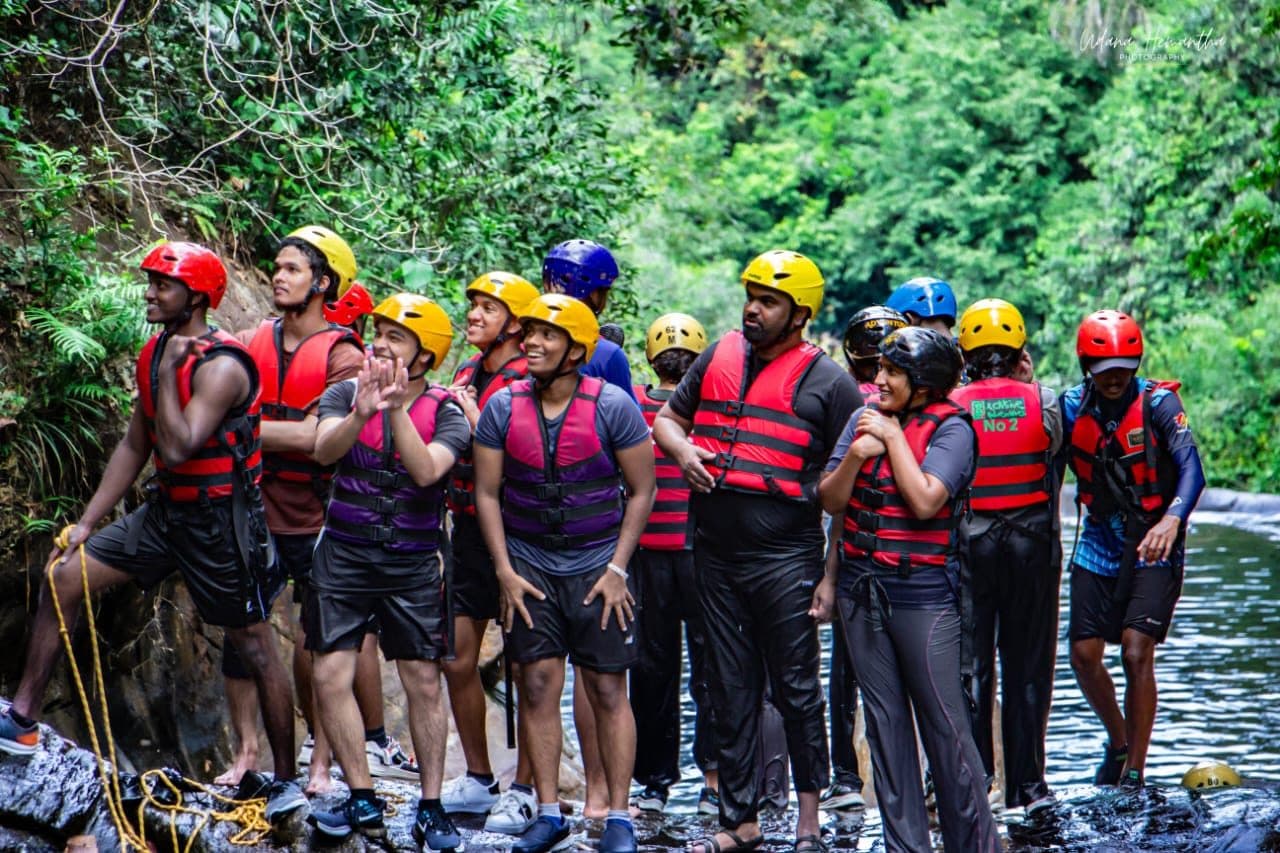
Not everything in Sri Lanka requires careful protocol. Kitulgala in the wet zone rainforest is one of the most photographically rewarding and forgiving places on the island — the main subjects are water, jungle, and people doing things they are actively proud of and happy to have documented. The Kelani River in full flood is a genuinely dramatic subject, and white water rafting produces action photography that makes you grateful for burst mode and a fast shutter. Waterproof housing is worth every rupee. The rainforest rewards patience and a longer lens for birds, including several endemic species found nowhere else on earth. Early morning mist over the river, the moment before your raft enters a rapid, the absurd brightness of a Sri Lanka hanging parrot in a fig tree: Kitulgala just requires you to be there early.
Best Photography Locations in Sri Lanka
Kitulgala offers adventure action, jungle birding, and mist-on-water landscapes best shot in early morning. Ella's Nine Arch Bridge rewards waking before tour groups arrive and finding angles below the arches where vegetation frames the structure differently. Yala and Udawalawe reward patience over proximity — four hours with one leopard at respectful distance beats chasing eight stressed sightings. Dambulla and Sigiriya demand a camera that handles high ISO, and Sigiriya's summit is best photographed at opening time before crowds arrive. Tea country between Nuwara Eliya and Ella is most photogenic at dawn when mist hangs in the valleys and workers begin their picking shift. Colombo's Fort district, Pettah market, and the harbor at golden hour require the most judgment around human subjects but offer the most urban variety.
Practical Camera Notes for Sri Lanka
Humidity is your primary enemy. The wet zone runs consistently humid, and condensation on glass is a real problem when moving between air-conditioned vehicles and outdoor heat — give your camera time to acclimatise before removing lens caps, and treat silica gel packets in your bag as non-optional. Sri Lanka's light is harsh from roughly 10am to 3pm, and the sun sets fast near the equator, giving a narrower golden-hour window than photographers from higher latitudes expect. Set alarms. Memory cards and batteries are available in Colombo but hard to find in rural areas, so bring more of both than you think you need. Clean your sensor before departure and carry a blower for the fine plant particles the rainforest throws into the air.
Planning FAQs
Is it legal to photograph people in public in Sri Lanka?
There is no specific law prohibiting street photography in public spaces in Sri Lanka, but cultural expectations matter more than the technical legal position. Photographing someone in a moment of religious devotion, in distress, or in a way that could be humiliating is widely considered disrespectful regardless of legality. Always delete photographs immediately if someone objects — this is both the ethical and the practical response.
Can I photograph inside Sri Lankan temples?
It depends on the temple and the specific area within it. Many temples allow general photography in outer courtyards but prohibit it in inner sanctuaries, and flash is almost universally prohibited near Buddha statues. Some temples ban cameras entirely. The safest approach is to ask at the entrance, look for signage, and observe what other visitors around you are doing before raising your camera.
Do I need a permit to photograph in national parks in Sri Lanka?
Entry fees to national parks like Yala and Udawalawe cover general photography. Professional commercial shoots require additional permits. Drone use is prohibited in national parks regardless of permit status. Confirm current regulations with the Department of Wildlife Conservation or your tour operator before visiting, as rules and fees can change between seasons.
Are there places in Sri Lanka where photography is completely forbidden?
Yes. Military installations, checkpoints, government security infrastructure, and anything visibly associated with the Sri Lanka military or police should not be photographed. Some temple inner sanctuaries prohibit cameras entirely. Certain ceremonies and rituals — particularly those involving spirit possession or funerary rites — are also best left unrecorded unless you have explicit permission from the people involved.
How do I ask for permission to photograph someone if I don't speak Sinhala?
A held-up camera, a questioning expression, and a small gesture toward the person is universally understood. Pressing your palms together briefly before or after the gesture signals respect. Most people will either smile and nod, wave you away, or indicate what position or angle they prefer — and all three of those responses are perfectly fine and should be accepted gracefully.
Is it worth hiring a local photography guide in Sri Lanka?
For wildlife and bird photography especially, yes. A local guide who knows the forests around Kitulgala or the safari routes through Yala will position you better than any amount of solo scouting, and they understand light and animal behavior in ways that take seasons to learn. A local guide in Ella will tell you precisely when the morning train will appear and where to stand so the mist is still in the valley — that photograph does not happen by accident.