
Same-sex relations are technically illegal in Sri Lanka under colonial-era laws, yet LGBT+ tourists visit every year with the overwhelming majority reporting no harassment or legal trouble. This guide gives you the full picture — the legal reality, what travelers actually experience, and practical guidance for navigating the country with clear eyes. It is designed to help you make an informed decision, not to deter or to reassure without basis.
The Legal Situation: What the Laws Actually Say
Sections 365 and 365A of Sri Lanka's Penal Code, dating to 1883, criminalise same-sex sexual activity in gender-neutral language, meaning they technically apply to both male and female couples. There is no legal recognition of same-sex relationships, no civil partnerships, no marriage equality, and no anti-discrimination protections covering sexual orientation. Attempts at reform have surfaced periodically — a Human Rights Commission report in 2016 recommended decriminalisation — but the laws remain unchanged. Crucially, no foreign tourist has been publicly reported as prosecuted under these laws. The FCO, US State Department, Australia's DFAT, and Canada's travel advisory all flag the laws while noting that enforcement against tourists is rare, and none advise against LGBT+ travel to Sri Lanka.
What LGBT+ Tourists Actually Experience
Talk to LGBT+ travelers who have visited Sri Lanka and a consistent picture emerges: the country is manageable, sometimes even welcoming, provided you read the room. The word that comes up again and again is discretion — not concealment of identity, but the same social calibration thoughtful travelers apply in any conservative country. Same-sex couples report that most hotels and guesthouses on the tourist circuit are professional and matter-of-fact: you check in, you get your room, nobody asks questions. Solo LGBT+ travelers tend to report even fewer friction points, as local curiosity about foreign visitors is generally friendly rather than interrogative. The occasional difficulty travelers describe tends to be social rather than legal — an awkward moment, the low-grade awareness of being somewhere your relationship lacks formal recognition — but these are not the same as danger.
Public Displays of Affection: The Practical Guidance
Sri Lanka is a conservative society by Western standards, and overt public displays of affection attract attention even between heterosexual couples in traditional areas. For same-sex couples, the additional dimension of legal risk makes discretion more than just a social consideration. Practical advice from experienced travelers is to apply the same caution you would in any culturally conservative destination: hand-holding in a busy tourist area of Colombo is different from hand-holding in a rural village. What reads as affectionate in Galle Fort may read very differently in a small highland town. This is about the same cross-cultural reading of a room that good travelers do everywhere, not about concealing who you are. At temples, monasteries, and local festivals, conservative dress and reserved behaviour is expected of all visitors regardless of sexuality.
Colombo: Sri Lanka's Most Open Environment
Colombo is the most relaxed environment for LGBT+ travelers in Sri Lanka. The capital has a small but visible LGBT+ community, and while there is no dedicated gay quarter or cluster of openly gay bars, social spaces and events do exist — found through community networks and social media rather than visible signage. The more cosmopolitan neighbourhoods around Colombo 3, Colombo 7, and Galle Road have a different social texture from the rest of the country, with international-facing restaurants and hotels operating with implicit openness notably more relaxed than rural Sri Lanka. This does not mean Colombo is gay-friendly in the way Amsterdam or Barcelona is, but it is the most navigable part of Sri Lanka for LGBT+ travelers who want social ease beyond their accommodation.
Rural Sri Lanka vs Tourist Areas: A Real Distinction
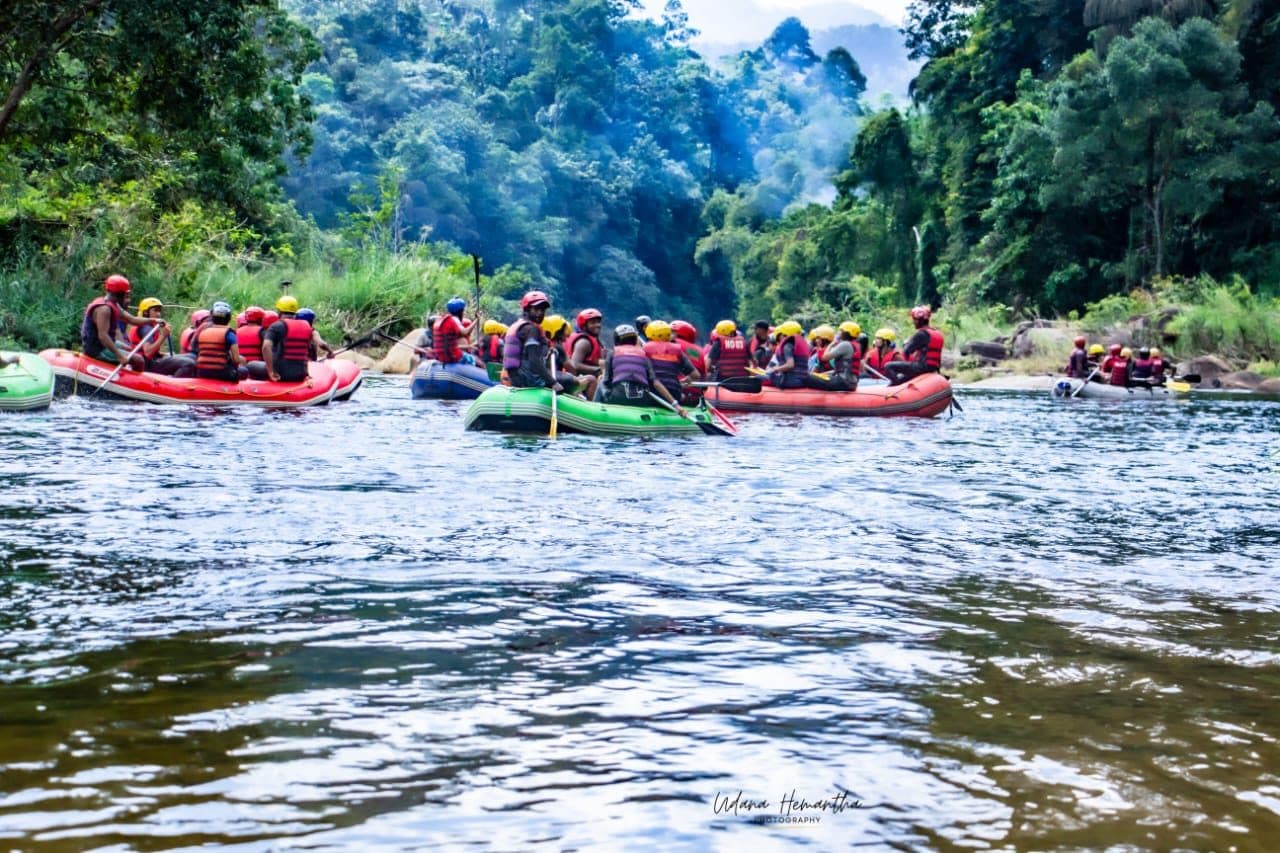
Rural Sri Lanka is socially conservative in ways most Western LGBT+ travelers will find unfamiliar. Small communities where religion is central to daily life and foreign visitors are already curiosities are environments where a same-sex couple will be more visible and where the social cost of that visibility may be higher. This is not a reason to avoid rural Sri Lanka — the country's most extraordinary experiences, from the hill country and wildlife to the rainforest around Kitulgala and the pilgrimage trails up Adam's Peak, are mostly not in cities. The tourist circuit itself acts as a buffer: Ella, Kandy, Galle, and Mirissa are places where international visitors are normal and the social atmosphere is accordingly more relaxed. The further you go from those nodes, the more genuine social conservatism applies.
Solo vs Couple Travel: The Differences
For solo LGBT+ travelers, Sri Lanka is genuinely easy. You are a foreign tourist, and local people will be curious about where you are from and what you think of the country — not about your sexuality. The social pressure that can exist for same-sex couples in public simply is not present when traveling alone. For couples, experience depends heavily on location and how you navigate public space. In hotels and accommodation, professional discretion is the norm. In public, read the room, be aware of your environment, and keep obvious couple behavior for private spaces or more international environments. Most couples report this as a manageable adaptation rather than a hardship — the same calibration you might make in rural parts of many countries. Couples may want to do slightly more advance research on accommodation and itinerary planning; solo travelers can largely just show up.
Cultural Awareness as a Travel Approach
There is a more useful way to think about culturally conservative destinations than either "it is dangerous, do not go" or "it is totally fine, do not worry." Sri Lanka is a deeply layered place — Buddhist and Hindu traditions, a colonial history that left these laws on the books in the first place, a younger generation with more open attitudes, and a tourism economy that depends on welcoming international visitors. Understanding that context is part of what it means to travel here well. Reading about Sri Lanka's religious traditions before you arrive, being thoughtful about how you engage with local customs, and recognising that the people you meet are not the same as the laws on their statute books all make you a better and more comfortable traveler. For adventure travelers specifically, the shared focus on the river, the trail, the wildlife, and the summit tends to cut through a lot of social complexity.
Planning FAQs
Is Sri Lanka safe for gay travelers?
The majority of LGBT+ tourists who visit Sri Lanka do so without incident. Same-sex sexual activity is technically illegal under colonial-era laws, but enforcement against tourists is essentially unheard of. The practical risk for visitors exercising cultural discretion is very low — though the legal vulnerability is real and worth understanding before you book. Always check the current travel advisory from your own government before you travel.
Can a same-sex couple book a hotel room together in Sri Lanka?
Yes, in most cases. Hotels and guesthouses across the tourist circuit are accustomed to international visitors and are generally professional about accommodation regardless of relationship type. Larger hotels and internationally-facing properties are typically straightforward. Smaller, rural guesthouses vary, and it is worth checking in advance if this is a concern. No one is required to disclose anything about their relationship.
Is there a gay scene in Sri Lanka?
Colombo has a small LGBT+ community and some social spaces that LGBT+ visitors use. There are no dedicated gay bars or districts operating openly, but social networks and events do exist, typically found through community channels and social media rather than visible signage. Outside Colombo, the scene is effectively absent. Sri Lanka is not an LGBT+ party destination, but it does have a visible if semi-underground community in the capital.
What should LGBT+ travelers know about public displays of affection in Sri Lanka?
Sri Lanka is a conservative country and overt public affection attracts attention even between heterosexual couples in traditional areas. For same-sex couples, the additional dimension of legal risk makes discretion more than just a social consideration. Most experienced travelers describe adapting to this easily — keeping obvious couple behavior to private settings — rather than finding it a major constraint on the trip.
Do I need to tell my adventure tour operator that I am LGBT+?
No, you do not need to. Reputable adventure operators in Sri Lanka, including Xclusive Adventures, are focused on running great experiences for travelers of all backgrounds. If you have specific concerns about accommodation or logistics during a multi-day trip, a direct conversation before booking is the most practical approach.
Has Sri Lanka ever discussed decriminalising same-sex relations?
Yes. Decriminalisation has been discussed at a political and civil society level for years, with a Human Rights Commission recommendation in 2016 supporting reform. Some politicians and advocacy groups continue to push for change. As of the time of writing the laws remain unchanged. The direction of social attitudes — particularly among younger Sri Lankans in urban areas — is more open than the legal framework suggests, but meaningful legal change has not yet followed.