
The Kandy-to-Ella train is Sri Lanka's most celebrated journey — and one of its most genuinely difficult to organise. This first-person account works through the booking chaos, the hour-by-hour ride through tea estates and mountain tunnels, and the practical details that actually matter once you're on board. Everything you need to know, woven into the story of the trip.
The Booking Mess: Colombo Fort vs. Online
The official Sri Lanka Railways online portal crashes, times out, and refuses foreign cards with what feels like personal spite. In practice, booking through a local agent or your guesthouse is far more reliable. The Kandy-to-Ella line has three classes: third class (wooden benches, no reservation) is vivid and exhausting; second class (padded seats, reservation system) is the sweet spot for most travellers; first class has air conditioning, which sounds good until you realise it seals you away from open doorways and wind. Then there's the Expo Rail observation car — a privately operated blue carriage with panoramic glass and a rear viewing platform, costing roughly LKR 2,000–3,500 (verify before booking). Reserved seats should be booked a week ahead for weekends and two to three weeks out during peak season (December–March).
Kandy Station: 6am and Already Chaos
The departure boards at Kandy station list platforms in Sinhala first, Tamil second, English third, in a font that assumes you brought binoculars. Finding the right platform means following the crowd of equally uncertain backpackers. Kandy itself rewards a day or two beforehand — the Temple of the Tooth, the lake, the markets. The train itself typically runs forty minutes late, sometimes more; build a full day's buffer at the far end and never book an onward connection that depends on this service arriving on time. The platform vendor selling string hoppers and pol sambol at 5am is not surprised by any of this. Buy the string hoppers.
The Hill Country, Hour by Hour
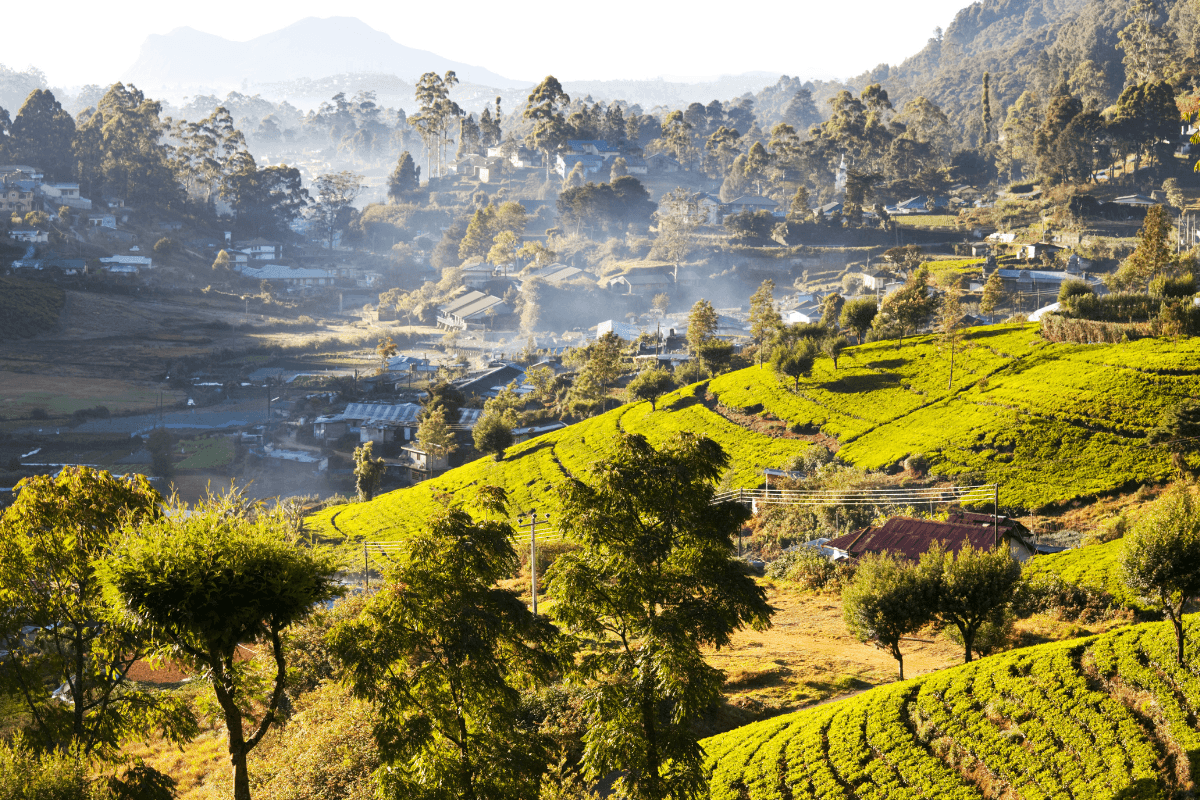
The first hour out of Kandy is suburban — laundry lines, children waving — then the altitude begins. Rubber plantations give way to the Knuckles foothills, the air cools, and the green deepens into something almost implausible. By mid-morning the tea estates appear: workers in coloured saris moving through geometrically clipped rows. Waterfalls become frequent, some nameless and dramatic, crashing down rock faces fifty metres from the track. Bring a light layer for the tunnel sections where the temperature drops noticeably, snacks and water (vendors are wonderful but unpredictable), and something padded if you plan to sit in the open doorway — the metal floor is unforgiving over seven hours. For views, conventional wisdom says left side from Kandy to Ella, but move around; the best angles shift constantly.
The Tunnels, the Cold, and the Feeling You're Not Quite Ready For
Somewhere between Hatton and Nanuoya the train enters a long tunnel and the carriage goes fully dark. In third class with windows open it gets cold enough to regret ignoring advice about a layer. When the train emerges into high-country sunlight the landscape has shifted: more open, mist sitting low over the tea bushes, the sky enormous. This is the stretch that produces all the photographs — the ones where the train seems to float on the hillside, the mist rolling through at exactly the right moment. In real life it is slower, louder, smelling of diesel and coconut roti, and completely worth it. Near Ohiya the train crosses a series of high-level bridges; stand in the doorway or on the observation car's rear platform for the stomach-lurching drop below.
The Nine Arch Bridge: A Note on What You Won't See from the Train
Nobody explains this clearly before you go: you don't see the Nine Arch Bridge from the train. You pass over it, which means you're on top of it while it's happening. The famous arched-bridge-with-train photograph is taken from the hillside footpath near Ella town, reached by a forty-minute walk from the main street or a short tuk-tuk ride to the trailhead and fifteen minutes through a tea estate. Go early morning or late afternoon — midday the light is flat. If you can time your visit to coincide with a scheduled train passing, wait for it. You hear the rumble before the carriages appear between the arches, and the effect is worth the patience.
Morning vs. Afternoon: Which Departure is Better
The morning departure (around 6am or 8:30am depending on the day and season) gives you mist in the valleys, the sun rising over the tea estates, and a slow landscape reveal as the hill country wakes up — you arrive in Ella with afternoon time to explore. The afternoon train catches golden-hour light over the hills, with long dramatic shadows; you arrive after dark, missing the arrival scenery, but the ride itself can be spectacular if the weather cooperates. First-time travellers should take the morning train. If you've done this before and want to see the route differently, try the afternoon.
Getting Onward from Ella
The train continues from Ella to Badulla — a further forty minutes through increasingly dramatic, quieter hill country that is arguably more beautiful than the famous stretch you just completed. It's worth doing if you have no fixed onward plans. For travel west toward the south coast or back to Colombo, the options are bus or hired car. The Sri Lanka bus network connecting Ella to Matara, Galle, and the coast is genuinely chaotic and very affordable. If you want to understand the full matrix of Sri Lankan overland transport options, the bus travel guide is the right starting point for planning connections.
Planning FAQs
How do I book tickets for the Kandy-to-Ella train?
The Sri Lanka Railways website (eticket.railway.gov.lk) sells reserved seats but is unreliable for foreign cards and often shows limited availability. The most practical options are booking through a local agent or guesthouse, using a third-party platform like 12Go Asia (verify availability before booking), or buying in person at Kandy Fort station the day before. For the Expo Rail observation car, book directly through their site or via a local operator. Reserved seats in first and second class sell out weeks ahead during peak season (December–March); third-class unreserved seats are generally available as walk-ups.
What class should I choose for the Kandy-to-Ella train?
Second-class reserved is the sweet spot for most travellers: you have a guaranteed seat with an opening window, the carriage feels like real Sri Lanka, and you can still access the open doorways that make the journey. First class with air conditioning works against you here — the best moments involve standing in open doorways feeling the air. The Expo Rail observation car is worth the premium if you're travelling as a couple and comfort matters; the panoramic windows and rear viewing platform are genuinely excellent. Third class is for travellers committed to the most immersive possible experience, including the possibility of standing for seven-plus hours.
How long does the Kandy-to-Ella train journey take?
The scheduled journey time is roughly seven to seven-and-a-half hours, but delays of an hour or more are common. Build the entire day around it and don't schedule anything requiring a specific arrival time — don't book an onward connection from Ella that would be missed if the train runs late. The journey is the destination; arriving faster is not the point.
Is the Nine Arch Bridge visible from the train?
No — you travel over the bridge, not around it, so there is no view of the bridge itself from inside the carriage. The famous photograph of arches with a train crossing is taken from a hillside footpath near Ella town. Walk or take a tuk-tuk to the trailhead, then hike about fifteen minutes through a tea estate. Go at golden hour if you can time it with a train passing; the rumble builds before the carriages appear between the arches and the wait is worth it.
What should I bring on the Kandy-to-Ella train?
Water and snacks are the priority — vendors board at stations but supply is inconsistent and there are long stretches with nothing. Bring a light jacket for tunnel sections and the early-morning chill at altitude. Bring something padded if you plan time sitting in the doorway, as the metal floor is hard over a long journey. A portable charger is useful since the trip takes most of a day. Travel light in general: the less you're managing, the more you can simply look out the window.
When is the best time of year for the Kandy-to-Ella train journey?
December through March is the driest and clearest period — you get the views in full, mist at the right moments, and none of the heavy rain from the south-west monsoon. April and May are hot and clear before the rains begin. June through September brings the south-west monsoon to the hill country: the journey is still possible but expect cloud cover, some delays, and occasional dramatic storms through the valleys. October and November are the unpredictable transition months, sometimes stunning, sometimes overcast.