
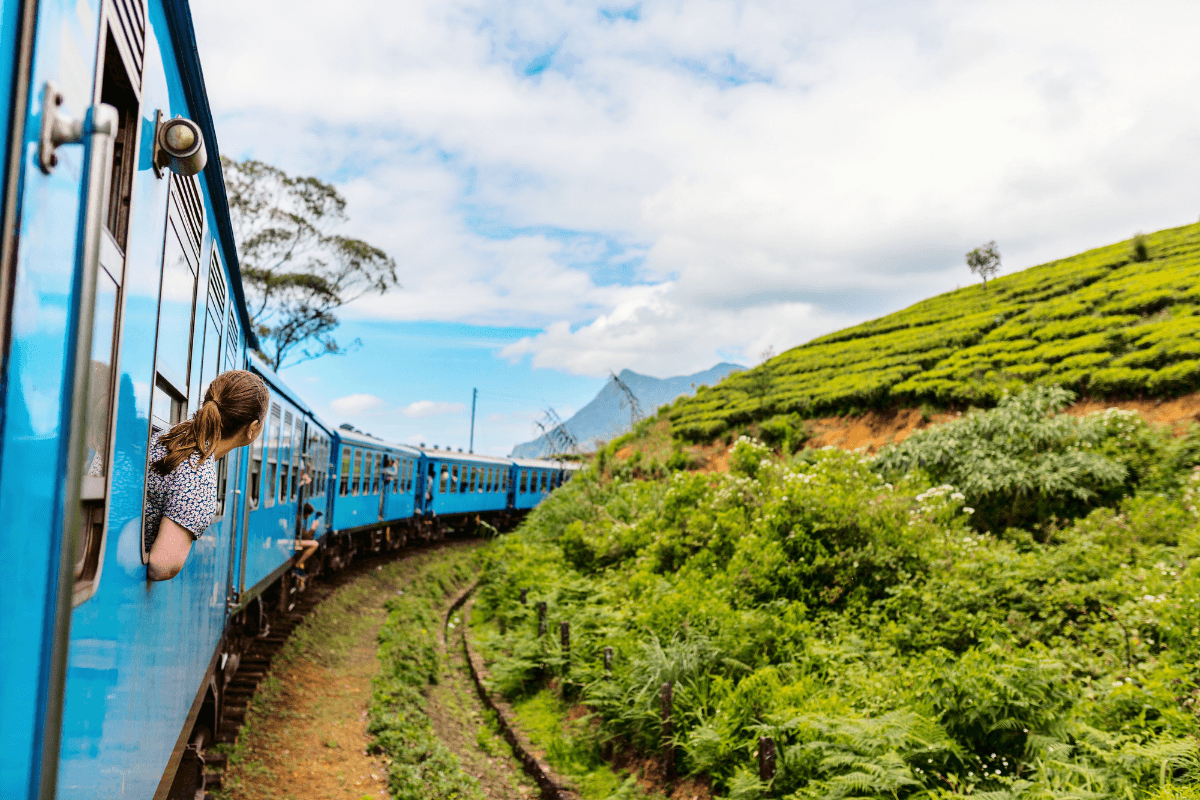
Sri Lanka's bus network is enormous, genuinely cheap, and connects places that trains and tuk-tuks simply don't reach. This guide covers the two overlapping systems — government CTB buses and private operators — alongside what to expect at bus stations, during the journey, and for specific popular routes. If you're willing to pay attention and ask questions, the bus is one of the most rewarding ways to travel the country.
CTB vs Private: The Two Systems Running in Parallel
Sri Lanka runs two overlapping bus systems from the same stations. The Ceylon Transport Board (CTB) operates older government buses on fixed routes at very low, subsidised fares — these are how ordinary Sri Lankans get around, and riding one is about as local as travel gets. Private buses run the same routes, are often newer and more vividly decorated, and leave when full rather than to a timetable, which means they drive faster to turn the vehicle around quickly. A third category — private AC intercity coaches on popular tourist routes like Colombo to Kandy — offers air-conditioning, scheduled departures, and reasonable legroom for a modest premium. On a three-hour journey in coastal heat, that difference is usually worth paying for.
Routes and What's Actually Bookable
For the vast majority of Sri Lankan bus travel, you do not book in advance. You turn up at the station, find the right bus, and get on. Reserved seats exist on some premium private coaches on popular tourist routes — bookable through guesthouses, online aggregators, or operators like Intercity Express or Budgetline — but on standard CTB or private buses there is no booking mechanism. Seats go to whoever boards first. On busy routes, arriving at the station fifteen to twenty minutes early is sufficient. Buses overlap with the rail network on main corridors but reach many places trains do not, making them the only realistic public transport option for smaller towns and hill-country settlements.
The Cost: Genuinely Remarkable
Sri Lanka's bus fares are genuinely, sometimes startlingly, cheap. CTB government fares on most intercity routes cost a fraction of what a private transfer charges for the same journey — a trip that might cost USD 15–20 in a hired vehicle can come in under USD 1 on a CTB bus. Even premium private AC coaches on the Colombo-Kandy corridor are significantly cheaper than taxis. The trade-off is time: buses are slower than trains on comparable routes, and trains are slower than private cars. But if you're travelling on a budget, or simply want to experience getting somewhere the way most people in the country do, buses make the economics of a Sri Lanka trip considerably more forgiving.
Bus Stations: Organised Chaos with a System Inside It
Sri Lanka's major bus stations — Colombo Bastian Mawatha, Kandy's Goods Shed, Galle terminal — are large, busy, and not particularly set up for visitors. Buses park in numbered bays with destination boards that may be in Sinhala script, where romanised place names don't always match what you see: Colombo is Kolamba, Kandy is Maha Nuvara, Galle is Gālla. The practical solution is to ask. Staff, drivers, and fellow passengers are generally patient with confused visitors, and most situations can be resolved by asking the same question to two or three people until the answers converge. Arrive with fifteen to twenty minutes to spare before your intended departure; for premium coaches, a little earlier.
Seats, Speed, and Strategic Positioning
On CTB and standard private buses, seats fill from the front and are first-come first-served. Front seats near the door make it easier to exit; rear seats over wheel arches are bumpier on rough roads; middle rows are the sweet spot. Window seats offer something to look at on longer journeys — the landscape through Sri Lanka's hill country or along the coast is consistently rewarding, even if the bus doesn't slow down for it. Express buses, sometimes called "limited stop" services, skip smaller stops and run significantly faster. If you're covering a long intercity route and an express option exists, take it — local buses stop constantly, and the cumulative effect on journey time is substantial.
Journey Times: Always Add a Buffer
Sri Lanka is a small country, but a map makes distances look more manageable than they are. The road network remains two-lane for most of its length, expressways are limited to a few corridors, and buses stop frequently. Colombo to Kandy is roughly 115km and takes two and a half to four hours by bus depending on service and traffic. Routes through the hill country or on mountain roads add time generously. Build a buffer into any plan that depends on arriving at a specific time. Buses in heavy rain are a further variable: on non-AC buses, window seats get wet in downpours, and landslides on mountain roads are a real seasonal hazard during the south-west monsoon (roughly May to September).
For Women Travelling Alone
Sri Lanka is a broadly manageable destination for solo female travellers on public transport. On CTB buses especially, there is an informal convention that the front two or three rows are for women, elderly passengers, and those with small children — aim for these seats if you're travelling alone. They carry a de facto lower risk of the low-level crowding or unwanted conversation that can occur on any country's busy public transport. Travel on busy daytime services rather than the last bus of the evening, and prefer morning departures on long intercity routes when there are more passengers around. Busy, well-used routes are preferable to quiet rural services at odd hours.
The Popular Routes and When the Bus Is Actually the Best Option
Colombo to Kandy is the most-used tourist bus route; pay for the AC private coach if you can — the climb is long and hot. Colombo to Galle is faster via the Southern Expressway on express coaches, though the coastal road passes more interesting territory. Into the hill country — Ella, Nuwara Eliya, Haputale — buses reach places trains don't, often with a change in Kandy, and on those routes the bus is simply the option. More broadly, buses beat alternatives when you need to reach a smaller town off the rail network, when train reserved seats are sold out, or when you want the flexibility of turning up and going without any advance booking. They also offer a more granular connection to the country than trains do.
Planning FAQs
Do I need to book Sri Lanka bus tickets in advance?
For standard CTB government buses and most private buses, no — you turn up at the station and get on. For premium private AC coaches on popular routes like Colombo to Kandy, advance booking is sometimes possible through guesthouses, local agents, or operator websites, and can be worth doing during peak season (December to March) when popular services fill quickly. But the vast majority of Sri Lankan bus travel requires no advance booking at all.
How cheap are buses in Sri Lanka?
Very cheap — typically among the cheapest ways to travel anywhere in the country. CTB government bus fares are subsidised and cost a fraction of what private transfers charge for the same route. Even private buses and premium AC coaches are significantly cheaper than taxis or hired vehicles. Exact fares change, so verify locally, but buses are consistently the lowest-cost ground transport option in Sri Lanka.
What's the difference between express and local buses in Sri Lanka?
Express buses (sometimes called "limited stop" buses) skip smaller intermediate stops and run significantly faster between major towns. Local buses stop anywhere along their route — at designated stops and wherever a passenger flags them down — which makes them slower but useful for reaching villages and smaller settlements not served by express services. On a busy intercity route, always ask whether an express option is available if you want to save time.
Is it safe for solo female travellers to take buses in Sri Lanka?
Generally yes, with some straightforward precautions. Aim for front seats, which carry an informal convention in Sri Lanka as a designated safer zone for women and elderly passengers. Travel on daytime services with other passengers rather than last buses of the evening. Busy, well-used routes are preferable to quiet rural services at odd hours. Sri Lanka is not a high-harassment environment by regional standards, but the same sensible precautions you'd apply anywhere apply here.
How do I find the right bus at a Sri Lankan bus station?
Ask. Signs at major stations exist but may be primarily in Sinhala script, and the romanised names of destinations are not always clearly displayed. Find an information booth if there is one, ask a driver, or ask other passengers. Give yourself fifteen to twenty minutes to navigate a major station before your intended departure. On popular tourist routes, there are usually enough travellers and staff familiar with English questions to get you pointed in the right direction.
Are buses faster or slower than trains in Sri Lanka?
Generally slower, on routes where both options exist. Trains move on dedicated track after leaving congested city streets, while buses are subject to traffic throughout. On mountain routes, buses on winding roads are significantly slower than rail equivalents. The exception is routes not served by rail, where the bus is the only realistic public transport option. Budget more time than the distance suggests.