
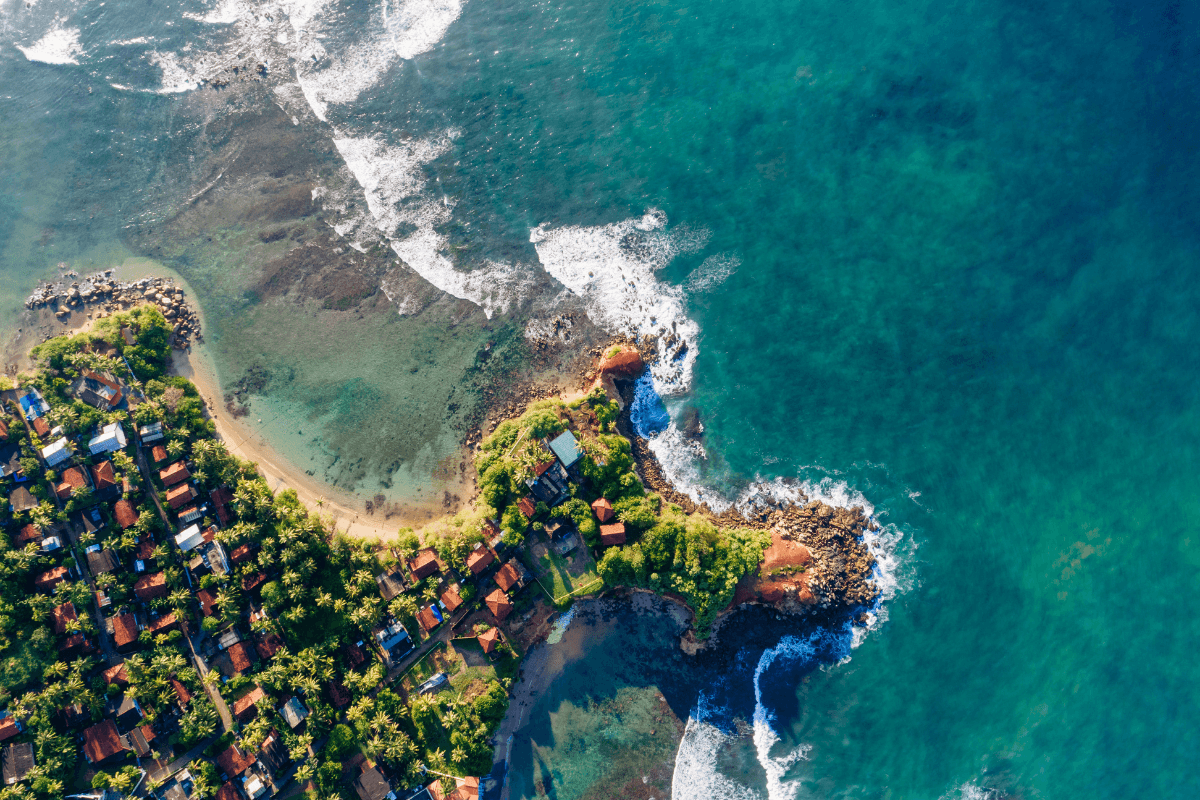
Rain does not automatically ruin a Sri Lanka adventure trip, but it does change how the route should be planned. The safest and most enjoyable monsoon-period itineraries treat weather as a planning variable from the very beginning: choosing the right region for the right month, keeping activity days flexible, building in backup options before anyone needs them, and being honest about which parts of the plan depend on conditions rather than the calendar.
Sri Lanka has two distinct monsoon patterns, and understanding them makes the difference between a ruined itinerary and a smart one. The southwest monsoon runs roughly from May through September and affects the west and south coasts, the hill country's western slopes, and the area around Colombo. During this period, Kitulgala — which lies in the southwest — can be wetter but often runs excellent rafting because higher rainfall feeds the river. The northeast monsoon runs roughly from October through January and affects the east coast, the north, and the cultural triangle. During this period, the east coast goes quiet while the west and south coast open up for peak season. A route that understands which monsoon is active — and builds accordingly — finds that most of Sri Lanka is accessible most of the time.
The travelers who struggle during monsoon periods are usually the ones who booked a fixed itinerary based on a photograph, assumed the map would hold regardless of weather, and did not have a backup option ready. The travelers who flourish are the ones who chose their region deliberately, built their adventure around activities that benefit from rain (Kitulgala rafting in particular is often better with higher water), kept one coast as a flexible decision, and gave themselves permission to change the plan if local conditions made a different choice clearly better.
Think in regions, not one island-wide season
Sri Lanka is not a single weather zone. A southwest monsoon forecast does not mean it is raining equally in Trincomalee, Yala, Sigiriya, and Kitulgala. A northeast monsoon forecast does not mean Weligama or Kitulgala are unavailable. The practical implication is that a traveler in June, July, or August should base the route around east coast beach time and inland culture, not try to force a south-coast beach ending against the prevailing weather. A traveler in October or November should plan with the west and south coasts in mind and keep the east coast as a previous-window option rather than a live choice. The monsoon is not an obstacle — it is a planning input.
Let local river conditions decide water activity days
For rafting and canyoning at Kitulgala, recent rainfall and current river level matter far more than a month-by-month calendar answer. Some rainfall — especially during the southwest monsoon — actually improves the rafting experience because higher water creates more powerful rapids and a more exciting run through the Grade 2-3 sections of the Kelani (up to Grade 4 in high water). The concern is not rain per se but extreme rainfall events that can raise the river too high for safe activity, reduce visibility, or change the river bank access. Local guide judgement on the specific day is the only reliable guide here. A good operator will check conditions the morning of the activity and recommend the appropriate session length and intensity — or a rainforest alternative — rather than running a fixed program regardless of what the river is doing.
Build every adventure route with a named backup
A strong monsoon-period itinerary has a Plan B before anyone needs it, and that plan should be named in the itinerary document rather than invented on the fly when something changes. For a Kitulgala activity day, the backup might be: shorter rafting session if the river is high, rainforest walk and birding if both water activities are unsuitable, village lunch and scenic river time if the group prefers a calmer morning. For an east coast beach day in June, the backup might be: snorkelling over coral if the sea allows it, fort and market walking in Trincomalee town if the sea is rough, or an inland cultural stop if the transfer is tighter than expected. Naming the backup gives the guide permission to use it confidently without feeling like a failure.
Protect transfers and final beach days
Monsoon rain can slow roads significantly in Sri Lanka, especially the hill-country and coastal routes where drainage is limited and visibility drops. A route built during a wet-season month should avoid tight final-day logistics: a long morning transfer, a busy midday activity, and a late evening flight is a fragile combination that becomes genuinely stressful if rain adds two hours to the road. Instead, build the route so the final night is close to the airport or to a manageable transfer point, the last beach section can absorb an extra quiet day if the sea is rough, and any weather-sensitive activity is placed in the first two-thirds of the trip rather than the final twenty-four hours.
Ask better questions before booking
When enquiring about a Sri Lanka adventure during or near monsoon season, the most useful questions are not about weather guarantees but about contingency. Ask: what happens to the rafting if the river runs too high the day before we arrive? What is the alternative to canyoning if the gorge is flooded? Which coast would you recommend for our specific travel dates and how might that change in the week before we land? How does transfer timing change if roads are slow? A good operator will answer these questions specifically and confidently — not because they can control the rain, but because they have planned around it before and know what good backup looks like.
June to September: the southwest monsoon window
This is the period that confuses first-time planners most, because the words 'monsoon season' suggest the entire island is closed. In practice, June through September is excellent for east coast travel — Trincomalee, Pasikuda, and Arugam Bay are dry, warm, and at their seasonal best. It is also, counterintuitively, a strong period for Kitulgala rafting because the southwest monsoon raises the Kelani River and creates more dynamic water. The hill country and cultural triangle (Sigiriya, Dambulla, Kandy) remain accessible with normal wet-weather flexibility. What to avoid in this window: south and west coast beach as a primary destination, exposed coastal walks on the southwest, and any route that depends entirely on perfect weather across every day.
October and November: the changeable bridge
October and November sit between the two monsoon systems and can be the most genuinely unpredictable months on the island. Neither coast is reliably ideal, the northeast monsoon is beginning to affect the north and east, and the southwest is winding down but not finished. This makes October and November the months where the route needs the most flexibility and the most honest planning. In practice, inland-focused itineraries — Kitulgala, cultural triangle, hill country, wildlife — hold up well in this window because they do not depend on coastal weather. Short beach sections on the west or south coast can work with honest expectations about conditions rather than guaranteed sunshine.
Monsoon advantages worth knowing
There are genuine reasons to travel during or near the monsoon period beyond just accepting the weather. Accommodation prices on the southwest coast drop significantly during June through September, while quality on the east coast is at its peak. Kitulgala is less crowded and the guides are more available. The tea country is extraordinarily green and atmospheric in cloud and drizzle. Wildlife parks are often quieter and the vegetation is lush. Cultural sites like Sigiriya can be visited in the early morning before cloud builds and the light is soft. A monsoon-period Sri Lanka adventure is not a compromise. It is a different trip, planned for what actually happens rather than what the peak-season brochure shows.
Planning FAQs
Can I visit Sri Lanka during monsoon season?
Yes. The key is planning regionally: the southwest monsoon (May–September) affects the west and south coasts but leaves the east coast and inland areas accessible. The northeast monsoon (October–January) affects the east coast and north but leaves the west, south, and inland regions open. A route matched to the right region for the active monsoon can work very well, often with better availability, lower prices, and more dynamic river conditions at Kitulgala.
Is rafting safe if it rains?
It depends on degree. Light to moderate rainfall at Kitulgala often improves rafting by raising the river and energizing the rapids. Heavy sustained rainfall that causes rapid river level rises, poor visibility, or unstable bank access is a different situation. Local guide judgement on the specific day is the only reliable assessment. Confirm the operator's process for checking and communicating river conditions before the activity morning.
What happens if canyoning is not suitable?
A good Kitulgala operator will have named alternatives ready: a shorter rafting session on a calmer section, a guide-led rainforest walk through the endemic bird habitat, a riverside village lunch and scenic morning, or a photography and birding program. None of these are second-best options — they are different genuine experiences. Ask what the backup looks like when you make your initial enquiry.
Should I avoid October and November?
Not necessarily, but they require the most honest planning of any window in the Sri Lanka calendar. The safest approach is to build an inland-focused route — Kitulgala, cultural triangle, hill country, wildlife — and treat any beach section as a flexible add-on rather than a fixed promise. Exact dates within October and November matter significantly because the monsoon transition is not uniform across the month.
Does the monsoon affect safari options?
Wildlife parks are generally open year-round. Yala's dry season (February–July) can concentrate animals around waterholes and improve sightings, but the park is accessible in other months too. Udawalawe elephants are present year-round with consistently high encounter rates. Minneriya is best known for the famous elephant gathering (August–October). Wilpattu is quieter and accessible across most months. Match the park to the travel month and the route logic rather than treating safari as a fixed best-time activity.
How do I plan around the monsoon without being paralyzed by uncertainty?
Build the route around what is reliably good in your specific months: the right coast, inland cultural and wildlife anchors, and Kitulgala with local condition checks. Name the backup for every weather-sensitive activity. Then travel with the attitude that local guide judgement will shape the final decision — not a calendar, not a review from two years ago, and not a weather forecast from a week before departure. Sri Lanka rewards flexible travelers and punishes rigid ones.