
Nuwara Eliya is the part of a Sri Lanka adventure route that active travelers sometimes skip because it sounds like it might be too slow. That is a mistake. The cool-climate hill station at nearly two thousand metres above sea level gives a route something it cannot get anywhere else in Sri Lanka: genuine recovery and real change of atmosphere. After rafting and canyoning in Kitulgala, or after the heat and intensity of the Cultural Triangle, the misty mornings and colonial calm of Nuwara Eliya reset everything.
That is not to say Nuwara Eliya is only a rest stop. Horton Plains National Park, reachable in around an hour, offers one of the most dramatic walks in Sri Lanka — a plateau edge that drops almost vertically at World's End with views across the southern lowlands on clear days. Tea estates invite proper walking through working landscape. Waterfalls appear everywhere in the surrounding hills. And the old town itself — with its post office, hill club, horse racing ground, and colonial-era bungalows — has enough character to fill a slower afternoon without any official activities required.
The key is matching Nuwara Eliya to your specific route. It works best as a deliberate pause in the middle of an action-heavy itinerary, not as an afterthought or a rushed single-morning stop. Give it the right number of nights, and it becomes one of the stops that improves everything around it.
Use Nuwara Eliya as recovery, not filler
If your route has done three or four physically demanding days before reaching Nuwara Eliya — Kitulgala water activities, a cultural triangle circuit, a long transfer — this is where you stop and breathe. The cool air at this elevation is a genuine physical change that most travelers feel immediately on arrival. Nuwara Eliya evenings can be cold enough for a jacket and a fire. Mornings are misty and quiet. Afternoons open into tea-estate views. This change of pace is not wasted time — it is the reason the adventure days before and after feel more vivid by comparison. Treat Nuwara Eliya as a deliberate gear change, and the whole route structure improves.
Horton Plains: the active morning option
Horton Plains and World's End deserve serious consideration for any adventure traveler staying near Nuwara Eliya. The national park sits at around 2,100 metres — the highest protected area in Sri Lanka — and the main walking circuit takes three to four hours at a comfortable pace. World's End is a cliff-edge drop of nearly nine hundred metres with views across the lowland south on clear days. Baker's Falls is a strong secondary highlight within the same circuit. The walk needs an early start — clouds typically build and obscure the views by mid-morning. Arrive at the park entrance by six to seven to maximize clear-sky conditions. Bring warm clothes, as the plateau can be significantly colder than Nuwara Eliya town.
Tea estates: choose experience over performance
Sri Lanka's tea industry is one of the world's most significant, and Nuwara Eliya sits at the heart of the highest-grown Ceylon tea country. Tea estate visits, factory tours, and estate walks are all available, but the quality varies. Some factory tours are polished tourist experiences with gift shops; others are genuine working visits where you see the full process from leaf to finished tea. The most rewarding option for active travelers is often a walking tour through the estate itself — among the tea rows, alongside workers, through the varied landscape of different elevation zones. Arrange this through a guide who has a genuine relationship with the estate, not through a travel desk looking for commissions.
The town itself: colonial atmosphere and slow afternoons
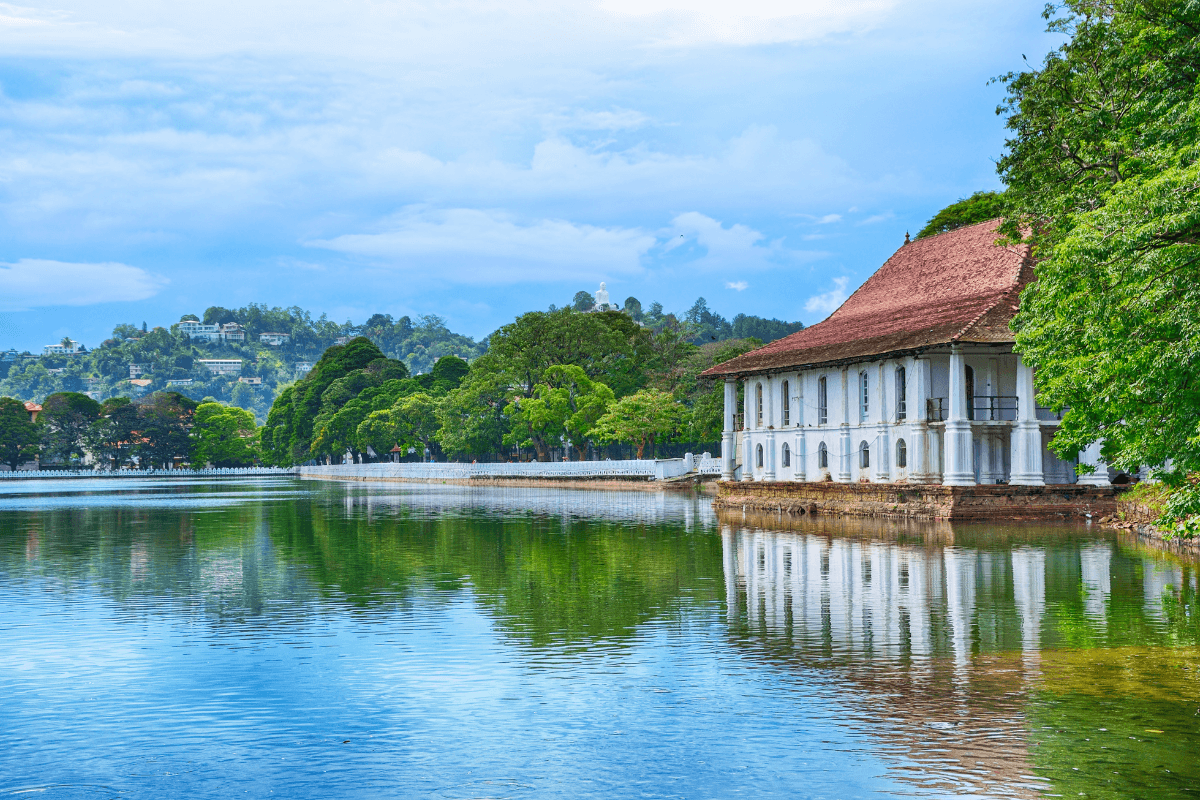
Nuwara Eliya town is something of a time capsule. The old post office, the Hill Club with its library and fireside atmosphere, the race course, the vegetable markets, and the English-style gardens of Victoria Park all carry the imprint of British colonial administration in an unusually legible way. Wandering slowly through this is a satisfying afternoon for travelers who do not need to be scheduled every hour. Gregory Lake offers a pleasant walk. Local food — hot kotthu, bread and butter pudding at the Hill Club, vegetable curries at market-adjacent restaurants — is worth seeking out. Nuwara Eliya afternoons reward curiosity more than organized tours.
The scenic train: Nanu Oya as the Nuwara Eliya connection
The hill-country train does not stop at Nuwara Eliya itself — the nearest station is Nanu Oya, about eight kilometres away. If you are planning the scenic train journey between Kandy and Ella, a stop in the Nuwara Eliya area typically involves disembarking at Nanu Oya and taking a tuk-tuk or vehicle into town, then re-boarding at Nanu Oya for the onward journey to Ella. Manage luggage carefully when doing this — large bags are difficult on trains and on the Nanu Oya approach. Book train seats in advance, especially for observation car sections in peak season. The train journey from Nanu Oya toward Ella is the most scenic section — misty peaks, tea rows, waterfalls, and tunnels in close succession.
Waterfalls and quieter drives around Nuwara Eliya
Ramboda Falls, on the road between Kandy and Nuwara Eliya, is worth stopping at during the drive in. Devon and St Clair's Falls in the Talawakele area further west are accessible by road and give a scale that smaller roadside falls cannot match. The drive along the A5 through Hatton and up toward Nuwara Eliya is itself one of the most scenic routes in Sri Lanka — hairpin turns, tea estate views, sudden mist, and small towns clinging to hillsides. A driver who knows these roads and is willing to stop for the views and the falls makes this part of the journey feel like an adventure in itself.
How Nuwara Eliya connects with the wider route
Nuwara Eliya sits naturally between Kandy and Ella on the hill-country route, and this is how most travelers encounter it. From Kitulgala, the drive via Kandy takes around three to four hours depending on traffic. From Sigiriya in the Cultural Triangle, the route typically comes south through Kandy first. From Nuwara Eliya, the onward journey to Ella takes around two to two-and-a-half hours along scenic mountain roads. For travelers connecting to Kitulgala from the hill country side, Nuwara Eliya can work as a buffer night before the river, or as a recovery stop after. Share your full route plan and dates with the Xclusive Adventures team to find the order that minimizes backtracking and maximizes the right kind of contrast between each stop.
Planning FAQs
Is Nuwara Eliya worth adding to an adventure itinerary?
Yes — especially for routes that have been physically intense. The cool climate, tea-country scenery, Horton Plains morning walks, and slower afternoon atmosphere give a route variety and recovery that active travelers need more than they often realize. Skip it only if the trip is very short and Ella is a more useful hill-country base for the onward route.
How many nights should I spend in Nuwara Eliya?
One night works as a route pause. Two nights allows Horton Plains in the morning, a tea estate walk, a slow town afternoon, and a calmer departure. For travelers who specifically want tea-country atmosphere and a genuine slow chapter in the route, two nights is the better choice.
How do I get to Horton Plains from Nuwara Eliya?
Horton Plains is approximately one hour by road from Nuwara Eliya town. The route climbs through tea estates and opens onto the plateau. There is a national park entrance fee, and vehicles cannot enter the plateau beyond the car park — the walking circuit starts from there. Arrange the transport the night before and aim to arrive at the park entrance by six or seven in the morning for the best weather conditions.
What should I pack for Nuwara Eliya?
A warm jacket or fleece for evenings and mornings — Nuwara Eliya can feel cold at night and early morning regardless of season. Walking shoes with grip for Horton Plains and estate paths. A rain jacket. Sunscreen for the plateau walk where wind and UV both surprise people. Normal trip packing applies for daytime sightseeing in town.