
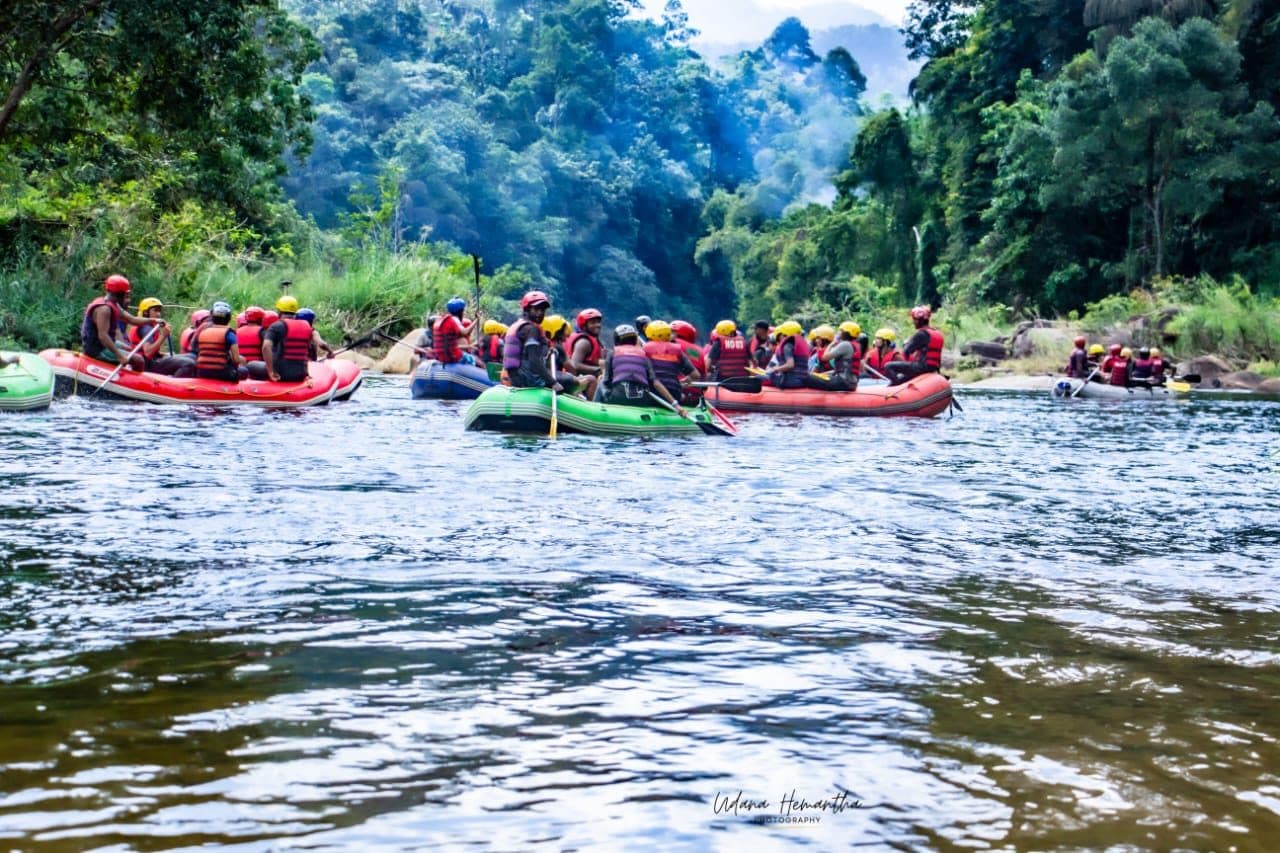
The best Sri Lanka itinerary is not built from a list of famous places copied from a travel magazine. It works when each stop has a clear reason for being there: adventure energy, cultural depth, wildlife encounter, scenic recovery, or a smart transfer hinge that makes the next day easier. Every place on this island has been photographed to death and deserves better than a rushed hour at the car park.
For adventure travellers in particular, the island rewards a route that contrasts rather than accumulates. Rafting the Kelani River at Kitulgala feels more alive after a long flight and a calm first night than it does after three days of temples and traffic. Ella's viewpoint walks mean more after the exertion of Kitulgala than they do as a first impression. A beach finish earns its slowness after everything that came before it.
This guide walks through the key stops in route order, explains what each one does well for adventure travellers, and gives you an honest account of how long each place actually needs — and what kind of accommodation makes sense at each stage.
Kitulgala: the adventure base
Kitulgala is where most adventure routes earn their identity. The Kelani River offers grade two and three white water rafting that suits a wide range of confidence levels, from first-timers to more experienced paddlers wanting a real river experience. Canyoning through rainforest channels and over waterfall sections adds a second, more physical adventure layer. Rainforest walks, birding, and village time fill the softer hours. One or two nights in a practical riverside lodge or nature camp gives you an early start without a rushed morning drive, and keeps the adventure base close to the activity rather than treating Kitulgala as a day-trip afterthought.
Kandy and Sigiriya: culture without losing route flow
Kandy works as a cultural bridge and transfer hinge between Kitulgala, the airport side, and the cultural triangle. The Temple of the Tooth, Peradeniya Botanical Gardens, the lakeside, and the hill-city atmosphere give the route a civilised pause after an active start. Sigiriya is the stronger choice for most adventure travellers: the fifth-century rock fortress is a UNESCO World Heritage Site that genuinely rewards the climb, and the surrounding villages, cycling routes, and eco-stays give it more than one dimension. Choose accommodation around traffic reality and the next morning's departure rather than the name of the town.
Nuwara Eliya and Ella: hill country recovery
The hill country gives the trip its sensory shift: cooler air, tea-green hillsides, waterfall detours, train-window scenery, and evenings that encourage slow meals and early beds. Nuwara Eliya suits travellers who want the tea-estate atmosphere in full — formal colonial-era hotels, rose gardens, and misty mornings. Ella is more accessible and livelier, with viewpoint hikes, the Nine Arch Bridge, a good food scene, and a confident adventure traveller crowd. Both work. The right choice depends on whether the group needs recovery and atmosphere or continued gentle activity.
Adam's Peak for the serious hiker
Sri Pada, or Adam's Peak, is a seven-kilometre trail with around 5,000 to 5,500 steps depending on route and a pilgrimage season that runs from December to May. At over 2,200 metres, the summit delivers a sunrise that travellers consistently describe as the best moment of the trip — but it requires a night-time start, appropriate clothing for mountain cold, and a recovery day after the descent. The hike should be planned deliberately rather than squeezed into a day that already has a long transfer or a water activity. Fit it into the route only if the group actively wants it.
Udawalawe or Yala: safari by route fit
Udawalawe National Park offers one of the highest concentrations of wild Asian elephants in the world and sits conveniently between Ella and the south coast, making it one of the smartest route additions for adventure travellers on a ten-day circuit. Yala is Sri Lanka's most visited national park and holds one of the world's densest populations of leopards, though sightings are never guaranteed and the park's popularity means early-morning jeep queues are a reality. Choose by route logic: Udawalawe for a smoother family or elephant-focused day; Yala for travellers who want the full classic safari atmosphere and have patience for it.
Mirissa, Weligama, or the east coast: finish with the right beach
A beach finish gives the route its recovery time before the long flight home. Weligama's shallow bay suits beginner surf lessons and mixed swimming confidence. Mirissa has the more famous south-coast feel, better food scene, and seasonal whale-watching boat trips between November and April. Smaller nearby bases like Hiriketiya suit couples or surf-focused travellers who want less noise. The east coast — Arugam Bay and the quieter bays near Trincomalee — is outstanding but fits best in May to September and requires a longer route or a deliberate commitment.
Let the route decide the stay style
Adventure travellers do not need the same accommodation style at every stop. Use practical, location-driven stays near water activities where activity timing and guide access matter most. Upgrade to boutique comfort after long transfers, hikes, or early safari starts where sleep and recovery change the next day's energy. Save the most relaxed, view-led stays for hill country and the final beach — these are the places where quality of stay has the most impact on how the trip is remembered. The enquiry form asks about comfort level because that information genuinely shapes the quote.
What to send before asking for a places and stays recommendation
The most useful places-and-stays conversations start with specifics rather than wish lists. Before contacting the team, gather your travel dates, trip length in nights, group size and ages, how many stops feel manageable, accommodation comfort level, rough budget range, must-do activities and must-see regions, and whether the route should prioritise wildlife, adventure, culture, coast, or a genuine mix. With those details, the team can suggest a route sequence with accommodation recommendations at each stop that fit both the budget and the daily plan rather than listing every hotel on the island and leaving the decision to you.
Planning FAQs
What are the best places to visit in Sri Lanka for adventure?
Kitulgala for rafting and canyoning, Sigiriya for the rock fortress and cultural triangle, Ella for hill country hiking and views, Udawalawe or Yala for safari, and Weligama or Mirissa for a beach finish. Placed in a realistic route order, these stops give a first-time Sri Lanka adventure trip most of what it needs.
How many places should I include in one week?
For a one-week trip, choose fewer stops: typically Kitulgala, one inland anchor — either hill country or cultural triangle — and a coast or safari finish. Trying to include every famous destination in seven nights produces exhaustion rather than memories.
Where should I stay in Kitulgala?
Stay close to the river if rafting and canyoning are the priority. A riverside lodge or nature camp reduces the morning transfer and keeps you close to the guides and activity base. A more comfortable stay further out suits travellers who want a recovery night rather than an adventure morning.
Is Sigiriya worth the extra distance from Kitulgala?
Yes for most first-time visitors. The fortress climb, surrounding landscape, and cultural triangle context make it one of the strongest single-day experiences on the island. It does add road time to the route, so it works best when the itinerary has a night in the Sigiriya area rather than a day trip.
Can Xclusive Adventures recommend hotels at each stop?
Yes. Share your dates, comfort level, budget range, and must-visit stops, and the team can match accommodation choices to the private route — taking into account road time, activity timing, and the group's energy levels at each stage.